
AMD has pledged over $10 billion to Taiwan's AI ecosystem, with ASE, SPIL, and Helios being the prominent results.
Lisa Su's announcement regarding Taiwan encompasses advanced silicon, packaging, and manufacturing collaborations for the company's Helios platform, which is slated for deployment in the latter half of 2026. On Wednesday, AMD revealed over $10 billion in investments aimed at enhancing strategic partnerships within Taiwan's semiconductor ecosystem and boosting advanced packaging manufacturing for future AI infrastructure.
This commitment entails a multi-year rollout of silicon, packaging, and supply-chain capabilities centered around the Helios platform, with expectations for customer deployment in the second half of 2026. The announcement includes partnerships with ASE and SPIL on cutting-edge wafer-based 2.5D bridge interconnect technology, as well as additional collaborations with other Taiwanese suppliers not specifically mentioned in the public release.
The technology outlined in the company's 8-K materials is designed to support the full-rack scale architecture of the Helios platform, where AMD has been positioning itself against Nvidia's GB200 and GB300 NVL72 systems over the past three quarters. Lisa Su, the chair and CEO, framed the announcement in the context of growing AI infrastructure demand, noting that as AI adoption increases, global customers are rapidly expanding their AI infrastructure to meet rising computing needs. This suggests that the capacity expansion in Taiwan is aligned with a customer pipeline that AMD has not publicly detailed.
The competitive context, which is not directly addressed in the announcement, pertains to the Google-Blackstone $25 billion TPU-cloud joint venture and broader hyperscaler-capex commitments for 2026, which have created a procurement opportunity for non-Nvidia accelerator suppliers to compete for market share, provided that the manufacturing and packaging supply chain can keep up.
Taiwan plays a crucial structural role, as the country's foundry and packaging capacity serves as a bottleneck for the entire frontier-AI-silicon supply chain, irrespective of the US accelerator brand that customers ultimately choose. AMD's commitment places it alongside Nvidia's long-term TSMC and packaging supply commitments, ensuring priority in the foundry queue for production in the second half of 2026 and the first half of 2027.
The geopolitical factors are not explicitly discussed in the announcement materials. The larger landscape of Nvidia alternatives, within which this announcement exists, has been active over the past three weeks. Discussions related to Tenstorrent's potential acquisition talks with Intel and Qualcomm, as well as Alibaba's T-Head Zhenwu M890 announcement, exemplify two visible non-Nvidia pathways from the US/Western side and the Chinese domestic side, respectively.
AMD stands as the third key player, an established US challenger with the production capability to effectively fulfill hyperscaler deployments at scale. The company did not reveal the multi-year allocation schedule for its $10 billion-plus commitment, the specific contracts for the Helios platform set for the H2 2026 deployment window, the cost per rack compared to Nvidia's NVL72 systems, or the ratio of Taiwan investments categorized as operational expenditure versus capital expenditure. The 8-K filed with the announcement contains the headline figure.
This commitment represents AMD's largest single-country AI-infrastructure investment disclosed to date, with the next significant marker expected to be the first named Helios deployment within the H2 2026 timeframe, at which point the customer's identity and production shipment volumes will be made public.
Other articles
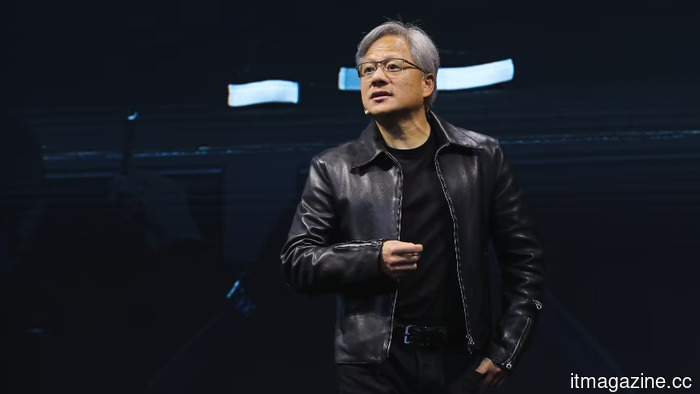 China halts imports of NVIDIA's RTX 5090D V2 while Jensen Huang visited Beijing.
On May 15, 2026, China halted the issuance of import permits for Nvidia's RTX 5090D V2, coinciding with CEO Jensen Huang's presence in Beijing with Donald Trump's state visit delegation.
China halts imports of NVIDIA's RTX 5090D V2 while Jensen Huang visited Beijing.
On May 15, 2026, China halted the issuance of import permits for Nvidia's RTX 5090D V2, coinciding with CEO Jensen Huang's presence in Beijing with Donald Trump's state visit delegation.
 Manus is targeting a $1 billion fundraising effort to facilitate its buyout from the Meta acquisition following a blockage from China.
Manus AI, the Singapore-based agentic-AI start-up at the heart of China's regulatory obstruction regarding Meta's over $2 billion acquisition in December, is considering a new funding round of up to $1 billion to support the unwinding process.
Malaysia has issued a legal demand to TikTok regarding shortcomings in content moderation.
Malaysia's Communications and Multimedia Commission has formally delivered a Section 39 statutory demand to TikTok due to its ongoing inability to manage inappropriate content.
Manus is targeting a $1 billion fundraising effort to facilitate its buyout from the Meta acquisition following a blockage from China.
Manus AI, the Singapore-based agentic-AI start-up at the heart of China's regulatory obstruction regarding Meta's over $2 billion acquisition in December, is considering a new funding round of up to $1 billion to support the unwinding process.
Malaysia has issued a legal demand to TikTok regarding shortcomings in content moderation.
Malaysia's Communications and Multimedia Commission has formally delivered a Section 39 statutory demand to TikTok due to its ongoing inability to manage inappropriate content.
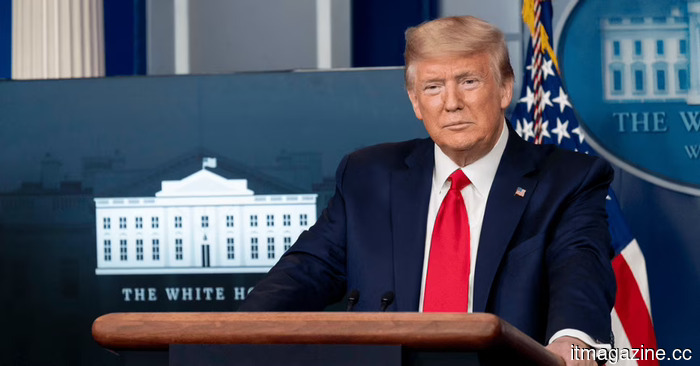 This week, Trump is set to sign an order for AI oversight as pressure from MAGA supporters intensifies on leading model laboratories.
President Trump is anticipated to sign an executive order concerning AI oversight as soon as Thursday, establishing a voluntary framework for model disclosure that will last 90 days prior to release, involving the federal government and operators of critical infrastructure.
This week, Trump is set to sign an order for AI oversight as pressure from MAGA supporters intensifies on leading model laboratories.
President Trump is anticipated to sign an executive order concerning AI oversight as soon as Thursday, establishing a voluntary framework for model disclosure that will last 90 days prior to release, involving the federal government and operators of critical infrastructure.
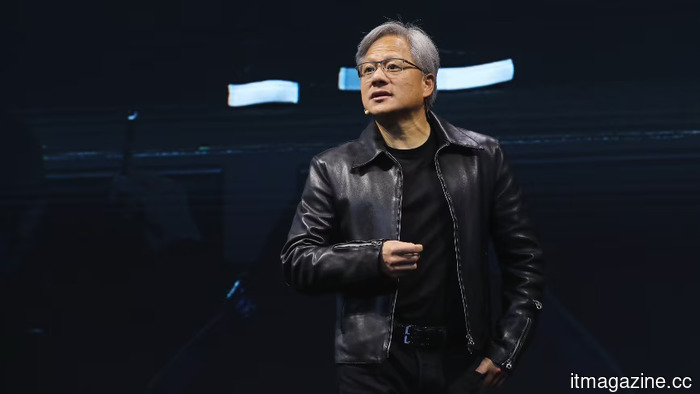 China has prohibited the import of NVIDIA's RTX 5090D V2 while Jensen Huang was present in Beijing.
On May 15, 2026, China ceased issuing import permits for Nvidia's RTX 5090D V2 during the same week that CEO Jensen Huang was in Beijing with Donald Trump's state-visit delegation.
China has prohibited the import of NVIDIA's RTX 5090D V2 while Jensen Huang was present in Beijing.
On May 15, 2026, China ceased issuing import permits for Nvidia's RTX 5090D V2 during the same week that CEO Jensen Huang was in Beijing with Donald Trump's state-visit delegation.
AMD has pledged over $10 billion to Taiwan's AI ecosystem, with ASE, SPIL, and Helios being the prominent results.
AMD has revealed investments exceeding $10 billion in Taiwan's AI semiconductor ecosystem, designating ASE and SPIL as packaging partners, while the rack-scale Helios platform is planned for customer deployment in the second half of 2026.