
China's three major telecommunications companies are competing to enter the AI token economy.
Credit: Yuanbao AI
China's telecommunications sector is undergoing a significant business transformation, shifting from offering voice minutes to capitalizing on mobile data and now venturing into the packaging and trading of AI tokens. This week, China Telecom, China Mobile, and China Unicom jointly launched token-based service plans and ecosystem partnerships, indicating how these operators are aligning themselves with the emerging token economy.
These recent developments signify a strategic departure from the long-standing price battles concerning data and traffic packages, as telecom companies seek new growth opportunities related to AI services, computing access, and tokenized consumption methods.
Credit: Yuanbao AI
China Telecom has taken the lead in establishing its role within the nascent token economy. On Monday, the company announced various trial commercial token packages, with consumer and household plans priced at 9.9 yuan ($1.40) for 10 million tokens, 29.9 yuan ($4.20) for 40 million tokens, and 49.9 yuan ($6.90) for 80 million tokens, along with integrated services that combine tokens, connectivity, and security.
For developers and small enterprises, China Telecom offered professional-tier plans that range from 39.9 yuan ($5.60) to 299.9 yuan ($42.00) per month, allowing up to 150 million tokens. Additionally, the company launched the China Telecom Token Ecosystem Alliance on the same day, which includes partners from key segments of the token value chain, such as production and distribution.
Credit: Yuanbao AI
China Mobile is adopting a regional pilot strategy supported by group-level coordination. In Shanghai, the operator partnered with Tencent to introduce an AI-native workspace platform providing 400,000 tokens for 1 yuan ($0.14), with payments facilitated via mobile billing. Meanwhile, in Beijing, users can buy entry-level computing power add-on packages starting from 5.99 yuan ($0.84), while a monthly package priced at 24.99 yuan ($3.50) includes 10 million tokens.
During the 2026 Mobile Cloud Conference held from May 7 to 9, China Mobile launched its New Computing Power Momentum initiative and collaborated with seven partners, including Tencent, Alibaba, and Huawei, to form a token operations ecosystem alliance. The platform integrates around 300 AI models, and China Mobile reported that centralizing operations could lower per-token expenses by approximately 30%.
Credit: Yuanbao AI
China Unicom is concentrating on emerging AI-driven usage scenarios. In Shanghai, the carrier provides OPC (one-person company) users with a free trial allocation of 30 million tokens and has launched bundled packages that combine tokens, AI cloud desktops, and its Uniclaw platform. In Hubei, China Unicom introduced three token-tier packages ranging from 6 million to 18 million tokens, priced between 7.5 yuan ($1.05) and 359 yuan ($50.30).
The backdrop to these latest initiatives is a remarkable rise in token consumption. Data from China’s National Data Administration reveals that average daily token usage has soared from 100 billion at the beginning of 2024 to 140 trillion by March 2026, representing an increase of over 1,000 times in just two years.
China's three major telecom operators are rapidly transforming from traditional connectivity providers into service platforms for the token economy. Token operations are swiftly overtaking traffic monetization as the industry's new strategic emphasis, with competition in this trillion-yuan market just beginning.
Jessie Wu is a technology reporter based in Shanghai. She covers consumer electronics, semiconductors, and the gaming industry for TechNode. You can connect with her via email: jessie.wu@technode.com. More by Jessie Wu.

Other articles
 Discord automatically encrypts all voice and video calls.
Discord has implemented end-to-end encryption for all voice and video calls, with no opt-in necessary. The DAVE protocol ensures that not even Discord has the ability to eavesdrop.
Discord automatically encrypts all voice and video calls.
Discord has implemented end-to-end encryption for all voice and video calls, with no opt-in necessary. The DAVE protocol ensures that not even Discord has the ability to eavesdrop.
 Discord automatically encrypts all voice and video calls.
Discord has enabled end-to-end encryption for all voice and video calls, and no opt-in is necessary. The DAVE protocol ensures that even Discord cannot eavesdrop.
GitLab reduces workforce by 7% amid restructuring for the 'agentic era'
GitLab reduces its workforce, cuts its country presence by 30%, and restructures R&D into 60 independent teams as CEO Bill Staples places his bets on AI agents developing software.
H2O.ai introduces the tabH2O foundation model designed for tabular data.
H2O.ai introduced tabH2O at Dell Technologies World 2026, a foundational model capable of producing predictions from tabular data in seconds without the need for model training.
Discord automatically encrypts all voice and video calls.
Discord has enabled end-to-end encryption for all voice and video calls, and no opt-in is necessary. The DAVE protocol ensures that even Discord cannot eavesdrop.
GitLab reduces workforce by 7% amid restructuring for the 'agentic era'
GitLab reduces its workforce, cuts its country presence by 30%, and restructures R&D into 60 independent teams as CEO Bill Staples places his bets on AI agents developing software.
H2O.ai introduces the tabH2O foundation model designed for tabular data.
H2O.ai introduced tabH2O at Dell Technologies World 2026, a foundational model capable of producing predictions from tabular data in seconds without the need for model training.
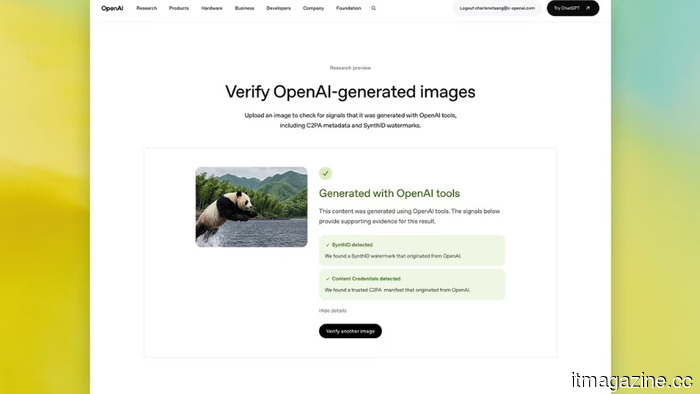 OpenAI incorporates C2PA metadata and SynthID watermarks into AI-generated images.
OpenAI has become a participant in the C2PA standard and has teamed up with Google to incorporate invisible SynthID watermarks, establishing a dual-layer system for identifying images generated by AI.
SpaceX plans to acquire the AI coding startup Cursor for $60 billion following its initial public offering (IPO).
SpaceX anticipates finalizing its $60 billion acquisition of Cursor in July, approximately 30 days following its record-setting IPO on Nasdaq. The deal is supported by a $10 billion breakup fee.
OpenAI incorporates C2PA metadata and SynthID watermarks into AI-generated images.
OpenAI has become a participant in the C2PA standard and has teamed up with Google to incorporate invisible SynthID watermarks, establishing a dual-layer system for identifying images generated by AI.
SpaceX plans to acquire the AI coding startup Cursor for $60 billion following its initial public offering (IPO).
SpaceX anticipates finalizing its $60 billion acquisition of Cursor in July, approximately 30 days following its record-setting IPO on Nasdaq. The deal is supported by a $10 billion breakup fee.
China's three major telecommunications companies are competing to enter the AI token economy.
China's telecom sector is undergoing a significant business transformation, shifting from the sale of voice minutes to the monetization of mobile data and now to