
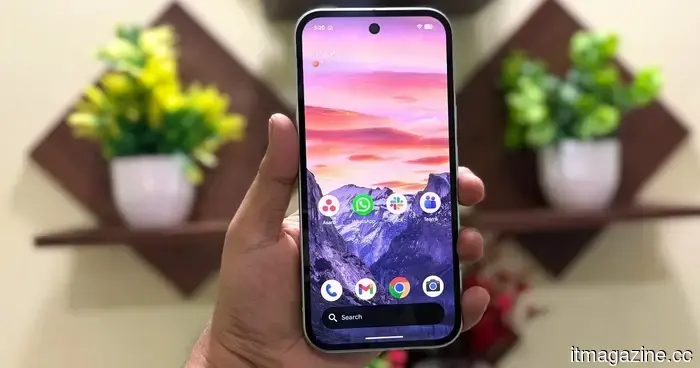
Your Pixel phone may soon notify you if a caller is not truthful about their identity.
Google's newest feature may catch scammers before you even pick up the phone.
Google has consistently led the way in safeguarding Pixel users from spam calls, and it appears the company is not finished advancing its efforts. A recent analysis of the Google Phone app by Android Authority revealed that Google is developing a new feature for detecting phone number spoofing.
What is phone number spoofing?
Phone number spoofing, often referred to as caller ID spoofing, occurs when a scammer tricks your phone into showing a familiar or saved contact's number, despite the call actually originating from a different number.
Since users are more inclined to answer calls that appear to come from family, friends, or trusted sources like doctors or bank representatives, the incidence of phone number spoofing has surged in the realm of scams. This tactic has become quite prevalent and has caught many individuals by surprise.
So, how is Google addressing this issue?
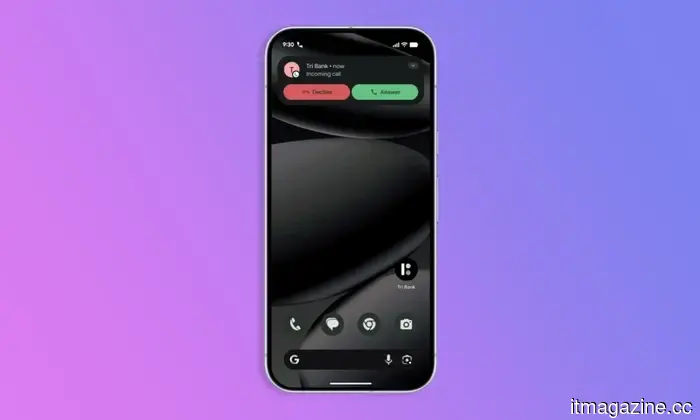
Android Authority examined version 222.0.913376317 of the Google Phone app and discovered code snippets that point to a forthcoming spoofing detection system. One line states, "Someone may be pretending to call from your contact's number," while another implies that users will be able to end the call immediately.
It remains unclear how Google intends to identify spoofed numbers, but the timing is noteworthy. Just days ago, Google introduced several security enhancements, including verified financial calls, OTP protection, real-time malware detection, APK scanning in Chrome, and more.
With the new call spoof detection feature alongside existing protections against spam calls, such as Call Screening and spam detection, Pixel devices have become the leading smartphones against scams. There is no information yet on when this feature will be released, but it’s reassuring to know that Google is developing it.
Rachit is an experienced tech journalist with over seven years of experience in the consumer technology field.
Red Magic's newest gaming phone appears to have emerged from an esports lab.
This is the type of phone that my teenage self would have idolized.
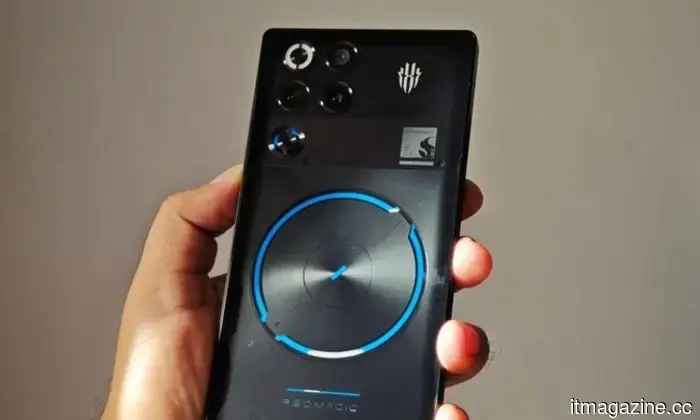
While some devices boast excellent cameras and others prioritize a sleek design, Red Magic's latest model seems ready to launch into a competitive gaming session the moment you touch it. The Red Magic 11S Pro series has officially debuted in China, celebrating the brand's eighth anniversary with two boldly gaming-oriented smartphones.
The series includes the Red Magic 11S Pro in Matte White and Matte Black, as well as the Red Magic 11S Pro+ in Transparent Black and Transparent White. Indeed, the transparent models represent the kind of extravagant hardware display that gaming phones should continue to embrace.
Move over gigabytes; AI tokens are the new metric on your phone bill.
It's astonishing how rapidly artificial intelligence has shifted from a futuristic novelty to an everyday necessity for many. Tools like ChatGPT, Claude, and Gemini are gradually integrating into daily digital interactions—assisting users with tasks like composing emails, summarizing documents, organizing schedules, debugging code, and sometimes even problem-solving comprehensively. Now, as per a new report, telecom providers in China are capitalizing on this trend in a manner that feels both intriguing and somewhat unsettling: by offering AI token plans akin to mobile data packages.
Indeed, actual AI usage credits are beginning to emerge. Instead of the usual concern about exhausting 5GB of data by month’s end, users may soon be more preoccupied with whether they have enough tokens remaining for several conversations powered by ChatGPT, AI-generated images, or coding inquiries.
Sony wants to clarify that the AI camera in their new Xperia phone isn’t as subpar as critics claim.
Sony’s Xperia smartphones have established a reputation for exceptional camera performance. Equipped with remarkable lenses and sophisticated in-camera features, they enable users to capture stunning photos. Therefore, when the company's official account shared before-and-after images taken with its AI camera assistant, the response was overwhelmingly negative. Not only did the company venture into subpar AI territory, but the images shared were also disappointing.




Other articles
 US and Philippines advance
Under Secretary Helberg toured the New Clark City location with American businesses. The BCDA proposed a two-year lease grace period but turned down Washington's appeal for diplomatic immunity at the site.
US and Philippines advance
Under Secretary Helberg toured the New Clark City location with American businesses. The BCDA proposed a two-year lease grace period but turned down Washington's appeal for diplomatic immunity at the site.
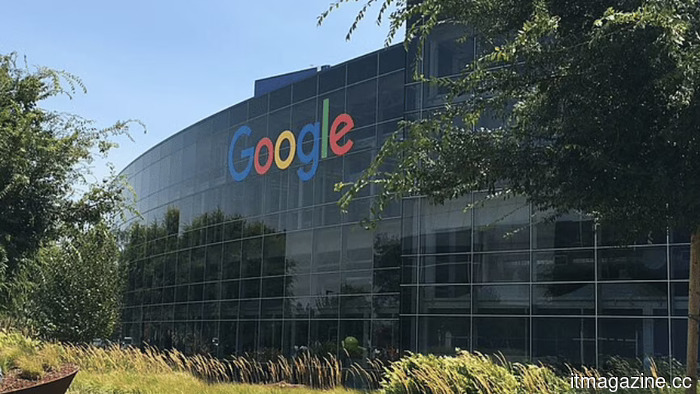 Google has sold so much TPU capacity that its own researchers are now waiting their turn for the remaining resources.
Google's TPU framework supports partnerships with Anthropic and Meta. According to Bloomberg, this level of success has turned internal compute access at Google and DeepMind into a highly sought-after asset.
Google has sold so much TPU capacity that its own researchers are now waiting their turn for the remaining resources.
Google's TPU framework supports partnerships with Anthropic and Meta. According to Bloomberg, this level of success has turned internal compute access at Google and DeepMind into a highly sought-after asset.
 Pope Leo XIV condemns AI warfare and the rearmament of Europe during his first papal visit to La Sapienza since 2008.
The pope cautioned that the conflicts in Ukraine, Gaza, Lebanon, and Iran demonstrate the "inhuman evolution" of warfare and technology. His inaugural encyclical regarding AI and human dignity is anticipated to be released in the coming weeks.
Pope Leo XIV condemns AI warfare and the rearmament of Europe during his first papal visit to La Sapienza since 2008.
The pope cautioned that the conflicts in Ukraine, Gaza, Lebanon, and Iran demonstrate the "inhuman evolution" of warfare and technology. His inaugural encyclical regarding AI and human dignity is anticipated to be released in the coming weeks.
 NextEra has reached a $67 billion all-stock agreement to acquire Dominion, marking the largest acquisition in the power sector to date.
NextEra Energy has reached an agreement to purchase Dominion Energy for approximately $67 billion in an all-stock transaction, marking the largest acquisition ever in the power sector.
NextEra has reached a $67 billion all-stock agreement to acquire Dominion, marking the largest acquisition in the power sector to date.
NextEra Energy has reached an agreement to purchase Dominion Energy for approximately $67 billion in an all-stock transaction, marking the largest acquisition ever in the power sector.
 Perhaps consider using a different option for your AI images instead of Gemini and ChatGPT. I just found an alternative that might interest you.
Ideogram may not replace all AI image generators, but its precision with text, format controls, and remix features make it a worthwhile option for creating posters, thumbnails, social graphics, and other visuals that require strong design elements.
Perhaps consider using a different option for your AI images instead of Gemini and ChatGPT. I just found an alternative that might interest you.
Ideogram may not replace all AI image generators, but its precision with text, format controls, and remix features make it a worthwhile option for creating posters, thumbnails, social graphics, and other visuals that require strong design elements.
 Two cryptocurrency billionaires are behind both the Trump family token and Iran's mechanism for evading sanctions.
A Reuters investigation associates $2.3 billion in transactions from Iran's largest cryptocurrency exchange, Nobitex, with Tron and BNB Chain.
Two cryptocurrency billionaires are behind both the Trump family token and Iran's mechanism for evading sanctions.
A Reuters investigation associates $2.3 billion in transactions from Iran's largest cryptocurrency exchange, Nobitex, with Tron and BNB Chain.
Your Pixel phone may soon notify you if a caller is not truthful about their identity.
Google is developing a feature for the Google Phone app to detect phone number spoofing. This feature may alert you when someone is impersonating a saved contact's number and allow you to end the call immediately.