

Siri's revival in iOS 27 may include an automatic deletion feature for your AI conversations.
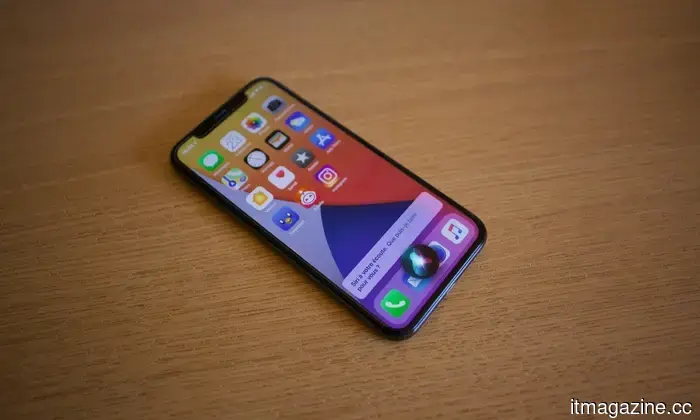
Apple's long-anticipated Siri update in iOS 27 might bring a feature that many AI chatbots still consider optional: the automatic deletion of AI conversations. As reported by Mark Gurman's Bloomberg newsletter, Apple is working on a revamped Siri experience that will feature a dedicated chatbot-style interface. However, in contrast to competitors like ChatGPT and Gemini, Apple may prioritize privacy controls as a fundamental aspect of the experience rather than a concealed option.
The proposed feature would enable users to delete Siri conversations automatically after 30 days, one year, or keep them indefinitely. This method seems to resemble the auto-delete option already present in Apple’s Messages app.
Apple is reimagining Siri for AI interactions.
This update is anticipated to evolve Siri from a straightforward voice assistant into a more conversational AI system. Reports indicate that iOS 27 will introduce the first standalone Siri app, enabling users to interact with Siri more as a chatbot rather than solely through voice commands.
A new “Search or Ask” feature may also allow users to transition between traditional search and AI conversations more fluidly. Siri is said to be acquiring the capability to retain conversational context and recall past interactions, a feature that competing AI assistants already utilize extensively.
However, Apple's approach seems more cautious. Unlike numerous chatbot platforms that maintain conversation histories indefinitely for personalization and model training, Apple is reportedly imposing stricter limits on memory retention and processing of user data.
Privacy is becoming Apple's primary differentiator in AI.
Apple has invested years in establishing privacy as one of its key competitive strengths. This strategy has helped differentiate the company from ad-supported competitors like Google and Meta, although it has also hindered Apple’s AI advancements compared to entities like OpenAI, Anthropic, and Google.
Now, Apple appears to be striving to balance both objectives: providing a more capable AI assistant while exercising stricter controls on user data. According to reports, Apple's AI system will still prioritize on-device processing and Private Cloud Compute infrastructure. Simultaneously, the company may increasingly depend on Google’s Gemini infrastructure behind the scenes to enhance Siri’s functionalities.
This places Apple in a unique position. The company aims for Siri to rival contemporary AI chatbots without fully embracing the data collection practices many of its competitors employ.
The significance of the auto-delete feature
Most AI chatbot platforms already present temporary or incognito chat modes, but these options are typically settings that users have to manually activate. Apple’s proposed approach seems distinct as the company may weave privacy controls directly into the core Siri experience.
For users, this could imply greater control over the duration for which AI conversations are kept and the amount of personal interaction history that remains accessible. At the same time, Apple might leverage privacy to mitigate criticism surrounding Siri’s slower AI implementation. While competitors often highlight model size and advanced reasoning, Apple could frame Siri as the "safer" AI assistant for everyday users.
What lies ahead
Apple is expected to share more information about Siri's redesign and iOS 27 during WWDC later this year. Reports suggest that the enhanced assistant could initially be launched in beta form due to delays in Apple’s broader AI strategy.
If successful, Siri's redesign could represent Apple’s most significant AI transformation in years—one where privacy is deemed just as crucial as intelligence itself.

Other articles
 Valve's Steam Controller has significantly increased its utility beyond Steam.
The main early drawback of the Steam Controller was its significant reliance on Steam. However, with the introduction of SDL support, it is expected to be much more beneficial for non-Steam games.
Valve's Steam Controller has significantly increased its utility beyond Steam.
The main early drawback of the Steam Controller was its significant reliance on Steam. However, with the introduction of SDL support, it is expected to be much more beneficial for non-Steam games.
 The Delhi bench has reached a procedural resolution regarding Apple's India App Store case.
The Delhi High Court has instructed Apple to fully assist India's competition regulator in the App Store antitrust matter, while also directing the CCI not to make a final decision before July 15.
The Delhi bench has reached a procedural resolution regarding Apple's India App Store case.
The Delhi High Court has instructed Apple to fully assist India's competition regulator in the App Store antitrust matter, while also directing the CCI not to make a final decision before July 15.
 CBA appoints AI researcher Professor Mary-Anne Williams as its Chief AI Scientist.
The Commonwealth Bank of Australia has designated Professor Mary-Anne Williams, a researcher in AI from UNSW and an AAAI Fellow, as its inaugural Chief AI Scientist.
CBA appoints AI researcher Professor Mary-Anne Williams as its Chief AI Scientist.
The Commonwealth Bank of Australia has designated Professor Mary-Anne Williams, a researcher in AI from UNSW and an AAAI Fellow, as its inaugural Chief AI Scientist.
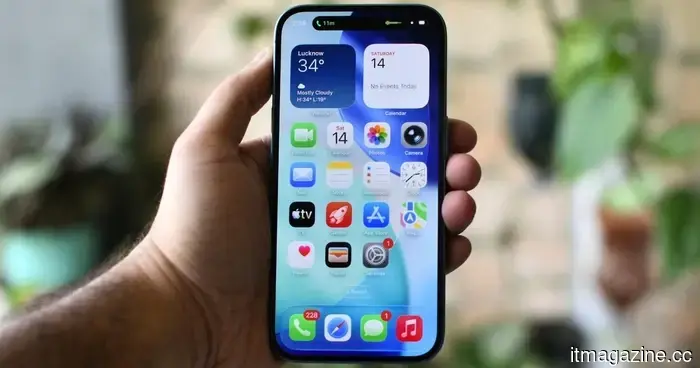 Siri may be late to the AI scene, but the overhaul in iOS 27 could still feel like a beta experience.
Apple could introduce its revamped AI-driven Siri as a beta feature in iOS 27, despite delays that are said to have postponed the project by almost two years.
Siri may be late to the AI scene, but the overhaul in iOS 27 could still feel like a beta experience.
Apple could introduce its revamped AI-driven Siri as a beta feature in iOS 27, despite delays that are said to have postponed the project by almost two years.
 Sony wants to assure you that the AI camera on the new Xperia phone is quite impressive.
Sony claims that its AI Camera Assistant recommends settings rather than making edits. However, the before-and-after photos it provided to support this argument seem to unintentionally argue the opposite.
Sony wants to assure you that the AI camera on the new Xperia phone is quite impressive.
Sony claims that its AI Camera Assistant recommends settings rather than making edits. However, the before-and-after photos it provided to support this argument seem to unintentionally argue the opposite.
 Two cryptocurrency billionaires are behind both the Trump family token and Iran's mechanism for evading sanctions.
A Reuters investigation associates $2.3 billion in transactions from Iran's largest cryptocurrency exchange, Nobitex, with Tron and BNB Chain.
Two cryptocurrency billionaires are behind both the Trump family token and Iran's mechanism for evading sanctions.
A Reuters investigation associates $2.3 billion in transactions from Iran's largest cryptocurrency exchange, Nobitex, with Tron and BNB Chain.
Siri's revival in iOS 27 may include an automatic deletion feature for your AI conversations.
The overhaul of Siri in Apple’s iOS 27 may bring chatbot-like conversations and features for automatic deletion, aimed at enhancing user privacy in AI interactions.