
Sigma Computing secures $80 million in Series E funding, achieving a valuation of $3 billion, with support from Databricks, ServiceNow, and Workday ventures.
TL;DR Sigma Computing has secured $80 million in Series E funding, achieving a $3 billion valuation, which marks a doubling of its value within a year. This funding round was led by Princeville Capital, with participation from Databricks Ventures, ServiceNow Ventures, and Workday Ventures.
Sigma Computing has successfully raised $80 million in Series E funding, now valued at $3 billion, which has doubled its worth in the past year and places the San Francisco-based firm as one of the most highly valued entities in the business intelligence sector. Princeville Capital led this funding round, with new strategic investors including Databricks Ventures, ServiceNow Ventures, and Workday Ventures coming on board. Existing investors such as Altimeter Capital, Avenir Growth Capital, D1 Capital Partners, Spark Capital, and Sutter Hill Ventures also participated, while JP Morgan served as the placement agent.
The valuation leap from $1.5 billion to $3 billion aligns with the company's revenue doubling during the same timeframe. In April, Sigma reported reaching $200 million in annual recurring revenue, up from approximately $100 million the previous year, boasting over 2,000 customers and adding 1.1 million new active users in the last fiscal year. Its customer roster includes notable names like AMD, Duolingo, Colgate-Palmolive, and JPMorgan Chase.
About Sigma's Offerings
Sigma provides a cloud-native analytics platform that operates on top of data warehouses from Snowflake, Databricks, and Google BigQuery. Its main value proposition is that business users can query and analyze live data from warehouses through a spreadsheet-like interface without needing to write SQL, while IT teams can maintain their governance and security controls. The platform can handle spreadsheet operations, SQL, Python, and the newly defined “AI Apps,” all processed via the warehouse's compute layer, eliminating the need to transfer data to separate systems.
This architecture is central to Sigma’s appeal to enterprises, as it avoids data movement or duplication. Consequently, security measures already established in the warehouse—like row-level security, column masking, and access controls—automatically apply to everything created in Sigma. In a landscape where data governance is both a regulatory obligation and a top executive priority, this offers a significant edge over traditional BI tools that pull data into their own systems.
The Shift in Focus
The Series E funding comes as Sigma pivots towards redefining its offerings. Transitioning from conventional business intelligence, it has embraced what it terms “agentic analytics,” a sector that only emerged recently and that major enterprise software vendors are now eager to explore. SAP has introduced over 200 AI agents, Google centered its Cloud Next conference on agentic AI, and Snowflake has formed a $200 million partnership with OpenAI to integrate AI agents directly into its data warehouse. Sigma asserts that it has already been pioneering this space.
The company’s leading product for this category is Sigma Agents, customizable no-code AI agents that function within the existing security and governance framework of data warehouses. These agents can work in three modes: interactive, where users communicate with the agent and approve actions; autonomous, where the agent tracks data and executes workflows automatically; and external, where the agent interacts with third-party systems via API calls. In the first quarter of the current fiscal year, Sigma Agents became the fastest-adopted product in the company's history.
CEO Mike Palmer articulated the strategy in light of the broader dynamics in enterprise AI, emphasizing the need for technology that facilitates quick advancements in areas like vibe-coded applications and agentic development, while ensuring safety. The deliberate mention of vibe coding—developing software through natural language prompts—highlights an increased risk of unregulated outputs as more business users create applications without traditional coding expertise. Security risks from vibe-coded applications have already raised concerns, and Sigma promotes its warehouse-native architecture as a governance layer to address these threats.
Investment Insights
The involvement of Databricks Ventures, ServiceNow Ventures, and Workday Ventures is as significant as the valuation itself. As venture arms of either Sigma’s infrastructure partners or potential competitors, their investments suggest they see Sigma as a complementary asset rather than a rival. Databricks, which provides a lakehouse platform that Sigma utilizes, describes the funding as helping users to transition from an accessible spreadsheet interface to AI apps' capabilities. ServiceNow and Workday, generating substantial amounts of data that require analysis, view Sigma as an additional layer that enhances their platforms.
Vivian Huang from Princeville Capital, who will join Sigma's board, highlighted the company’s “warehouse-native architecture and strong operating discipline at scale” as reasons for the investment. This emphasis on “operating discipline” is noteworthy: Sigma raised $80 million rather than $800 million. In a sector where AI companies often secure tenfold that amount, this relatively conservative fundraising indicates either Sigma's strong capital position or a strategic choice to limit dilution while securing key partnerships. With $200 million in ARR and what the company describes as
Other articles
 Coursera initiates a $500 million stock buyback program just days after finalizing its merger with Udemy.
The buyback, financed with available cash, occurs as COUR is trading close to its 52-week low of $5.00. The merged Coursera-Udemy platform reports 290 million learners and aims for $115 million in annual cost synergies.
Coursera initiates a $500 million stock buyback program just days after finalizing its merger with Udemy.
The buyback, financed with available cash, occurs as COUR is trading close to its 52-week low of $5.00. The merged Coursera-Udemy platform reports 290 million learners and aims for $115 million in annual cost synergies.
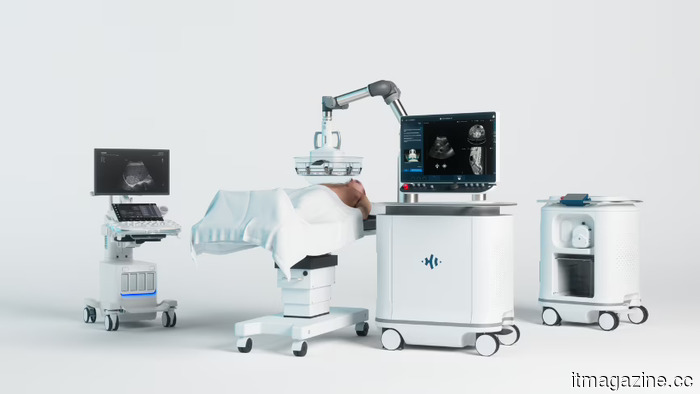 HistoSonics has obtained TFDA approval in Taiwan for the Edison Histotripsy System, expediting its expansion in Asia.
The non-invasive focused ultrasound technology eliminates liver tumors without the need for surgery or radiation. Supported by Bezos Expeditions and estimated at a value of $2.25 billion, HistoSonics also filed a submission to the FDA for treating kidney tumors on May 11.
Sigma Computing secures $80 million in Series E funding, achieving a valuation of $3 billion, with support from Databricks, ServiceNow, and Workday Ventures.
The analytics firm based in San Francisco reached an annual recurring revenue of $200 million in April, reflecting a year-over-year increase of 100%. Its no-code AI offering, Sigma Agents, has become the most rapidly adopted feature in the company's history.
HistoSonics has obtained TFDA approval in Taiwan for the Edison Histotripsy System, expediting its expansion in Asia.
The non-invasive focused ultrasound technology eliminates liver tumors without the need for surgery or radiation. Supported by Bezos Expeditions and estimated at a value of $2.25 billion, HistoSonics also filed a submission to the FDA for treating kidney tumors on May 11.
Sigma Computing secures $80 million in Series E funding, achieving a valuation of $3 billion, with support from Databricks, ServiceNow, and Workday Ventures.
The analytics firm based in San Francisco reached an annual recurring revenue of $200 million in April, reflecting a year-over-year increase of 100%. Its no-code AI offering, Sigma Agents, has become the most rapidly adopted feature in the company's history.
 Do you long for the classic PC days? This website allows you to navigate Wikipedia as if you’re using Windows XP.
A new web project transforms Wikipedia into a Windows XP-style desktop, allowing categories, articles, and Wikimedia Commons to resemble folders that can be browsed instead of just pages to search through.
Sigma Computing secures $80 million in Series E funding, achieving a valuation of $3 billion, with support from Databricks, ServiceNow, and Workday Ventures.
The analytics firm based in San Francisco reached $200 million in annual recurring revenue in April, achieving a year-over-year increase of 100%. Its no-code AI product, Sigma Agents, became the most rapidly adopted feature in the company's history.
Do you long for the classic PC days? This website allows you to navigate Wikipedia as if you’re using Windows XP.
A new web project transforms Wikipedia into a Windows XP-style desktop, allowing categories, articles, and Wikimedia Commons to resemble folders that can be browsed instead of just pages to search through.
Sigma Computing secures $80 million in Series E funding, achieving a valuation of $3 billion, with support from Databricks, ServiceNow, and Workday Ventures.
The analytics firm based in San Francisco reached $200 million in annual recurring revenue in April, achieving a year-over-year increase of 100%. Its no-code AI product, Sigma Agents, became the most rapidly adopted feature in the company's history.
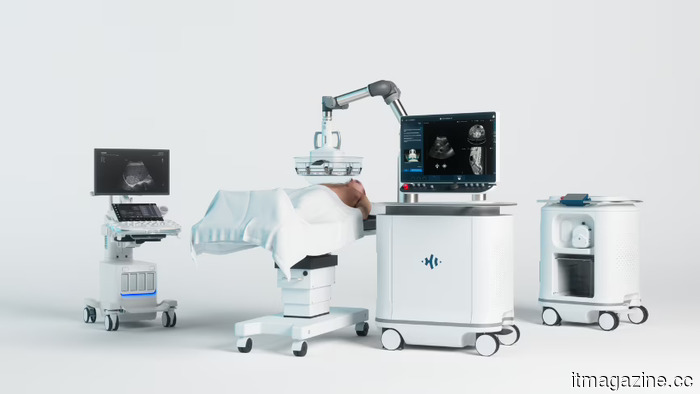 HistoSonics has obtained TFDA approval in Taiwan for its Edison Histotripsy System, boosting its expansion efforts in Asia.
The non-invasive focused ultrasound technology eliminates liver tumors without the need for surgery or radiation. Supported by Bezos Expeditions and valued at $2.25 billion, HistoSonics also filed with the FDA for kidney tumors on May 11.
HistoSonics has obtained TFDA approval in Taiwan for its Edison Histotripsy System, boosting its expansion efforts in Asia.
The non-invasive focused ultrasound technology eliminates liver tumors without the need for surgery or radiation. Supported by Bezos Expeditions and valued at $2.25 billion, HistoSonics also filed with the FDA for kidney tumors on May 11.
Sigma Computing secures $80 million in Series E funding, achieving a valuation of $3 billion, with support from Databricks, ServiceNow, and Workday ventures.
The analytics firm based in San Francisco reached an annual recurring revenue of $200 million in April, marking a year-over-year increase of double. Sigma Agents, the company's no-code AI offering, emerged as the quickest adopted feature in its history.