

Scientists have suggested an economy class approach that could reduce the cost of traveling to the moon slightly.
Reaching the Moon has just become somewhat more affordable, and scientists are quite enthusiastic about it.
It's well-known that traveling to the moon comes with a hefty price tag, largely due to fuel costs. Consequently, minimizing these expenses has been a key goal. Now, researchers appear to have discovered a method to cut fuel costs by opting for a more budget-friendly trajectory.
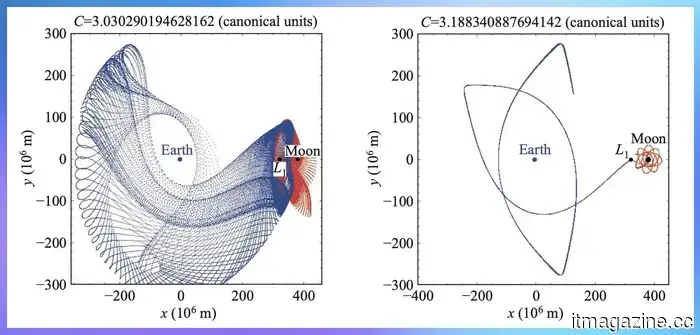
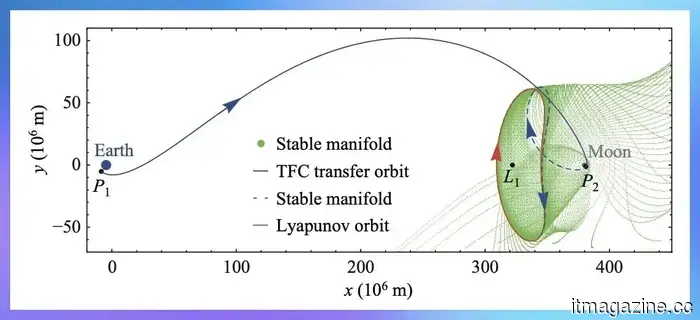
A recent study in the journal Astrodynamics has outlined a new path from Earth’s orbit to the Moon that could significantly decrease mission expenses. The solution lies in making a cosmic stop at a gravitational equilibrium point between the two celestial bodies, known as the L1 Lagrange point.
This innovative route conserves at least 58.80 m/s of fuel compared to the previously identified most efficient routes. That figure may not seem significant initially, but as lead researcher Allan Kardec de Almeida Júnior explains, “every meter per second corresponds to a substantial amount of fuel usage” in space exploration.
How was this route identified?
The research team utilized a mathematical framework called the Theory of Functional Connections, which considerably lowers the computational resources required for simulating spacecraft trajectories.
This enhanced efficiency enabled them to conduct 30 million route simulations, as opposed to just 280,000 in earlier benchmark studies. The increased number of simulations improved the likelihood of uncovering a more fuel-efficient route, which they successfully accomplished.
Astrodynamics
The most economical route ultimately utilizes the section of the gravitational corridor that approaches the Moon initially, which seems counterintuitive given that the spacecraft is departing from Earth.
The reason for this effectiveness is that coming close to the Moon provides the spacecraft with a gravity assist, minimizing the fuel needed to achieve the intermediate orbit.
What are the benefits of stopping at the L1 Lagrange point?
Once a spacecraft reaches the L1 Lagrange point, it can maintain its position indefinitely through a control system, allowing it to wait until it’s time to proceed to lunar orbit. In contrast to a direct path, this intermediate orbit allows for constant communication with both Earth and the Moon, which presents a significant benefit.
Astrodynamics
The researchers noted that incorporating the Sun’s gravitational effects into their simulations could lead to even greater fuel savings, although this would necessitate specific launch date planning.
With a multitude of space missions anticipated soon, a more fuel-efficient route translates to increased payload capacity, reduced costs, and ultimately, a greater number of missions that could significantly enhance our success rate.
Rachit is an experienced tech journalist with over seven years spent covering the consumer technology sector.
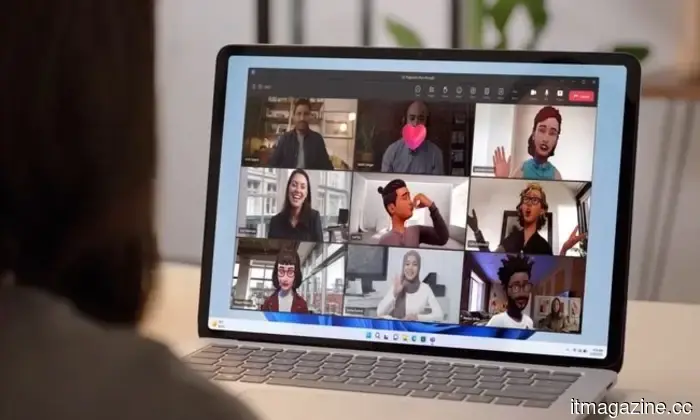
Microsoft is discontinuing the Together Mode in Teams in favor of more practical and straightforward layouts.
Microsoft Teams is phasing out one of its more distinct meeting features, which may actually be a positive change. The company has announced the retirement of Together Mode in Teams as it shifts towards simpler meeting layouts. To recap, Together Mode was launched during the surge of video calls during the pandemic, placing participants in shared virtual settings like auditoriums or classrooms. It was a charming concept at the time, but it never became the standard meeting layout for the majority.
Experts are expressing concerns that as AI becomes more advanced, we may become less intelligent.
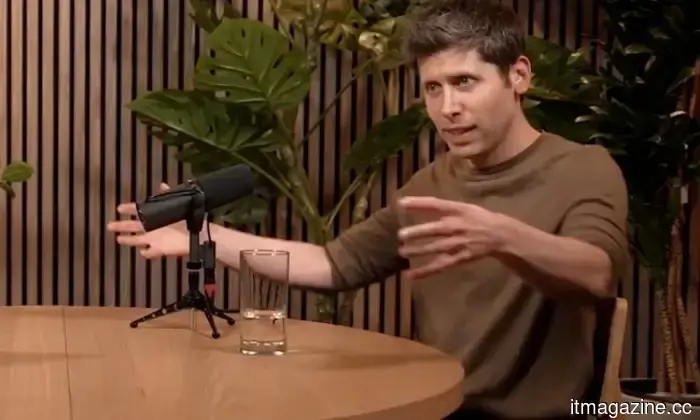
Experts indicate that while chatbots can facilitate research, relying too heavily on them risks outsourcing the cognitive processes that foster intelligence. AI now responds to inquiries so swiftly that the search itself can seem optional. This convenience has raised concerns at the Royal Observatory Greenwich, which has cautioned that immediate AI responses may undermine the curiosity, critical evaluation, and source verification that are essential for genuine knowledge.
The danger lies within its utility. Chatbots can assist individuals in testing ideas, accelerating their pace, and discovering new perspectives, but a completed answer may also disconnect users from the complex journey that solidifies understanding. When that occurs, information arrives without the effort that leads to discernment.
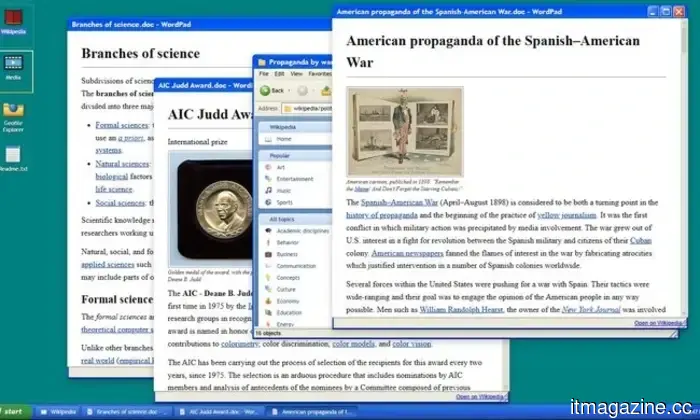
Do you long for the old PC era? This website allows you to experience Wikipedia as if it were on Windows XP.
This XP-themed Wikipedia explorer offers an experience reminiscent of a bygone era of family computers, school labs, and bulky blue title bars. Developer Sami Smith has created a browser-based Windows XP-style Wikipedia explorer that transforms categories into folders and articles into documents. It is fun, somewhat inefficient, and far more engaging than yet another AI search box added to the internet.


Other articles
 Musk's xAI had assured employees $420 for their tax information. However, two months later, there has been no payment.
xAI, founded by Elon Musk, offered staff $420 in exchange for their tax returns to use as training data for Grok before the April 15 deadline. However, two months later, Bloomberg reports that the payments have yet to be processed.
Musk's xAI had assured employees $420 for their tax information. However, two months later, there has been no payment.
xAI, founded by Elon Musk, offered staff $420 in exchange for their tax returns to use as training data for Grok before the April 15 deadline. However, two months later, Bloomberg reports that the payments have yet to be processed.
 Google has sold so much TPU capacity that its own researchers are now waiting their turn for the remaining resources.
Google's TPU framework supports partnerships with Anthropic and Meta. According to Bloomberg, this level of success has turned internal compute access at Google and DeepMind into a highly sought-after asset.
Google has sold so much TPU capacity that its own researchers are now waiting their turn for the remaining resources.
Google's TPU framework supports partnerships with Anthropic and Meta. According to Bloomberg, this level of success has turned internal compute access at Google and DeepMind into a highly sought-after asset.
 NextEra has reached a $67 billion all-stock agreement to acquire Dominion, marking the largest acquisition in the power industry to date.
NextEra Energy has reached an agreement to purchase Dominion Energy for approximately $67 billion in an all-stock transaction, marking the biggest acquisition in the power sector to date.
NextEra has reached a $67 billion all-stock agreement to acquire Dominion, marking the largest acquisition in the power industry to date.
NextEra Energy has reached an agreement to purchase Dominion Energy for approximately $67 billion in an all-stock transaction, marking the biggest acquisition in the power sector to date.
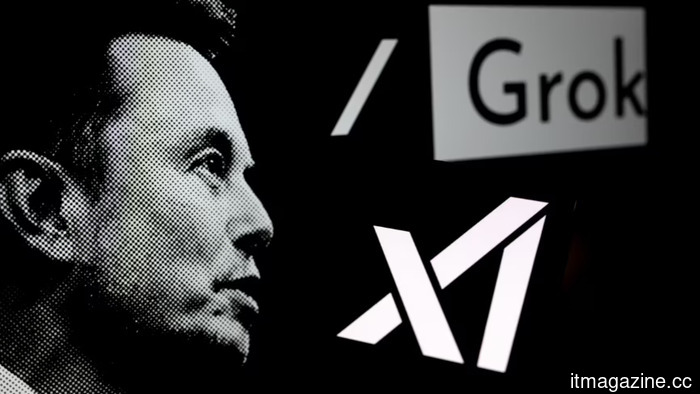 Musk's xAI had assured employees of $420 for their tax information. However, two months later, there has been no payment.
La xAI de Elon Musk ofreció a los empleados $420 para entregar sus declaraciones de impuestos como datos de entrenamiento para Grok antes de la fecha límite del 15 de abril. Dos meses después, Bloomberg informa que los pagos aún no se han realizado.
Musk's xAI had assured employees of $420 for their tax information. However, two months later, there has been no payment.
La xAI de Elon Musk ofreció a los empleados $420 para entregar sus declaraciones de impuestos como datos de entrenamiento para Grok antes de la fecha límite del 15 de abril. Dos meses después, Bloomberg informa que los pagos aún no se han realizado.
 Google Gemini’s updated thinking level allows you to increase its cognitive abilities.
Google's Gemini app could soon allow users to determine the depth of the AI's "thinking" prior to generating a response. Additionally, new integrations from third parties seem to be forthcoming ahead of I/O 2026.
Google Gemini’s updated thinking level allows you to increase its cognitive abilities.
Google's Gemini app could soon allow users to determine the depth of the AI's "thinking" prior to generating a response. Additionally, new integrations from third parties seem to be forthcoming ahead of I/O 2026.
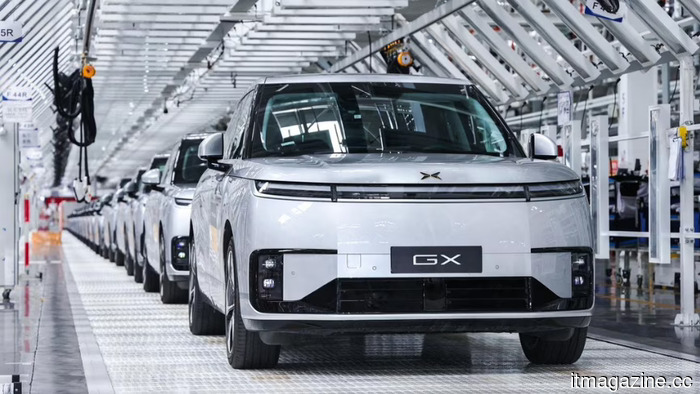 XPeng launches its robotaxi service in Guangzhou, three years after the industry leaders and ahead of any other Chinese car manufacturer.
XPeng commenced production of its robotaxi in Guangzhou on Monday, featuring VLA 2.0, four Turing chips, and aiming for a driverless target by 2027.
XPeng launches its robotaxi service in Guangzhou, three years after the industry leaders and ahead of any other Chinese car manufacturer.
XPeng commenced production of its robotaxi in Guangzhou on Monday, featuring VLA 2.0, four Turing chips, and aiming for a driverless target by 2027.
Scientists have suggested an economy class approach that could reduce the cost of traveling to the moon slightly.
Researchers have discovered a more economical method for launching spacecraft to the Moon by utilizing a gravitational sweet spot as a pit stop, resulting in a reduction of fuel costs by at least 58.80 m/s compared to current techniques.