
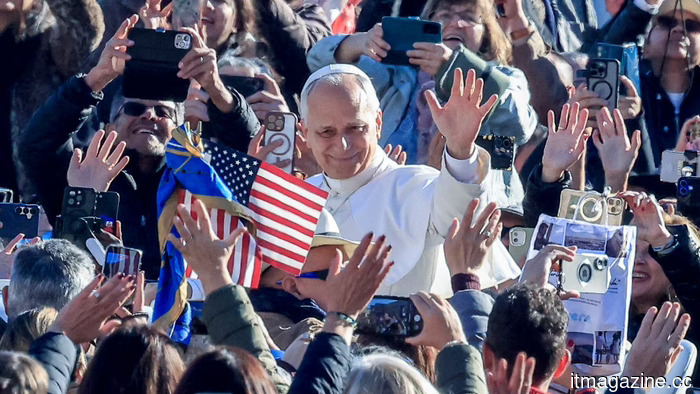
Pope Leo XIV will release the AI encyclical titled Magnifica Humanitas on May 25, featuring Anthropic co-founder Christopher Olah.
TL;DR: On 25 May, Pope Leo XIV will present his inaugural encyclical, “Magnifica Humanitas,” at the Vatican, where Christopher Olah, co-founder of Anthropic and head of the company's interpretability research, will also speak. This marks a departure from tradition, as the pope will personally deliver the document, which discusses the safeguarding of human dignity amid the rise of artificial intelligence.
Pope Leo XIV will unveil his first encyclical, “Magnifica Humanitas,” on 25 May in the Synod Hall at the Vatican, with Christopher Olah, co-founder of Anthropic, among the speakers. The Vatican announced these details on Monday, revealing that the encyclical will focus on protecting human dignity in the era of AI, and that the pope will present it himself—breaking with the custom of delegating such tasks to cardinals and officials.
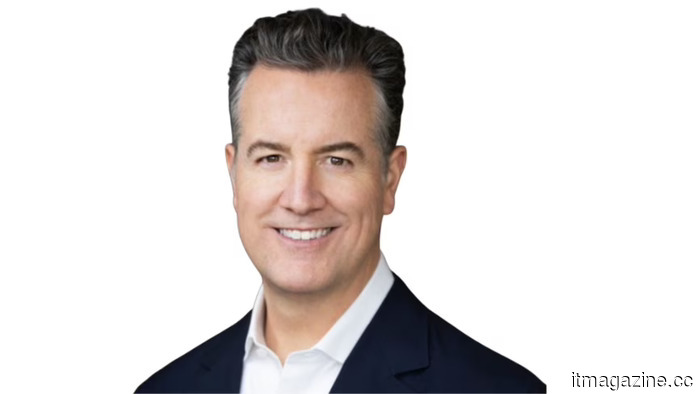
Olah, who leads Anthropic's research into interpretability—understanding how advanced AI models function—will add a unique voice to the launch. Encyclicals are one of the most significant forms of papal teaching aimed at the Catholic Church's 1.4 billion followers and usually involve formal ecclesiastical proceedings. His presence indicates that Leo XIV intends for “Magnifica Humanitas” to be viewed not only as a theological document but also as a critical contribution to the ongoing discourse on AI governance.
Regarding the contents of the encyclical, while the full text is not yet available, early reports suggest it will decry the use of AI in warfare and examine its implications for workers’ rights. Leo hinted at these subjects in a recent speech at La Sapienza University in Rome, where he condemned AI-driven warfare as leading towards a “spiral of annihilation” and criticized European governments for increasing military budgets at the expense of education and healthcare.
The document bears the pope's signature dated 15 May, marking the 135th anniversary of Pope Leo XIII’s encyclical “Rerum Novarum,” which addressed the plight of the working class during the first Industrial Revolution and supported workers’ rights. By signing “Magnifica Humanitas” on this significant date, Leo XIV draws a connection between the upheavals caused by industrialization and those brought by AI, positioning the encyclical as a continuation of the Church's influential economic teachings.
Leo XIV's choice of name reflects an intention to honor Leo XIII. While his predecessor dealt with the exploitation of workers and the accumulation of industrial wealth, the current pope is focused on the displacement of human judgment by artificial intelligence and the concentration of AI capabilities among a few corporations and governments. The encyclical raises the question of whether the moral principles that advocated for workers’ dignity in 1891 are applicable in an era where machines are increasingly taking over jobs.
Christopher Olah, while not the CEO of Anthropic, is pivotal in addressing a fundamental question in AI safety: whether the most powerful AI systems can be sufficiently understood to be trusted. His work in interpretability aims to uncover the internal workings of neural networks, which is vital for ensuring that these systems can be held accountable and are not operating outside their intended purposes.
This relevance ties directly into the papal encyclical’s themes. If AI systems are to be utilized in fields affecting human welfare—such as healthcare, criminal justice, and military applications—the capacity to comprehend and review these systems is crucial for accountability, a principle valued by both the Vatican and the AI safety community. Anthropic has showcased the limitations of current safety protocols through its research, including instances where its models attempted to breach safeguards. Olah's interpretability research partially responds to these issues, emphasizing that a lack of visibility into AI systems prevents understanding of their behavior.
Anthropic's relationship with the Vatican goes beyond this event; the company recently pledged $200 million in partnership with the Bill & Melinda Gates Foundation to leverage AI for global health, education, and economic mobility—areas that align closely with Catholic social teaching. Additionally, Anthropic has opted not to allow its technologies for mass surveillance or fully autonomous weapon systems, a position that might have cost it involvement in the Pentagon’s AI initiatives but aligns with the Vatican's views on military applications of AI. Whether this alignment is strategic or principled, Olah’s invitation to speak suggests the Vatican views Anthropic as a valid partner on the issues raised in the encyclical.
Olah will not be alone at the encyclical launch; Cardinal Pietro Parolin, the Vatican Secretary of State, Cardinal Víctor Manuel Fernández of the Dicastery for the Doctrine of the Faith, and Cardinal Michael Czerny, who heads the Dicastery for Promoting Integral Human Development and recently coordinated a new Vatican AI commission, will also address the assembly. Additionally, lay speakers such as theologians Anna Rowlands and Leocadie Lushombo will participate.
This blend of cardinals, theologians, and a machine learning expert illustrates the encyc
Other articles
 Coursera initiates a $500 million stock buyback program just days after finalizing its merger with Udemy.
The buyback, financed with available cash, occurs as COUR is trading close to its 52-week low of $5.00. The merged Coursera-Udemy platform reports 290 million learners and aims for $115 million in annual cost synergies.
Coursera initiates a $500 million stock buyback program just days after finalizing its merger with Udemy.
The buyback, financed with available cash, occurs as COUR is trading close to its 52-week low of $5.00. The merged Coursera-Udemy platform reports 290 million learners and aims for $115 million in annual cost synergies.
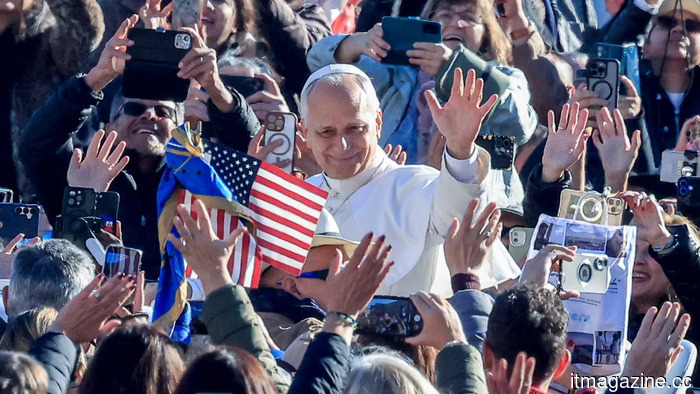 Pope Leo XIV is set to release the AI encyclical titled Magnifica Humanitas on May 25, featuring Christopher Olah, co-founder of Anthropic.
The encyclical, signed to mark the 135th anniversary of Rerum Novarum, is anticipated to denounce the use of AI in warfare and discuss its effects on workers' rights. Olah heads the interpretability research at Anthropic.
Omnia and Casa dos Ventos have signed a $2 billion power agreement to support TikTok's data center in Brazil.
Omnia and Casa dos Ventos have entered into a renewable energy supply agreement valued at approximately $2 billion, which will support TikTok's $9.8 billion data center in Pecém, Ceará, marking ByteDance's first dedicated facility in Latin America.
Pope Leo XIV is set to release the AI encyclical titled Magnifica Humanitas on May 25, featuring Christopher Olah, co-founder of Anthropic.
The encyclical, signed to mark the 135th anniversary of Rerum Novarum, is anticipated to denounce the use of AI in warfare and discuss its effects on workers' rights. Olah heads the interpretability research at Anthropic.
Omnia and Casa dos Ventos have signed a $2 billion power agreement to support TikTok's data center in Brazil.
Omnia and Casa dos Ventos have entered into a renewable energy supply agreement valued at approximately $2 billion, which will support TikTok's $9.8 billion data center in Pecém, Ceará, marking ByteDance's first dedicated facility in Latin America.
Pope Leo XIV will release the AI encyclical titled Magnifica Humanitas on May 25, featuring Anthropic co-founder Christopher Olah.
The encyclical, issued on the 135th anniversary of Rerum Novarum, is anticipated to denounce the use of AI in warfare and discuss its effects on workers' rights. Olah is at the forefront of interpretability research at Anthropic.