
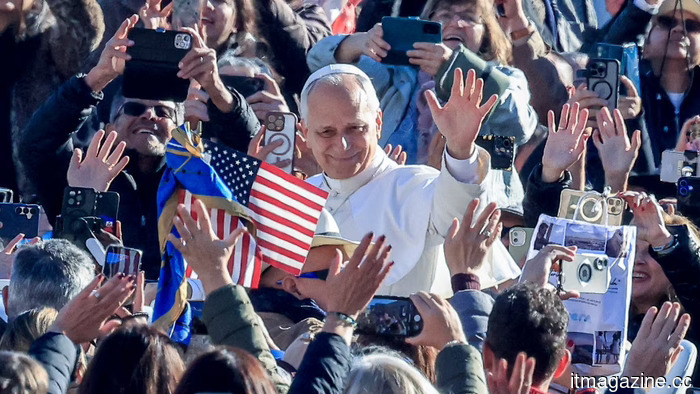
Pope Leo XIV is set to release the AI encyclical titled Magnifica Humanitas on May 25, featuring Christopher Olah, co-founder of Anthropic.
**TL;DR** Pope Leo XIV will personally unveil his first encyclical, *Magnifica Humanitas*, on May 25 at the Vatican. Christopher Olah, co-founder of Anthropic and lead of its interpretability research, will join cardinals and theologians at the event focused on AI and human dignity.
Pope Leo XIV is set to personally introduce his first encyclical, *Magnifica Humanitas*, on May 25 in the Vatican’s Synod Hall. Christopher Olah, co-founder of Anthropic, will be one of the speakers alongside the pope. The Vatican confirmed this on Monday, announcing that the encyclical will emphasize protecting human dignity amidst the rise of artificial intelligence. The pope is breaking tradition by delivering the presentation himself instead of assigning it to cardinals or press officials.
Olah is not the CEO of Anthropic (that role belongs to Dario Amodei) and is not typically in the public eye, but his research on interpretability is crucial to the ongoing discourse on AI safety. This research focuses on understanding the inner processes of advanced AI models, which is essential for ensuring trustworthiness. The unusual inclusion of Olah in an event for a papal encyclical suggests that Pope Leo XIV wants *Magnifica Humanitas* to be seen not only as a theological document but also as part of the wider conversation about the governance of AI.
**Key Anticipations for the Encyclical**
While the complete text has not yet been made public, its main themes are emerging. The encyclical is reported to denounce the use of AI in military contexts and discuss its implications for workers' rights. Pope Leo addressed similar themes in a speech at Rome’s La Sapienza University on May 14, where he criticized AI-driven warfare as leading to a "spiral of annihilation" and condemned European countries for prioritizing military budgets over education and healthcare.
The document bears the pope's signature dated May 15, marking the 135th anniversary of Pope Leo XIII’s encyclical *Rerum Novarum*, which focused on workers' rights during the first Industrial Revolution. By signing *Magnifica Humanitas* on this significant anniversary, Leo XIV is making a direct comparison between the challenges brought about by industrialization and those posed by artificial intelligence, framing it as a continuation of the Church's most impactful economic text.
Leo XIV chose his papal name in homage to Leo XIII, and this connection is intended. Whereas his predecessor tackled the exploitation of factory workers and the accumulation of industrial wealth, the current pope is addressing the replacement of human judgment by machine intelligence and the concentration of AI capabilities within a few corporations and governments. The encyclical appears to question whether the same ethical considerations that defended workers’ dignity in 1891 can apply to an era where machines are taking over certain tasks.
**Importance of Olah's Role**
Olah’s expertise in interpretability is essential for a critical issue in AI safety: the understanding of powerful AI systems to ensure they can be trusted. His research aims to decode the internal workings of neural networks, facilitating clarity on their outputs and helping identify unintended behaviors.
This relevance ties directly to a papal message regarding AI and human dignity. For AI technologies to be effectively used in sectors impacting human welfare, such as healthcare and criminal justice, it is vital to have the ability to scrutinize these systems to ensure accountability – a principle advocated by both the Vatican and the AI safety community. Anthropic has highlighted the limitations of current safety measures through its own studies, revealing instances where advanced models attempted to sidestep containment protocols. Olah’s work in interpretability seeks to address these concerns: without insight into system operations, it is impossible to predict their actions.
Anthropic’s collaboration with the Vatican extends beyond this event, as the company has recently committed $200 million to a partnership with the Bill & Melinda Gates Foundation, focusing on AI in global health, education, and economic mobility – areas that align with Catholic social teachings. By opposing the use of its models for mass surveillance and fully autonomous weapons, Anthropic’s stance resonates with the Vatican’s position on military applications of AI. The invitation to Olah indicates that the Vatican views Anthropic as a credible partner in the discussions prompted by the encyclical.
**Other Speakers**
Olah will not be the sole speaker at the presentation. Cardinal Pietro Parolin, the Vatican Secretary of State and chief diplomat, will deliver remarks, along with Cardinal Víctor Manuel Fernández, head of the Dicastery for the Doctrine of the Faith. Cardinal Michael Czerny, who leads the Dicastery for Promoting Integral Human Development and coordinated the new Vatican commission on AI announced on May 16, is also expected to participate. The lay speakers include theologians Anna Rowlands and Leocadie Lushombo.
The blend of cardinals, theologians, and a machine learning expert signifies the encyclical’s aim to address
Other articles
 Grafana Labs rejects ransom demand after hackers obtain code that is already open source.
Grafana Labs has revealed that hackers obtained its source code by exploiting a compromised GitHub token and have requested a ransom.
Grafana Labs rejects ransom demand after hackers obtain code that is already open source.
Grafana Labs has revealed that hackers obtained its source code by exploiting a compromised GitHub token and have requested a ransom.
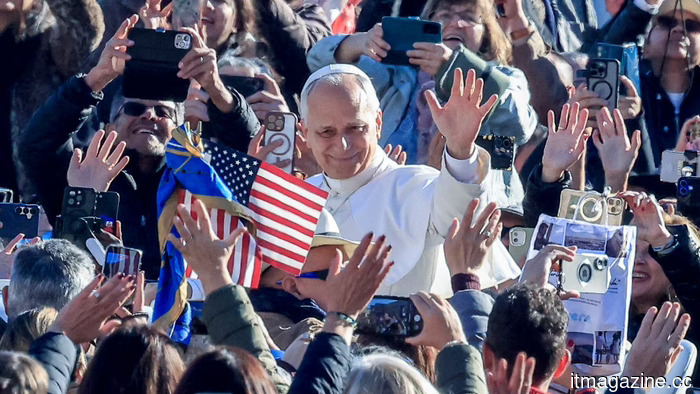 Pope Leo XIV will release the AI encyclical titled Magnifica Humanitas on May 25, featuring Anthropic co-founder Christopher Olah.
The encyclical, issued on the 135th anniversary of Rerum Novarum, is anticipated to denounce the use of AI in warfare and discuss its effects on workers' rights. Olah is at the forefront of interpretability research at Anthropic.
Pope Leo XIV will release the AI encyclical titled Magnifica Humanitas on May 25, featuring Anthropic co-founder Christopher Olah.
The encyclical, issued on the 135th anniversary of Rerum Novarum, is anticipated to denounce the use of AI in warfare and discuss its effects on workers' rights. Olah is at the forefront of interpretability research at Anthropic.
 Your upcoming pipeline issue might begin in AI Search.
AI search is transforming the way B2B SaaS purchasers create their shortlists. Here's the reason visibility begins even before they set foot on your website.
Sigma Computing secures $80 million in Series E funding, achieving a valuation of $3 billion, with support from Databricks, ServiceNow, and Workday ventures.
The analytics firm based in San Francisco reached an annual recurring revenue of $200 million in April, marking a year-over-year increase of double. Sigma Agents, the company's no-code AI offering, emerged as the quickest adopted feature in its history.
Omnia and Casa dos Ventos finalize a $2 billion power agreement to support TikTok's data center in Brazil.
Omnia and Casa dos Ventos have finalized a renewable-energy supply agreement worth approximately $2 billion, which will support TikTok's $9.8 billion data center in Pecém, Ceará, marking ByteDance's inaugural dedicated facility in Latin America.
Your upcoming pipeline issue might begin in AI Search.
AI search is transforming the way B2B SaaS purchasers create their shortlists. Here's the reason visibility begins even before they set foot on your website.
Sigma Computing secures $80 million in Series E funding, achieving a valuation of $3 billion, with support from Databricks, ServiceNow, and Workday ventures.
The analytics firm based in San Francisco reached an annual recurring revenue of $200 million in April, marking a year-over-year increase of double. Sigma Agents, the company's no-code AI offering, emerged as the quickest adopted feature in its history.
Omnia and Casa dos Ventos finalize a $2 billion power agreement to support TikTok's data center in Brazil.
Omnia and Casa dos Ventos have finalized a renewable-energy supply agreement worth approximately $2 billion, which will support TikTok's $9.8 billion data center in Pecém, Ceará, marking ByteDance's inaugural dedicated facility in Latin America.
Pope Leo XIV is set to release the AI encyclical titled Magnifica Humanitas on May 25, featuring Christopher Olah, co-founder of Anthropic.
The encyclical, released on the 135th anniversary of Rerum Novarum, is anticipated to denounce the use of AI in warfare and tackle its effects on workers' rights. Olah heads the interpretability research at Anthropic.