
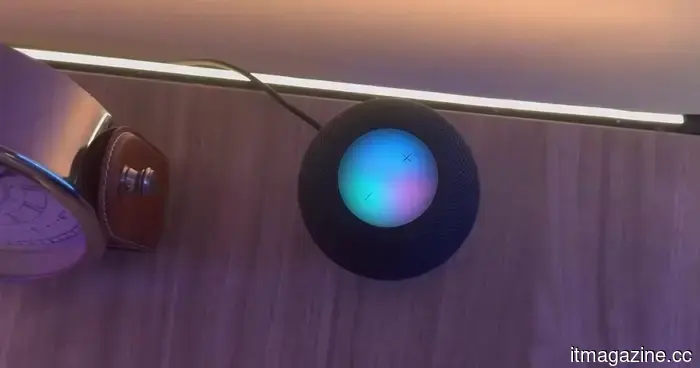
In 2026, the HomePod mini remains a sensible choice if you are already part of Apple's ecosystem.
The HomePod mini debuted as Apple’s compact and budget-friendly smart speaker, and on the surface, not much has changed since its initial release. The design remains unchanged, the price has been stable, and in 2026, it still bears a striking resemblance to the model that Apple launched years ago.
However, the landscape for smart speakers has shifted significantly. Rather than focusing solely on specifications, the primary question now is whether the HomePod mini fits into daily use, especially as competitors advance with smarter assistants, enhanced versatility, and superior audio at comparable prices.
The design is still highly effective
Faiz Aly
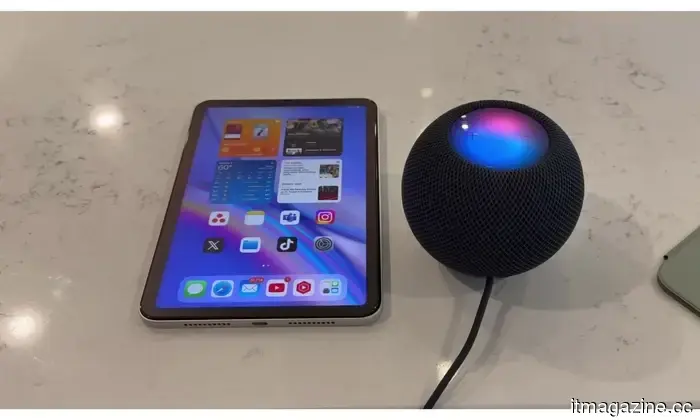
The HomePod mini’s rounded design continues to outperform many other smart speakers in its price category. Its mesh fabric covering, compact size, and understated top interface feel purposeful rather than overly ornate, making it suitable for placement in various areas of a home without attracting too much attention. Its smaller dimensions are also appealing, allowing it to sit comfortably on a desk, nightstand, kitchen counter, or shelf, while the variety of color options enables it to blend more seamlessly than larger speakers or soundbars.
The sound exceeds expectations for its size
Despite its small stature, the HomePod mini delivers surprisingly robust performance. While it cannot replace a dedicated soundbar or a larger audio system, it still provides clear vocals, balanced mids, and sufficient bass to prevent it from sounding weak or excessively sharp. Notably, the audio quality remains consistent across different media types, whether it’s music, podcasts, movies, or TV shows, making it practical for everyday listening instead of merely casual use.
This quality becomes even more apparent in smaller environments, where the HomePod mini proves to be far more proficient than one might assume from its size. While it performs well alone, the experience significantly improves when paired with an Apple TV 4K.
Connecting with an Apple TV enhances the experience
The HomePod mini is much more appealing for those who already possess an Apple TV 4K, as it can serve as the default speaker for movies, streaming services, and general viewing. The benefit here extends beyond sound quality to include simplicity, as setup is minimal and the audio remains synchronized without the lag or connection issues that sometimes afflict wireless speaker configurations.
Using two HomePod minis enhances the experience even further. Stereo pairing creates distinct left and right channel separation, a broader soundstage, and more immersive audio that approaches a compact home theater experience rather than a typical smart speaker setup. In smaller spaces, this can entirely eliminate the need for a separate soundbar.
Apple's ecosystem remains a key advantage
Faiz Aly
The HomePod mini is particularly beneficial for users of Apple devices because the integration with the ecosystem continues to be its standout feature. AirPlay operates immediately, audio handoff between devices feels smooth, and features like intercom and smart home controls blend seamlessly into the wider Apple experience.
This convenience alters how frequently the speaker is utilized throughout the day. Simple tasks such as checking the weather, managing lights, setting alarms, or transferring audio between devices occur with minimal hassle, making the HomePod mini feel less like an isolated speaker and more like a component of a larger system.
Real limitations persist
However, the HomePod mini remains closely linked to Apple’s ecosystem, which is one of its major drawbacks. There is limited support for non-Apple services, traditional Bluetooth capabilities are missing, and Siri still lags behind competitors in terms of intelligence and broader integrations.
This makes the experience less recommendable for users outside the Apple ecosystem, particularly as rival smart speakers increasingly offer more capable voice assistants and better compatibility across platforms. While Apple excels in ecosystem integration, that edge becomes less significant if other devices are not connected to it.
Is it still worth purchasing?
For Apple users, the answer is likely still affirmative. The HomePod mini continues to be straightforward, compact, and dependable, seamlessly fitting into Apple’s broader ecosystem approach even after several years. If you already own an Apple TV 4K or aim to use two HomePod minis as a stereo pair, the overall experience becomes considerably more enticing for smaller living environments.
For everyone else, the decision isn’t as clear-cut since the compromises are more noticeable outside Apple’s ecosystem. Given ongoing speculation about a refreshed version possibly coming later this year, it might also be wise to wait and see what direction Apple takes with the HomePod mini next.
Other articles
 Gemini is set to take flight on your phone with its proactive capabilities.
A recent leak indicates that Google might be developing a more advanced version of Gemini capable of handling inbox clutter, producing meeting summaries, and even creating personalized AI skills.
Gemini is set to take flight on your phone with its proactive capabilities.
A recent leak indicates that Google might be developing a more advanced version of Gemini capable of handling inbox clutter, producing meeting summaries, and even creating personalized AI skills.
 Impressed by AI agents that use computers? Studies indicate they are "digital disasters," even when it comes to simple tasks.
Recent research from UC Riverside discovered that AI agents used on computers frequently proceed with unsafe or illogical tasks, prompting concerns about the readiness of current desktop agents for sensitive daily workflows.
Impressed by AI agents that use computers? Studies indicate they are "digital disasters," even when it comes to simple tasks.
Recent research from UC Riverside discovered that AI agents used on computers frequently proceed with unsafe or illogical tasks, prompting concerns about the readiness of current desktop agents for sensitive daily workflows.
 The shocking lawsuit against OpenAI alleges that your conversations with ChatGPT were shared with Google and Meta.
A recent class action lawsuit alleges that OpenAI shared ChatGPT prompts and user identifiers with trackers from Google and Meta, highlighting new privacy issues related to private conversations with the chatbot.
The shocking lawsuit against OpenAI alleges that your conversations with ChatGPT were shared with Google and Meta.
A recent class action lawsuit alleges that OpenAI shared ChatGPT prompts and user identifiers with trackers from Google and Meta, highlighting new privacy issues related to private conversations with the chatbot.
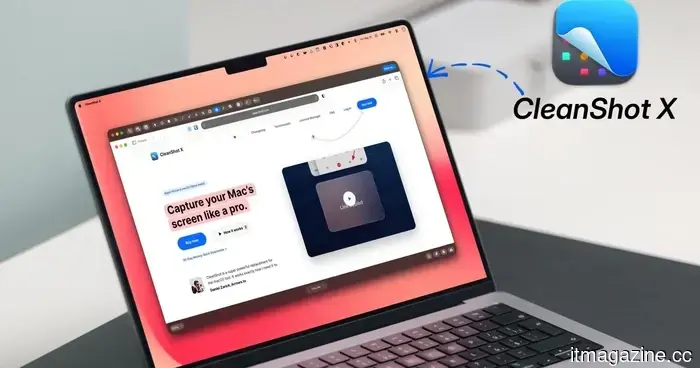 CleanShot X is my top Mac utility. Here are 8 features that will persuade you as well.
macOS includes a basic screenshot tool that covers the essentials. However, when more advanced options are required, it lacks depth. CleanShot X is the enhancement your Mac needs, and these 8 features demonstrate its superiority.
CleanShot X is my top Mac utility. Here are 8 features that will persuade you as well.
macOS includes a basic screenshot tool that covers the essentials. However, when more advanced options are required, it lacks depth. CleanShot X is the enhancement your Mac needs, and these 8 features demonstrate its superiority.
 AI shouldn't decide for you, but this one will indicate when you're making a poor choice.
A new AI tool developed by researchers at Cornell assists you in improving decision-making by identifying inconsistencies between your expressed values and your real choices.
AI shouldn't decide for you, but this one will indicate when you're making a poor choice.
A new AI tool developed by researchers at Cornell assists you in improving decision-making by identifying inconsistencies between your expressed values and your real choices.
 AI shouldn't decide for you, but this one will indicate when you're making a poor choice.
A novel AI tool developed by researchers at Cornell assists you in making improved decisions by identifying inconsistencies between your declared values and your real choices.
AI shouldn't decide for you, but this one will indicate when you're making a poor choice.
A novel AI tool developed by researchers at Cornell assists you in making improved decisions by identifying inconsistencies between your declared values and your real choices.
In 2026, the HomePod mini remains a sensible choice if you are already part of Apple's ecosystem.
The HomePod mini has seen little change throughout the years, yet it continues to deliver impressive sound quality, smooth integration with Apple devices, and an unexpectedly pleasant experience when used with the Apple TV 4K. However, the downside is that many of its top features are most effective within Apple’s ecosystem.