
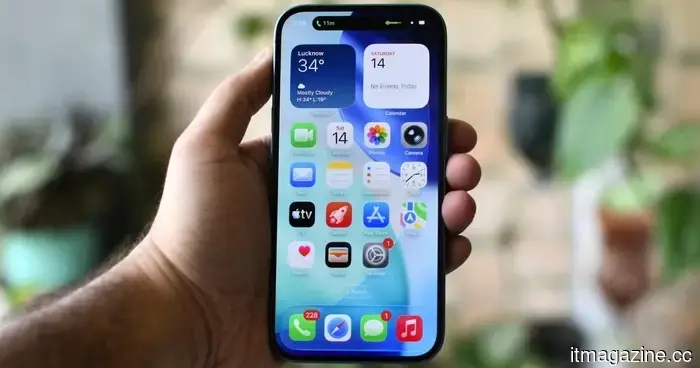
Following issues with Siri, Apple intends to offer AI agents on the App Store.
Apple is currently dealing with an issue regarding Siri that isn’t directly related to the assistant itself. With WWDC 2026 approaching, The Information reports that the company is actively trying to persuade developers to connect their applications with the revamped Siri set to arrive in iOS 27.
The core of the redesigned Siri, known as App Intents, is an API that enables Siri to perform actions within third-party applications without the need for users to open them, which seems quite promising. Nonetheless, some of the biggest developers in the world are hesitating to adopt it, not due to complexity, but because Apple has left the possibility open for future charges.
Why are developers reluctant to adopt the new Siri?
Apple has allegedly informed developers not to impose a commission during the initial phases of Siri integration. However, the company has not excluded the chance of introducing such a charge later, once the APIs are established and Siri functions smoothly. This appears to be more of a legal safeguard than a genuine reassurance.
Among the Chinese companies being approached by Apple are Baidu, Alibaba, and Tencent, and employees from these firms are feeling uncertain. The worry is that if Siri becomes the main assistant for user tasks within their apps, developers who opt for this integration may inadvertently create a new point of control for Apple over their customer interactions.
In summary, Apple seeks the ecosystem advantages of extensive Siri integration but is not committing to the commercial terms that would truly motivate developers to adopt the revamped Siri with App Intents in their applications.
The situation with Apple’s App Store AI agents is even more complicated than the Siri issue.
Additionally, the iPhone maker is reportedly working on integrating AI agents into the App Store, which could lead to problems. AI agents are capable of generating smaller apps instantly to perform tasks, which presents a significant challenge (according to The Information).
While the App Store publishing process may have given a nod to a parent app featuring agent capabilities, it remains unaware of what these agents might create within it. A specific example mentioned in the report involves OpenClaw, an agent system where agents malfunctioned and deleted a user’s emails.
It is believed that engineers at Apple are developing a security solution to constrain the behavior of AI agents while ensuring they remain compliant with privacy regulations. Though the company may announce the integration of AI agents during the WWDC 2026 keynote, it might not be completely prepared for it.
WWDC is just around the corner.
In the most recent earnings call, Tim Cook briefly acknowledged the trend of AI agents, noting that consumers are purchasing the Mac mini and Mac Studio to operate local agents. Thus, Apple recognizes the popularity of this trend but has not yet determined how to create a profitable product or service without negatively impacting other aspects.
The ambiguity regarding fees seems to stem from Apple’s own decisions. The company established the App Store with clear commission structures that developers comprehended, although they do not favor them. Leaving the commercial aspects of Siri integration ambiguous invites delays, a situation Apple cannot afford, especially following The Android Show 2026.
Moreover, the App Store AI agent dilemma is arguably more severe. Apple has invested years in building the most regulated app marketplace globally, yet somehow plans to incorporate AI agents capable of spontaneously creating unapproved apps. At WWDC 2026, Apple must address both of these challenges for the benefit of stakeholders and end users.



Other articles
 The CEO of Polestar attributes the increase in electric vehicle demand to "pump anxiety" resulting from rising fuel prices due to the war in Iran.
According to Polestar's CEO, elevated fuel prices have turned EVs into a financial matter. While EU registrations surged by 51% in March, the company's losses in Q1 increased to $383 million.
The CEO of Polestar attributes the increase in electric vehicle demand to "pump anxiety" resulting from rising fuel prices due to the war in Iran.
According to Polestar's CEO, elevated fuel prices have turned EVs into a financial matter. While EU registrations surged by 51% in March, the company's losses in Q1 increased to $383 million.
 Thrive Capital invests $100 million in Shopify, marking a unique public-market wager on AI-driven commerce.
Joshua Kushner's Thrive Capital, an investor in OpenAI and SpaceX, has acquired a $100M stake in Shopify while the stock is trading 40% below its high for the year. The rationale: AI is set to transform commerce.
Thrive Capital invests $100 million in Shopify, marking a unique public-market wager on AI-driven commerce.
Joshua Kushner's Thrive Capital, an investor in OpenAI and SpaceX, has acquired a $100M stake in Shopify while the stock is trading 40% below its high for the year. The rationale: AI is set to transform commerce.
 Palantir is experiencing a departure of investors and a rejection from the German military as its narrative begins to unravel.
Retail investors sold off $82 million in Palantir shares as they shifted their focus to memory chips, while Germany removed the company from its defense cloud initiative. Karp refers to the ongoing discussion as 'witchcraft'.
Palantir is experiencing a departure of investors and a rejection from the German military as its narrative begins to unravel.
Retail investors sold off $82 million in Palantir shares as they shifted their focus to memory chips, while Germany removed the company from its defense cloud initiative. Karp refers to the ongoing discussion as 'witchcraft'.
 Meta is experimenting with an AI bot intended to replicate the same online foolishness seen with AskGrok on X.
Meta is experimenting with an AI bot on Threads that functions similarly to Grok on X, publicly replying to user mentions within discussions.
Meta is experimenting with an AI bot intended to replicate the same online foolishness seen with AskGrok on X.
Meta is experimenting with an AI bot on Threads that functions similarly to Grok on X, publicly replying to user mentions within discussions.
 Carta introduces Carta Law following the acquisition of Avantia, marking its fourth transaction in eight months.
Carta has obtained the UK law firm Avantia to establish Carta Law, integrating AI-driven legal and compliance solutions into its private capital ERP. This marks the fourth acquisition since October 2025.
Carta introduces Carta Law following the acquisition of Avantia, marking its fourth transaction in eight months.
Carta has obtained the UK law firm Avantia to establish Carta Law, integrating AI-driven legal and compliance solutions into its private capital ERP. This marks the fourth acquisition since October 2025.
 Flo Health introduces perimenopause resources as a survey reveals that 66% of women felt better equipped for puberty.
Flo Health's new perimenopause suite aims at a user base of 80 million, offering symptom assessments, timeline monitoring, and relief solutions. A Wakefield survey revealed that the majority of women feel less equipped to handle perimenopause compared to puberty.
Flo Health introduces perimenopause resources as a survey reveals that 66% of women felt better equipped for puberty.
Flo Health's new perimenopause suite aims at a user base of 80 million, offering symptom assessments, timeline monitoring, and relief solutions. A Wakefield survey revealed that the majority of women feel less equipped to handle perimenopause compared to puberty.
Following issues with Siri, Apple intends to offer AI agents on the App Store.
Developers are skeptical about Apple's commitment to their Siri commission. Apple seems unsure about how to safely approve AI agents. With WWDC just three weeks away, a resolution is needed.