
Anthropic partners with the Gates Foundation, pledging $200 million to implement AI in global health, education, and agriculture.
Anthropic and the Gates Foundation have pledged $200 million over four years to support AI initiatives in global health, life sciences, education, and economic mobility. Their partnership will utilize Claude to enhance vaccine research for neglected diseases, develop literacy tools for sub-Saharan Africa and India, and provide public benchmarks and datasets. This commitment is four times larger than OpenAI’s $50 million deal with the Gates Foundation announced at Davos in January.
Anthropic is engaging in this partnership with the Bill & Melinda Gates Foundation, marking the largest collaboration of its kind between an AI firm and a global philanthropic organization. The funding, which combines grant money, Claude usage credits, and technical assistance, aims to support initiatives in global health, life sciences, education, and economic mobility, collaborating with partners in both the United States and developing nations. Anthropic will contribute through engineering staff time and API credits, while the Gates Foundation will offer grant funding, program design, and field expertise.
This partnership signals a significant move for Anthropic, which is nearing a $900 billion valuation, as it seeks to develop a meaningful non-commercial division alongside its enterprise operations. The company’s Beneficial Deployments team already provides discounted access to Claude for nonprofits and educational institutions; however, this Gates Foundation collaboration represents a major expansion beyond the $50 million partnership that OpenAI announced with the same foundation for AI deployment in African health clinics.
The primary focus of the initiative is global health. A significant portion of the $200 million will be allocated to enhancing health outcomes in low- and middle-income countries, where approximately 4.6 billion people lack access to essential health services, according to the World Health Organization. The initiatives will cover three main areas: expediting drug and vaccine development, aiding governments in leveraging health data for quicker decision-making, and supporting frontline health workers.
In research, scientists will utilize Claude to screen potential vaccine and drug candidates computationally prior to entering pre-clinical development, potentially shortening initial timelines for diseases that pharmaceutical companies have little incentive to pursue. The initial focus includes polio, HPV, and eclampsia and preeclampsia. HPV is responsible for approximately 350,000 deaths each year, with 90% occurring in low- and middle-income regions, as noted by WHO.
Anthropic will also collaborate with the Institute for Disease Modelling, part of the Gates Foundation, to enhance the accessibility of epidemiological forecasts. This institute develops models to determine the best deployment strategies for malaria and tuberculosis treatments; integrating with Claude aims to help practitioners who lack specialized modeling skills utilize these models effectively. The broader goal is to create public resources, connectors, benchmarks, and evaluation frameworks that allow any researcher or government to evaluate how AI systems perform in healthcare tasks.
In terms of education and economic mobility, the partnership will fund AI-driven tutoring tools for K-12 students in the United States, as well as literacy and numeracy applications for children in sub-Saharan Africa and India. This initiative forms part of the Global AI for Learning Alliance (GAILA), a coalition being created by Anthropic, the Gates Foundation, and other partners. The first public deliverables from this effort, including model benchmarks, datasets, and knowledge graphs aimed at ensuring the effectiveness of AI tutoring tools, are expected later in the year.
A key aspect of the education program is to enhance how AI models manage African languages. AI systems have struggled with writing and translating various languages across the continent, and Anthropic and the foundation plan to support improved data collection and labeling, which will be made available publicly to benefit the wider AI industry, not just Claude.
The economic mobility initiatives are diverse. In agriculture, Anthropic will develop crop-specific improvements to Claude and release datasets on local crops and evaluation benchmarks as public resources, targeting the approximately two billion people who rely on smallholder farming. In the U.S., the partnership will work on creating portable records of skills and certifications, offer career guidance tools for new entrants to the workforce, and develop systems that connect training program data with employment outcomes.
The partnership illustrates an intriguing intersection of Anthropic’s commercial and public-interest goals. Over the past year, the company has been building a $1.5 billion joint venture on Wall Street, acquiring a biotech startup for $400 million, and committing $100 million to a partner network heavily influenced by major consulting firms. Although the Gates Foundation deal is financially smaller than these ventures, it is the most prominent affirmation by Anthropic that AI should benefit individuals who cannot afford enterprise software licenses.
The effectiveness of the programs will rely on successful execution in environments where infrastructure, connectivity, and institutional capacity are significantly more limited than in Anthropic’s primary markets. The Gates Foundation's extensive experience in deploying health and education initiatives in the relevant countries provides a crucial asset for making the partnership feasible. Anthropic’s role involves providing technology and engineering efforts to adapt that technology.
The commitment to publish benchmarks, datasets, and evaluation tools as public goods is perhaps the most impactful aspect
Other articles
 AI shouldn't decide for you, but this one will alert you when you're about to make a poor choice.
A new AI tool developed by researchers at Cornell assists you in making improved decisions by identifying inconsistencies between your expressed values and your real choices.
AI shouldn't decide for you, but this one will alert you when you're about to make a poor choice.
A new AI tool developed by researchers at Cornell assists you in making improved decisions by identifying inconsistencies between your expressed values and your real choices.
 AI shouldn't decide for you, but this one will indicate when you're making a poor choice.
A new AI tool developed by researchers at Cornell assists you in improving decision-making by identifying inconsistencies between your expressed values and your real choices.
AI shouldn't decide for you, but this one will indicate when you're making a poor choice.
A new AI tool developed by researchers at Cornell assists you in improving decision-making by identifying inconsistencies between your expressed values and your real choices.
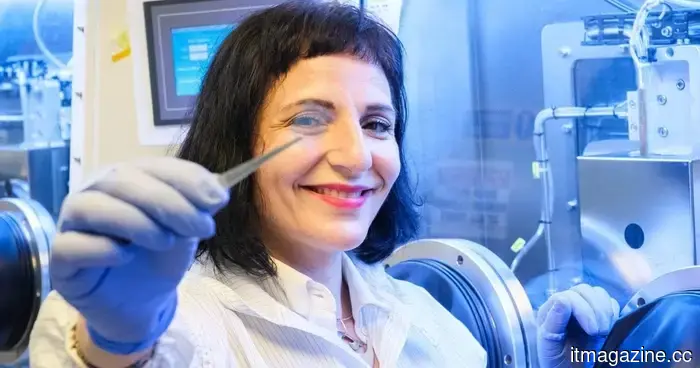 Ultra-slim transparent solar panels offer the potential for discreet charging of wearables, vehicles, and residential spaces.
Researchers at NTU have created ultra-thin transparent solar cells that have the potential to transform windows, vehicle glass, and wearables into clean energy sources while maintaining their appearance.
Ultra-slim transparent solar panels offer the potential for discreet charging of wearables, vehicles, and residential spaces.
Researchers at NTU have created ultra-thin transparent solar cells that have the potential to transform windows, vehicle glass, and wearables into clean energy sources while maintaining their appearance.
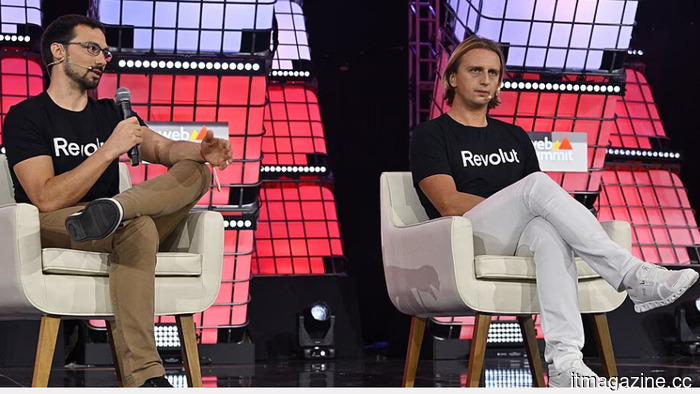 Revolut prioritizes B2B banking as it aims for a $200 billion valuation in its IPO.
CEO Nik Storonsky informed employees that business banking has now become "P0" and proposed a reward of GBP1,000 for each employee who secures new clients. Revolut Business accounted for 16% of revenue in 2025 and experienced a year-on-year growth of 53%.
Anthropic has partnered with the Gates Foundation, investing $200 million to implement AI in global health, education, and agriculture.
The four-year collaboration will support vaccine research for overlooked diseases, AI tutoring initiatives in sub-Saharan Africa, and public benchmarks. It far exceeds OpenAI's $50 million agreement with the Gates Foundation.
Revolut prioritizes B2B banking as it aims for a $200 billion valuation in its IPO.
CEO Nik Storonsky informed employees that business banking has now become "P0" and proposed a reward of GBP1,000 for each employee who secures new clients. Revolut Business accounted for 16% of revenue in 2025 and experienced a year-on-year growth of 53%.
Anthropic has partnered with the Gates Foundation, investing $200 million to implement AI in global health, education, and agriculture.
The four-year collaboration will support vaccine research for overlooked diseases, AI tutoring initiatives in sub-Saharan Africa, and public benchmarks. It far exceeds OpenAI's $50 million agreement with the Gates Foundation.
 Eighteen48 Partners has successfully completed the first tranche of EUR175 million for its European mid-market buyout fund.
Eighteen48 Partners, based in London, has successfully raised EUR175M for its first private equity fund, which aims for EUR350M. The firm focuses on mid-market buyouts facilitated by independent sponsors throughout Europe.
Eighteen48 Partners has successfully completed the first tranche of EUR175 million for its European mid-market buyout fund.
Eighteen48 Partners, based in London, has successfully raised EUR175M for its first private equity fund, which aims for EUR350M. The firm focuses on mid-market buyouts facilitated by independent sponsors throughout Europe.
Anthropic partners with the Gates Foundation, pledging $200 million to implement AI in global health, education, and agriculture.
The four-year collaboration will support vaccine research for neglected illnesses, AI education in sub-Saharan Africa, and public metrics. It significantly exceeds OpenAI's $50 million agreement with the Gates Foundation.