
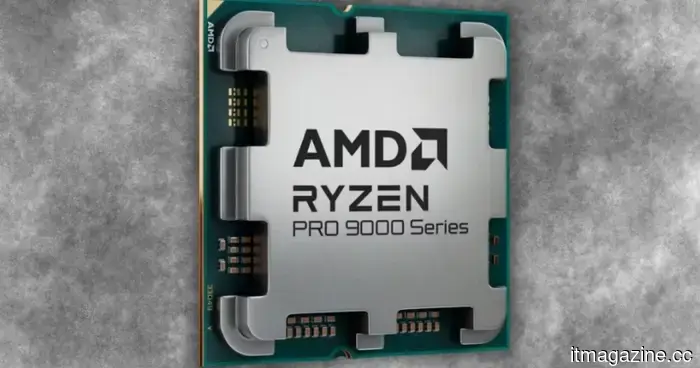
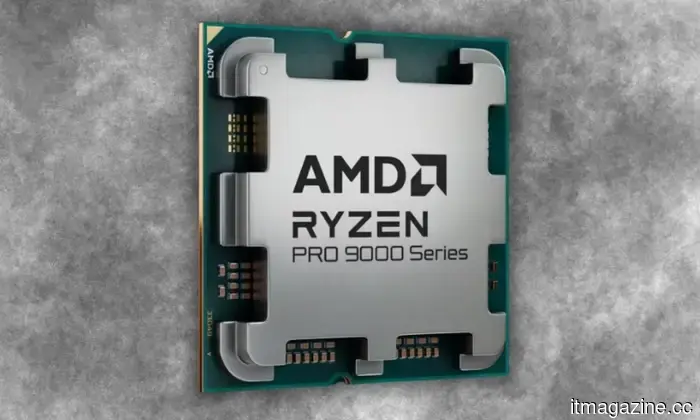
AMD introduces Zen 5 and 3D V-Cache to the Ryzen Pro 9000 series workstation processors.
AMD has spent years informing gamers that a larger cache leads to improved performance. Now, it's applying the same rationale to architects, video editors, and simulation engineers.
AMD has introduced six new Ryzen Pro 9000 Series desktop processors utilizing Zen 5 architecture, which should excite professionals using workstations, but may frustrate those who thought 3D V-Cache was only for gaming applications.
The standout product in this lineup is the Ryzen 9 Pro 9965X3D, which includes 16 cores, 32 threads, a boostable clock speed of up to 5.5 GHz, and a total L3 cache of 128 MB. While other specifications might seem standard, the 128 MB cache is notably larger than the typical 64 MB.
The additional 64 MB is derived from AMD’s 3D V-Cache technology, which stacks extra last-level cache directly on the processor die, significantly reducing data latency during intense workloads.
Below the Ryzen 9 Pro is the Ryzen 7 Pro 9755X3D, which offers eight cores, a peak clock speed of up to 5.2 GHz, and 104 MB of L3 cache. Both models achieve something unprecedented for Ryzen Pro CPUs: they exceed the 65W power limit.
The 9965X3D operates at a 170W TDP, while the 9755X3D has a peak at 120W. The remaining CPUs, which include the Ryzen 9 PRO 9965, Ryzen 9 PRO 9955, Ryzen 7 PRO 9755, and Ryzen 5 PRO 9655, are non-X3D variants with core counts ranging from six to 16 and power ratings between 65W to 170W, enabling OEMs to create a diverse range of products.
All six processors support up to 256GB of ECC DDR5 RAM, provide PCIe 5.0 connectivity, and include AMD’s Pro Technologies suite, which offers enterprise-grade security, remote manageability, and a stable long-term platform.
AMD is targeting these new Ryzen chips at the media and entertainment sector, ideal for 4K/8K video editing, architecture, and engineering applications that often involve 3D modeling, rendering, and local AI inference tasks.
Systems powered by the new Ryzen PRO 9000 Series processors are anticipated to launch in the latter half of 2026, with Lenovo confirmed to be the first OEM to release a system, the ThinkStation P4, in the third quarter of this year.
Regrettably, these chips will not be available for retail purchase, as they are exclusively for OEMs. Pricing details will also follow the usual Pro series approach and will not be publicly disclosed.
For over five years, Shikhar has steadily simplified advancements in consumer technology and reported on them...
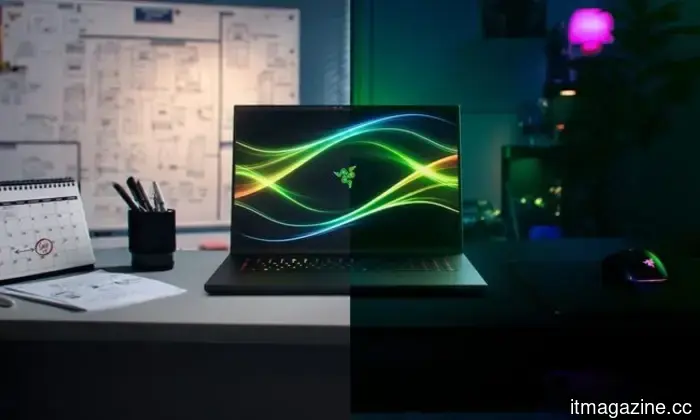
In other news, Razer has revealed the new Blade 18, which features an Arrow Lake upgrade and starts at a price of $3,999.99.
At this price point, you receive the base model equipped with an Nvidia RTX 5070 Ti, while a 5090 variant is also offered.
The official unveiling of the 2026 Blade 18 showcases configurations powered by Intel's Arrow Lake processor.
Specifically, it uses the Core Ultra 9 290HX Plus, which boasts 24 cores, a clock speed of up to 5.5GHz, a 36MB cache, and an integrated NPU capable of delivering up to 13 TOPS of computational performance.
On another note, Windows 11 is set to take care of its own driver issues, alleviating the need for users to hunt down malfunctioning drivers following a problematic update.
Microsoft appears to be honoring its commitment to improve Windows 11. Following the introduction of a new low-latency mode for quicker app launches and a fix for the RAM memory leak issue, the company is also testing a feature aimed at resolving one of its major challenges.
This new feature, named Cloud-Initiated Driver Recovery, can automatically revert a faulty driver that was installed through Windows Update.
In a different development, Apple is addressing ongoing issues with Siri and is planning to host AI agents on the App Store.
The company is grappling with a Siri-related challenge that isn’t tied to the digital assistant itself. With WWDC 2026 approaching, reports indicate that Apple is actively reaching out to developers to incorporate their applications with the new iteration of Siri expected in iOS 27.
This revamped Siri utilizes App Intents, an API that enables Siri to perform actions within third-party applications without requiring users to open them manually, which is a promising development. However, major developers are hesitant to engage, not due to complexity, but because Apple has left the possibility open for future charges.


Other articles
 Top ITGC Tools and Software for SOX Compliance in 2026
In 2026, we evaluated the top ITGC tools for SOX compliance, which included Scytale, Pathlock, ServiceNow GRC, Workiva, MetricStream, Archer, and others.
Top ITGC Tools and Software for SOX Compliance in 2026
In 2026, we evaluated the top ITGC tools for SOX compliance, which included Scytale, Pathlock, ServiceNow GRC, Workiva, MetricStream, Archer, and others.
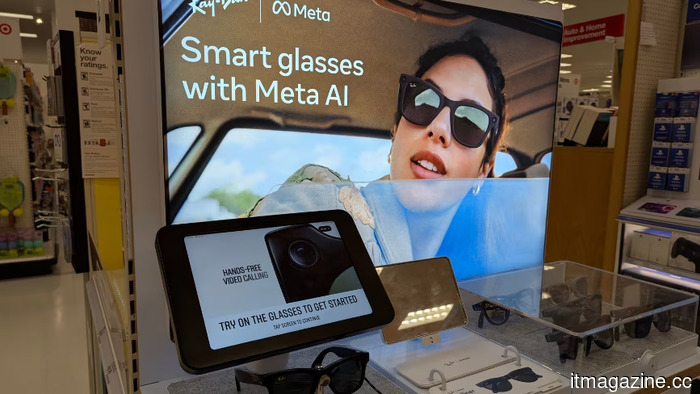 Meta's smart glasses are flying off the shelves, but those who are being recorded without their knowledge have no recourse.
Meta has sold 7 million pairs of Ray-Ban smart glasses and controls 82% of the market. There are reports of women being filmed without their knowledge, lawsuits are increasing, and companies like Apple, Google, and Snap are looking to enter the market.
Meta's smart glasses are flying off the shelves, but those who are being recorded without their knowledge have no recourse.
Meta has sold 7 million pairs of Ray-Ban smart glasses and controls 82% of the market. There are reports of women being filmed without their knowledge, lawsuits are increasing, and companies like Apple, Google, and Snap are looking to enter the market.
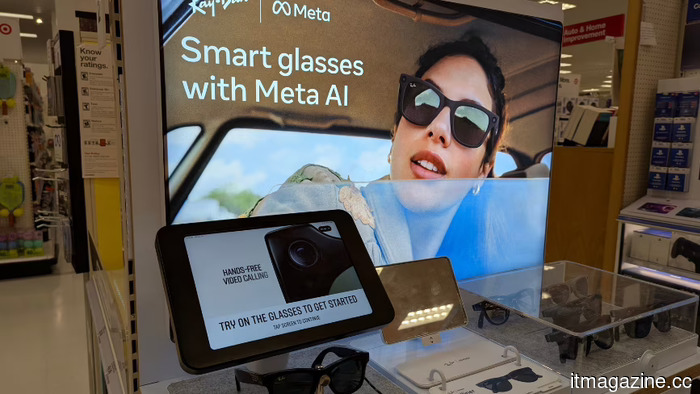 Meta's smart glasses are flying off the shelves, yet those being recorded without their knowledge have no way to respond.
Meta has sold 7 million pairs of Ray-Ban smart glasses, capturing 82% of the market. There have been incidents of women being filmed without consent, lawsuits are increasing, and companies like Apple, Google, and Snap are looking to enter the market.
Meta's smart glasses are flying off the shelves, yet those being recorded without their knowledge have no way to respond.
Meta has sold 7 million pairs of Ray-Ban smart glasses, capturing 82% of the market. There have been incidents of women being filmed without consent, lawsuits are increasing, and companies like Apple, Google, and Snap are looking to enter the market.
 I had my doubts regarding the Motorola Razr Fold, but it exceeded the limitations often associated with first-generation products quite impressively.
The Motorola Razr Fold might be the brand's initial foray into book-style foldables, yet its high-quality materials, robust hinge, and refined folding experience give it a sense of confidence that surpasses a typical first effort.
I had my doubts regarding the Motorola Razr Fold, but it exceeded the limitations often associated with first-generation products quite impressively.
The Motorola Razr Fold might be the brand's initial foray into book-style foldables, yet its high-quality materials, robust hinge, and refined folding experience give it a sense of confidence that surpasses a typical first effort.
 The six biggest banks on Wall Street eliminated 15,000 positions and reported profits of $47 billion. The CEOs ceased their pretenses.
In the first quarter of 2026, the six largest banks in the US cut 15,000 jobs while reporting profits of $47 billion. Their CEOs specifically attributed the job losses to the impact of AI. JPMorgan, Citi, Goldman Sachs, Bank of America, and Wells Fargo are now revealing...
The six biggest banks on Wall Street eliminated 15,000 positions and reported profits of $47 billion. The CEOs ceased their pretenses.
In the first quarter of 2026, the six largest banks in the US cut 15,000 jobs while reporting profits of $47 billion. Their CEOs specifically attributed the job losses to the impact of AI. JPMorgan, Citi, Goldman Sachs, Bank of America, and Wells Fargo are now revealing...
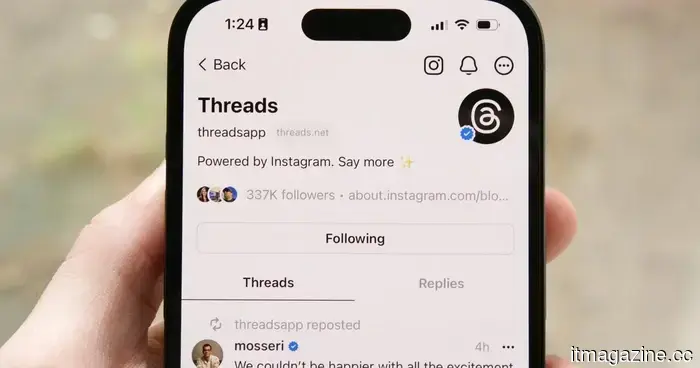 It's not possible to block Meta's AI bot on Threads. I'm not sure what we did to warrant this.
Threads users are angry after finding out that Meta's new AI chatbot cannot be blocked like other accounts on the platform.
It's not possible to block Meta's AI bot on Threads. I'm not sure what we did to warrant this.
Threads users are angry after finding out that Meta's new AI chatbot cannot be blocked like other accounts on the platform.
AMD introduces Zen 5 and 3D V-Cache to the Ryzen Pro 9000 series workstation processors.
3D V-Cache was originally seen as a gimmick for gaming. However, AMD has now made a significant entry into the workstation market with six new Ryzen PRO 9000 processors, including two featuring X3D stacking. The top model boasts 128MB of L3 cache and operates at 170W.