

Corti makes its clinical-AI platform accessible to startups as the regulatory legislation in Europe increases.
The Copenhagen-based company has announced that its Symphony model surpasses OpenAI in the HealthBench Professional benchmark and is providing credits and regulatory assistance to entrepreneurs developing healthcare AI globally.
Corti, the clinical AI company located in Copenhagen, has introduced a no-equity accelerator aimed at startups in the healthcare and life sciences sectors. This initiative makes its Symphony model stack available to entrepreneurs worldwide at a time when the regulatory expenses associated with developing medical AI in Europe are exceptionally high.
On Tuesday, the company stated that Symphony, its flagship clinical-grade model, has outperformed OpenAI in the HealthBench Professional, which serves as the benchmark for realistic clinical conversations and was launched last month alongside OpenAI's ChatGPT for Clinicians product.
The recently launched Startup Acceleration Program provides up to $5,000 in credits across the entire Symphony stack, which includes agents, medical coding, speech-to-text, and text generation, and is trained on over 1.5 million hours of clinical audio, according to the company.
Participants in the program will also gain direct access to Corti’s clinical and regulatory experts regarding the EU AI Act, MDR, and data residency issues, along with founder-led roadmap webinars and invitations to Corti events in New York, Copenhagen, London, and Berlin.
Applications are open today and will be accepted on a rolling basis, with responses expected within a week. There is no pitch requirement or equity stake involved, and the program is available to companies ranging from pre-seed to Series B in healthcare, clinical workflows, or related life sciences.
This launch occurs amid a stricter regulatory environment. In April, OpenAI made clinical AI available free to all verified healthcare professionals in the United States.
Shortly after, OpenEvidence, a clinical AI search platform valued at $12 billion that is utilized daily by about 40% of U.S. physicians, pulled out from the UK and EU, citing regulatory concerns under the EU AI Act. The obligations pertaining to high-risk systems associated with that decision will take effect on August 2, 2026, although AI integrated into CE-marked medical devices under MDR or IVDR has a different timeline specified in Article 6(1) set for August 2, 2027.
The structural cost barrier in Europe further supports Corti's argument. According to industry navigation guides, achieving EU MDR certification alone costs founders between €200,000 and €600,000 per device and requires 12 to 18 months.
Galen Growth's Q1 2026 analysis indicates that digital health funding in Europe is consolidating into larger, later-stage rounds, with investors increasingly preferring companies that can demonstrate clinical evidence and workflow integration rather than merely strong headline performance.
Andreas Cleve, Corti’s co-founder and CEO, stated, “The future of healthcare AI will not be created by a single company. It will involve thousands of teams, each possessing extensive expertise in a particular care setting, workflow, or patient demographic.”
He emphasized, “Our role is to provide those creators with a head start: the leading clinical AI model, the underlying evidence base, and a pathway to production that we have already navigated for regulated health systems. This allows them to concentrate on what only they can address: the workflow, patient demographic, and the specific issues they truly understand.”
Among the development teams utilizing Corti is Aisel Health, a European startup dedicated to psychiatric workflows.
Augusta Klingsten Peytz, Aisel’s co-founder and CEO, remarked, “Psychiatrists are a scarce and highly specialized resource. Their focus should solely be on making clinical decisions, eliminating everything else. However, currently, most of a psychiatrist’s time is consumed not by clinical decision-making, but by the administrative and repetitive tasks associated with it. By leveraging Corti, we at Aisel can concentrate on providing specialized psychiatric workflows that enable clinicians to regain their capacity, rather than rebuilding the clinical-grade infrastructure beneath.”
To date, Corti has raised $100 million and has offices in Copenhagen, New York, and London. Its Symphony for Medical Coding, released in April, reportedly achieved a 25% accuracy advantage over OpenAI and Anthropic in two academic medical-coding benchmarks, ACI-BENCH and MDACE, and the company claims that its stack powers AI for systems serving over 100 million patients annually, including the NHS.
Corti frames the premise of the program as an assertion that the challenges making Europe difficult for horizontal model providers are precisely the conditions for which vertical clinical-AI players were designed. Applications are open starting today.
Other articles
 Spain maintains its stance on regulations for social media and AI as the lobbying efforts from US tech companies increase.
Spain will proceed with its new regulations on social media and AI, despite heavy lobbying from American tech firms, stated digital transformation minister Óscar López.
Spain maintains its stance on regulations for social media and AI as the lobbying efforts from US tech companies increase.
Spain will proceed with its new regulations on social media and AI, despite heavy lobbying from American tech firms, stated digital transformation minister Óscar López.
 Anduril secures $5 billion at a valuation of $61 billion, having doubled its worth in eleven months.
Anduril has secured $5 billion in funding at a $61 billion valuation in a round spearheaded by Thrive Capital and Andreessen Horowitz, doubling its valuation in less than a year.
Anduril secures $5 billion at a valuation of $61 billion, having doubled its worth in eleven months.
Anduril has secured $5 billion in funding at a $61 billion valuation in a round spearheaded by Thrive Capital and Andreessen Horowitz, doubling its valuation in less than a year.
 Meta workers demonstrate against new mouse-tracking software just days ahead of widespread layoffs.
Meta employees handed out flyers at U.S. offices in protest against the company's new mouse-tracking software, just days before the layoffs of approximately 8,000 employees scheduled for May 20.
Meta workers demonstrate against new mouse-tracking software just days ahead of widespread layoffs.
Meta employees handed out flyers at U.S. offices in protest against the company's new mouse-tracking software, just days before the layoffs of approximately 8,000 employees scheduled for May 20.
 Anduril secures $5 billion at a valuation of $61 billion, achieving a twofold increase in eleven months.
Anduril has secured $5 billion at a valuation of $61 billion, in a financing round led by Thrive Capital and Andreessen Horowitz, effectively doubling its valuation in less than a year.
Anduril secures $5 billion at a valuation of $61 billion, achieving a twofold increase in eleven months.
Anduril has secured $5 billion at a valuation of $61 billion, in a financing round led by Thrive Capital and Andreessen Horowitz, effectively doubling its valuation in less than a year.
 Anthropic is in discussions to secure $30 billion at a valuation of $900 billion.
Anthropic is engaged in initial discussions to secure a minimum of $30 billion, aiming for a pre-money valuation exceeding $900 billion, just weeks after comparable conversations emerged.
Anthropic is in discussions to secure $30 billion at a valuation of $900 billion.
Anthropic is engaged in initial discussions to secure a minimum of $30 billion, aiming for a pre-money valuation exceeding $900 billion, just weeks after comparable conversations emerged.
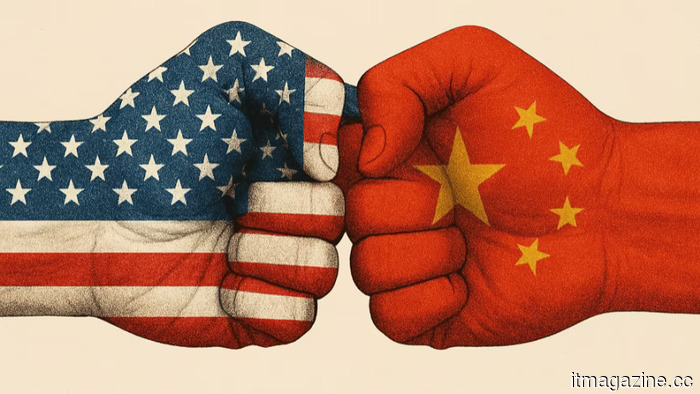 China intensifies its criticism of the U.S. chip equipment legislation as Trump arrives in Beijing.
Beijing intensified its criticism of the US MATCH Act, which aims to impose stricter export controls on chip equipment and requires Japan and the Netherlands to adhere to a 150-day deadline.
China intensifies its criticism of the U.S. chip equipment legislation as Trump arrives in Beijing.
Beijing intensified its criticism of the US MATCH Act, which aims to impose stricter export controls on chip equipment and requires Japan and the Netherlands to adhere to a 150-day deadline.
Corti makes its clinical-AI platform accessible to startups as the regulatory legislation in Europe increases.
Corti has introduced a Startup Acceleration Program that does not require equity, providing credits and regulatory assistance to healthcare AI entrepreneurs globally.