
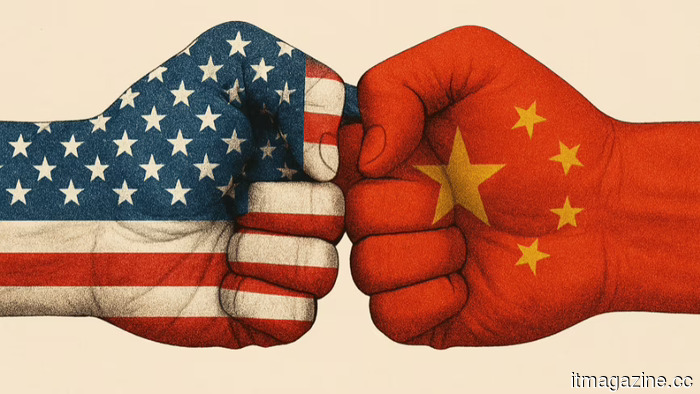
China intensifies its condemnation of the US chip-equipment legislation as Trump arrives in Beijing.
Beijing's foreign ministry criticized the MATCH Act just before the Xi summit, highlighting a key provision that requires Japan and the Netherlands to align their regulations within 150 days.
The Chinese government intensified its critique of U.S. legislation aimed at tightening semiconductor manufacturing equipment regulations, coinciding with Donald Trump's arrival in Beijing for his state visit and summit with Xi Jinping.
According to the Chinese foreign ministry, the MATCH Act currently under consideration in Congress is further proof of what spokesperson Lin Jian has labeled as Washington’s "excessive interpretation of national security" and a "malicious obstruction and suppression" of China's industries.
The timing of these remarks is significant, as Trump and Xi are scheduled to discuss trade, AI, export controls, Taiwan, and the conflict in Iran later this week, with semiconductor equipment being the most advanced issue on their agenda.
The Multilateral Alignment of Technology Controls on Hardware Act was introduced by Representative Michael Baumgartner on April 2 and received a Senate counterpart six days later from Pete Ricketts, Andy Kim, Jim Risch, and Chuck Schumer, clearing the House Foreign Affairs Committee on April 22.
At that time, China's Ministry of Commerce warned that the legislation would "severely disrupt the international economic and trade order."
The bill cites SMIC, Huawei, Hua Hong, CXMT, and YMTC as "covered facilities," prohibiting the export of deep-ultraviolet immersion lithography equipment from ASML to these entities. It would also prevent allied companies from servicing existing machines, gradually degrading current Chinese fabrication capabilities, as DUV systems require ongoing maintenance to maintain output.
Most importantly for diplomatic relations, the legislation would allow Japan and the Netherlands a 150-day period to align their export regulations with the U.S. or face unilateral enforcement through an expanded Foreign Direct Product Rule.
ASML, the only supplier of advanced DUV systems, has already indicated that its revenue from China will decrease to about 20% by 2026, down from 33% the previous year. If the MATCH Act is enacted, this decline could be even sharper.
Applied Materials has estimated potential losses of up to $710 million in revenue from China this fiscal year, while Lam Research forecasts that China's contribution to its revenue may drop below 30%, compared to 43% in the first quarter.
China has already implemented countermeasures through the State Council's Order No. 834, a supply-chain security regulation overseen by more than 15 agencies, which permits legal action against firms seen as damaging to Chinese supply chains.
In the past 18 months, Beijing has imposed various restrictions on gallium, germanium, antimony, seven mid and heavy rare earth elements, and silver, alternating between suspensions and maintaining licensing requirements. Furthermore, it has mandated that domestic chipmakers procure 50% of new equipment from Chinese suppliers, posing a threat to an estimated $18 billion in annual U.S. equipment sales.
In some ways, the MATCH Act contrasts with the executive branch’s January decision when the Trump administration changed its export-review policy for Nvidia’s H200 and AMD’s MI325X from a presumption of denial to a case-by-case review, a relaxation supported by Nvidia's CEO Jensen Huang, who, after initially being omitted, has been included in Trump's Beijing delegation this week.
While the White House eased restrictions on finished chips, Congress is tightening regulations on the equipment used to produce them, based on the premise that lithography systems are more challenging to reroute than commodities.
Allied governments are still assessing the 150-day requirement. Japan, which imposed restrictions on 23 categories of chip equipment in 2023, and the Netherlands, which has restricted ASML’s EUV and certain DUV exports since 2024, would have to expand their controls in five months or risk U.S. enforcement against any company utilizing American technology in their supply chains.
What transpires in the summit discussions is unlikely to affect the legislative timeline. The MATCH Act is currently progressing through the full House, and its bipartisan nature positions it as one of the few significant China-policy bills advancing without notable internal opposition.
Beijing seems to believe that the summit is a more suitable setting to publicly establish the costs of the legislation’s passage while reserving decisions on retaliation for later. The Trump-Xi meeting is set to commence on Thursday morning, Beijing time.
Other articles
 Spain maintains its stance on regulations for social media and AI as the lobbying efforts from US tech companies increase.
Spain will proceed with its new regulations on social media and AI, despite heavy lobbying from American tech firms, stated digital transformation minister Óscar López.
Spain maintains its stance on regulations for social media and AI as the lobbying efforts from US tech companies increase.
Spain will proceed with its new regulations on social media and AI, despite heavy lobbying from American tech firms, stated digital transformation minister Óscar López.
 Many startups don't actually struggle with burn issues; they struggle with decision-making.
Seventy percent of unsuccessful startups depleted their funds. The core problem isn't simply overspending; it's the lack of unified data and decisions made without clarity. Here’s how to address this.
Many startups don't actually struggle with burn issues; they struggle with decision-making.
Seventy percent of unsuccessful startups depleted their funds. The core problem isn't simply overspending; it's the lack of unified data and decisions made without clarity. Here’s how to address this.
 Anduril secures $5 billion at a valuation of $61 billion, achieving a twofold increase in eleven months.
Anduril has secured $5 billion at a valuation of $61 billion, in a financing round led by Thrive Capital and Andreessen Horowitz, effectively doubling its valuation in less than a year.
Mythos heads to Tokyo: Japanese banks to acquire Anthropic’s vulnerability-detecting AI.
According to a source who spoke to Reuters, MUFG, Mizuho, and SMFG will be the inaugural Japanese institutions permitted to access Anthropic's exclusive Mythos AI model.
Anduril secures $5 billion at a valuation of $61 billion, achieving a twofold increase in eleven months.
Anduril has secured $5 billion at a valuation of $61 billion, in a financing round led by Thrive Capital and Andreessen Horowitz, effectively doubling its valuation in less than a year.
Mythos heads to Tokyo: Japanese banks to acquire Anthropic’s vulnerability-detecting AI.
According to a source who spoke to Reuters, MUFG, Mizuho, and SMFG will be the inaugural Japanese institutions permitted to access Anthropic's exclusive Mythos AI model.
 Anthropic is in discussions to secure $30 billion at a valuation of $900 billion.
Anthropic is in preliminary discussions to secure at least $30 billion with a pre-money valuation exceeding $900 billion, just weeks after similar conversations emerged.
Anthropic is in discussions to secure $30 billion at a valuation of $900 billion.
Anthropic is in preliminary discussions to secure at least $30 billion with a pre-money valuation exceeding $900 billion, just weeks after similar conversations emerged.
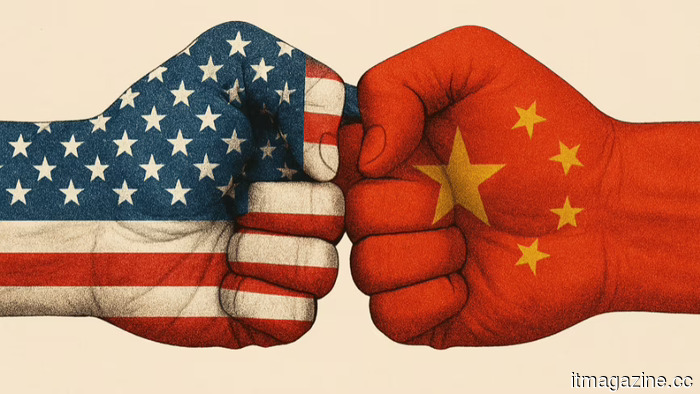 China intensifies its criticism of the US chip equipment legislation as Trump lands in Beijing.
Beijing intensified its condemnation of the US MATCH Act, which aims to impose stricter export controls on chip equipment and obligate Japan and the Netherlands to adhere to a 150-day timeline.
China intensifies its criticism of the US chip equipment legislation as Trump lands in Beijing.
Beijing intensified its condemnation of the US MATCH Act, which aims to impose stricter export controls on chip equipment and obligate Japan and the Netherlands to adhere to a 150-day timeline.
China intensifies its condemnation of the US chip-equipment legislation as Trump arrives in Beijing.
Beijing intensified its criticism of the US MATCH Act, which aims to tighten export controls on chip equipment and impose a 150-day deadline on Japan and the Netherlands.