
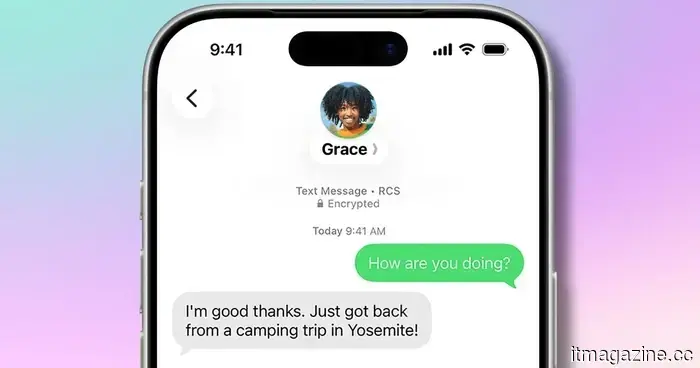
Apple and Google have finally restricted your green-bubble messages, and it's overdue.
The green bubble finally has something to boast about. The unexpected partnership between Apple and Google introduces genuine encryption for everyday cross-platform texting.
For years, messaging between an iPhone and an Android device felt less like a private chat and more like yelling across a busy street. That is set to change on May 11, 2026, as Apple and Google officially launched end-to-end encryption (E2EE) for RCS messaging.
This long-anticipated feature is being rolled out first in beta with iOS 26.5 (also announced today) and the latest version of Google Messages.
Big announcement: We're starting the rollout of end-to-end encryption for RCS messaging between Android and iPhone users! This cross-industry initiative replaces outdated SMS with a more secure and private method of communication, regardless of the phone you use. 🔒 Thanks to the community for… pic.twitter.com/5J71TwjbHL— Sameer Samat (@ssamat) May 11, 2026
How did they accomplish this?
It’s uncommon for Apple and Google to collaborate, as they often focus on creating advertisements that poke fun at each other.
However, for the implementation of end-to-end encryption for RCS, both companies joined forces with the GSM Association to establish the encryption standard as part of RCS Universal Profile 3.0, which is built on the Messaging Layer Security Protocol.
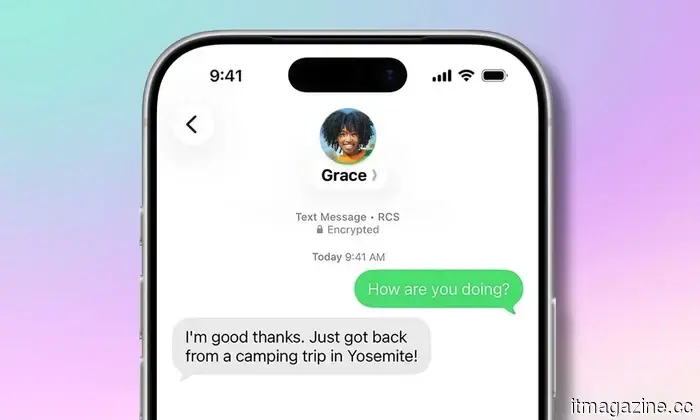
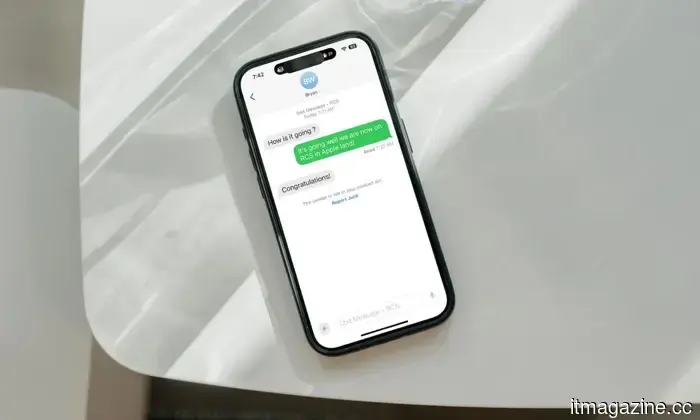
The outcome: messages sent between iPhones and Android devices are now secure from interception by anyone in transit, including Apple and Google. Once you activate this feature, a small lock icon will appear in your Messages app, signaling that the conversation is encrypted.
Bryan M. Wolfe / Digital Trends
Who can currently access this feature?
Carrier support is crucial for the feature to function. Fortunately, the E2EE rollout for RCS comes with an impressive lineup of carrier partners.
In the United States, major carriers such as AT&T, Verizon, T-Mobile, Boost Mobile, and Xfinity Mobile already back the new security feature. Canadian carriers like Bell, Rogers, and Telus also support it.
It’s important to note that both the sender and recipient must be with a participating carrier for encryption to activate in their chats. While iMessage continues to offer E2EE independently, support for RCS will gradually extend to all existing conversations.
For me, E2EE for RCS represents more than just a software upgrade: it symbolizes a geopolitical truce among different smartphone platforms. The absence of cross-platform encryption had previously allowed privacy-focused messaging platforms like WhatsApp to thrive. Now, the standard has been raised, and for good reason.
For over five years, Shikhar has consistently simplified developments in consumer technology…
Signal messenger aims to protect users from phishing with these new in-app adjustments.
Signal has implemented new safety features to assist users in identifying and avoiding scams.
If you're a Signal user, there's something significant you should be aware of. The encrypted messaging app has launched a series of new in-app safety measures aimed at safeguarding you against phishing and social engineering attacks.
https://twitter.com/signalapp/status/2053957236376961474?s=46
Read more
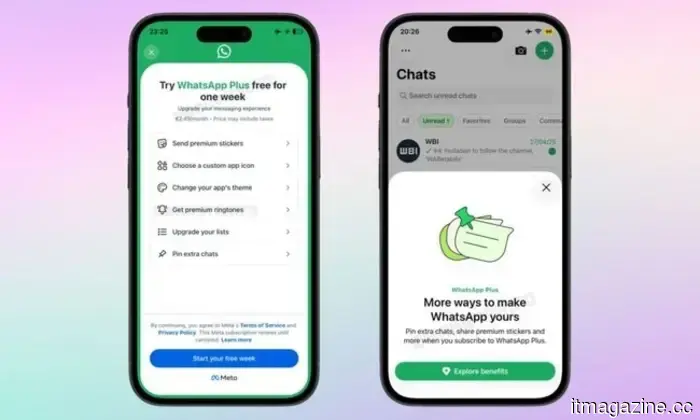
WhatsApp Plus is now available, and you can disregard this subscription.
WhatsApp is introducing a monthly fee for features that other apps include by default, which is a dilemma that Meta can't mask with custom icons.
WhatsApp has staunchly defended its position as a free, straightforward messaging app for over a decade, but a new subscription tier complicates matters. Meta is rolling out WhatsApp Plus, a paid subscription option, to a limited number of iPhone users on the latest version of the App Store.
Read more
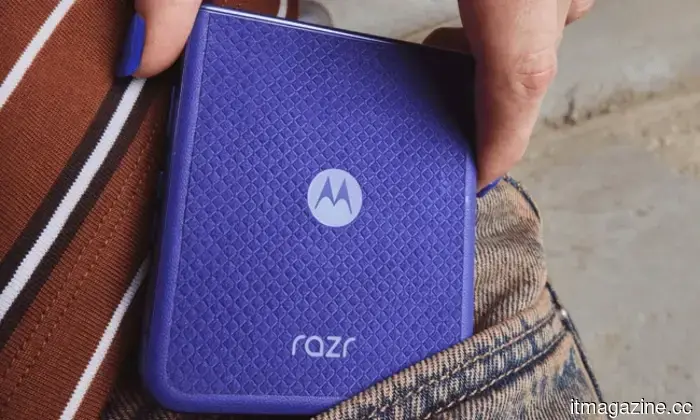
The Razr Ultra 2026 embodies everything a flip phone should be, but I won't spend $1,500 on it.
A flip phone should never be this expensive. At $1,500, the Razr Ultra faces tough competition from everything else that your money can buy.
I'll be candid: spending $1,500 on the Razr Ultra, a clamshell phone that folds in half, is a significant amount. In fact, it's considerable for any smartphone, especially when a Galaxy S26 Ultra or iPhone 17 Pro Max is priced lower and leaves you with a few hundred dollars to spare, or for a couple of hundred more, you could get a fully-fledged book-style foldable.
For me, the Razr Ultra struggles to justify its $1,500 price tag. On its own, it's an impressive flip phone that gets the essentials right and offers the premium experience expected at this price. The Alcantara back, the 5,000-nit display, the silicon-carbon battery, and the dual rear cameras give it the appeal of a complete package.
Read more

Other articles
 Sony's wearable air conditioner has returned, and it appears to be even cooler than before.
Sony’s Reon Pocket Pro Plus features a cooled metal plate that rests on your neck, offering enhanced cooling, improved stability, and a battery life of up to 10 hours.
ServiceNow plans to issue a $4 billion bond to refinance the debt from its acquisition of Armis.
ServiceNow aims to raise $4 billion through a high-grade bond sale in the US to refinance the term loan that supported its $7.75 billion acquisition of Armis Security.
Sony's wearable air conditioner has returned, and it appears to be even cooler than before.
Sony’s Reon Pocket Pro Plus features a cooled metal plate that rests on your neck, offering enhanced cooling, improved stability, and a battery life of up to 10 hours.
ServiceNow plans to issue a $4 billion bond to refinance the debt from its acquisition of Armis.
ServiceNow aims to raise $4 billion through a high-grade bond sale in the US to refinance the term loan that supported its $7.75 billion acquisition of Armis Security.
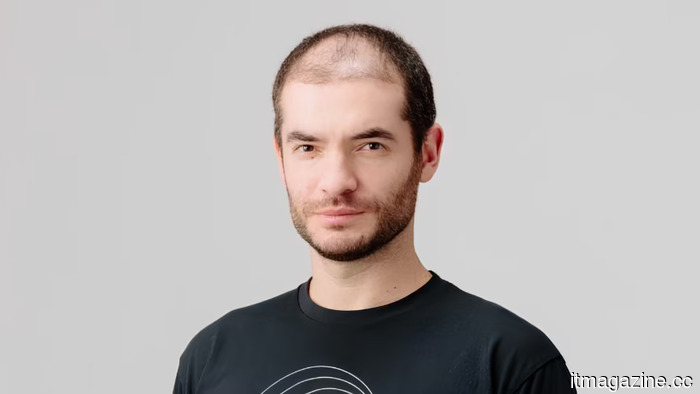 Ilya Sutskever reveals a $7 billion stake in OpenAI during his testimony in the lawsuit involving Musk.
Ilya Sutskever stated that his shares in OpenAI are valued at approximately $7 billion, positioning him as one of the top individual shareholders in the AI firm.
Ilya Sutskever reveals a $7 billion stake in OpenAI during his testimony in the lawsuit involving Musk.
Ilya Sutskever stated that his shares in OpenAI are valued at approximately $7 billion, positioning him as one of the top individual shareholders in the AI firm.
 China generates $500 million every hour from exports, fueled by the growth of AI products.
Goldman Sachs and Nomura report that approximately half of the growth in Chinese exports in April was attributed to AI-related products, with total exports reaching a record $359 billion.
China generates $500 million every hour from exports, fueled by the growth of AI products.
Goldman Sachs and Nomura report that approximately half of the growth in Chinese exports in April was attributed to AI-related products, with total exports reaching a record $359 billion.
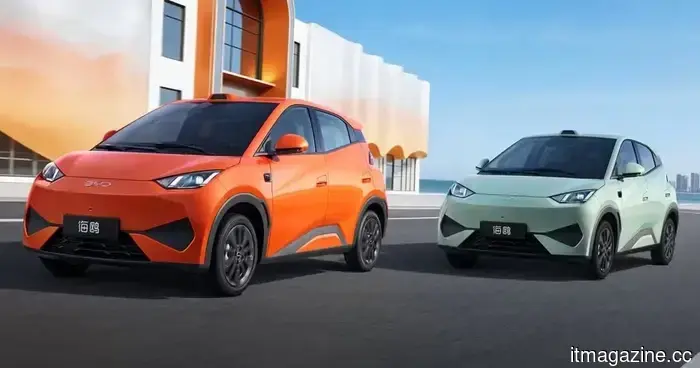 BYD's newest electric vehicle is priced at just over $10,000, has a range of 250 miles, and includes LiDAR technology as well.
BYD has introduced the 2026 Seagull, starting at $10,300, with an optional LiDAR driver-assist package that incorporates features typically found in high-end EVs into one of the most budget-friendly electric cars globally.
BYD's newest electric vehicle is priced at just over $10,000, has a range of 250 miles, and includes LiDAR technology as well.
BYD has introduced the 2026 Seagull, starting at $10,300, with an optional LiDAR driver-assist package that incorporates features typically found in high-end EVs into one of the most budget-friendly electric cars globally.
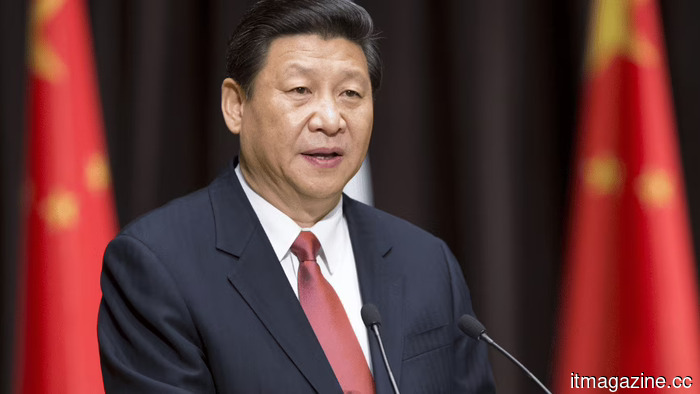 China generates $500 million each hour from exports, propelled by the growth of AI products.
Goldman Sachs and Nomura indicate that approximately 50% of the growth in Chinese exports for April was driven by AI-related products, with total exports reaching a record high of $359 billion.
China generates $500 million each hour from exports, propelled by the growth of AI products.
Goldman Sachs and Nomura indicate that approximately 50% of the growth in Chinese exports for April was driven by AI-related products, with total exports reaching a record high of $359 billion.
Apple and Google have finally restricted your green-bubble messages, and it's overdue.
Texting between iPhone and Android devices has become significantly more private. Apple and Google have made a groundbreaking joint launch of end-to-end encrypted RCS messaging.