

Amazon is set to issue its inaugural Swiss franc bond as part of a six-part initiative focused on AI and capital expenditures.
BNP Paribas, Deutsche Bank, and JPMorgan have been appointed to manage the issuance, which will have maturities ranging from three to twenty-five years. This transaction follows Alphabet's record bond issuance in Swiss francs in February and Amazon's $37 billion deal in March, marking a significant shift as hyperscalers have become multi-currency borrowers.
According to Bloomberg's report on Monday, Amazon is set to make its inaugural bond issuance in Swiss francs through a six-tranche deal covering maturities of three, five, seven, ten, fifteen, and twenty-five years. The size of this trade is not yet disclosed, with pricing anticipated later this week.
This issuance serves as a clear indication that the largest US hyperscalers have evolved their funding strategies, as a US dollar bond program alone is no longer adequate. The substantial capital required for AI infrastructure has prompted Big Tech treasurers to diversify into euros, sterling, and Swiss francs, often within the same multi-currency framework, to broaden their investor appeal and capture demand that the US market alone cannot meet at favorable rates.
Amazon's entry into the Swiss market follows a familiar path, as Alphabet raised over CHF 2.75 billion (approximately $3.6 billion) across five maturities in February as part of a multi-currency initiative that also included sterling and euro issuances, as well as a rare 100-year US dollar bond. That Swiss issuance was the largest corporate bond sale in that market's history. Other companies, such as Caterpillar and Thermo Fisher Scientific, have also tapped this market in the past eighteen months.
Amazon brings significant scale with plans for approximately $200 billion in capital expenditures by 2026, as noted by CEO Andy Jassy, which translates to annual funding requirements running into the tens of billions. The six tranches across the Swiss curve indicate a strategic focus on securing long-duration capacity rather than funding a specific project.
On March 10, Amazon raised about $37 billion in the US bond market across eleven tranches, followed shortly by a €14.5 billion deal with multiple maturities. This combined dollar and euro issuance was the largest single funding event in the company's history at that point, with reported demand for the dollar portion approximately four times the amount sold.
Pricing on the long end of the dollar trade fell below Treasury yields by margins that would have seemed unimaginable for the company a decade ago. The upcoming Swiss franc issuance extends this approach into a third currency and a market environment where issuance costs are generally lower than those in the dollar space for similarly rated borrowers.
The rationale behind the issuance is straightforward: Amazon Web Services is experiencing rapid growth in AI-related revenues, but the capital expenditures needed to support this growth are substantial. As a result, the company has opted to pre-fund a considerable portion through long-term debt rather than depleting cash reserves. This strategy is being similarly adopted by Alphabet, Microsoft, Meta, and Oracle. Combined, hyperscaler debt issuance reached over $121 billion in 2025 and is on track to exceed this amount by mid-2026. The estimated $650 billion in combined Big Tech AI capital expenditures planned for 2026 explains the urgency in funding.
Investor interest in these issuances has consistently been robust. The four largest US hyperscalers maintain credit ratings in the AA range, which allows them access to deep pools of institutional fixed-income demand at financing costs unmatched by private-market alternatives. The largest trades of 2025 were oversubscribed in ways that would be uncommon in other sectors, with Amazon's March dollar trade being roughly four times covered.
While the Swiss franc market is smaller in relative terms, as the all-currency corporate market typically clears around CHF 60-70 billion annually according to Refinitiv data, the lower interest rates in Switzerland compared to US dollar and euro counterparts provide a compelling opportunity for issuers with sizable funding needs spread across different currencies.
The currency diversification strategy is genuinely about reducing reliance on any single investor group and allowing treasurers to choose which tranches to access during periods of regional volatility while extending the average maturity profile by accessing markets with strong long-duration demand.
Amazon's selection of a twenty-five-year tranche at the end of this Swiss deal reflects that approach. The shorter three, five, seven, and ten-year tranches provide the company with flexibility in the mid-duration range, while the fifteen and twenty-five-year tranches cater to insurance and pension demand that can be harder to secure in similar sizes in dollars.
A broader concern, which the clearer trades from the previous three months have highlighted, is the sustainability of the supportive funding environment. Hyperscaler bond issuance has progressed at a rate that even optimistic analysts did not predict at the start of 2025. Morgan Stanley and JPMorgan project that the sector might need to issue up to $1.5 trillion in additional debt over the next several years to fund the AI expansion at the desired pace.
This estimate assumes that capital expenditures continue to rise
Other articles
 Dutch company Eyeo secures €40 million to commercialize NCOS color-splitting image sensors.
Eyeo has secured €40 million in a Series A funding round, led by Innovation Industries, to advance its imec-developed Nanophotonic Color Splitting sensor technology.
Dutch company Eyeo secures €40 million to commercialize NCOS color-splitting image sensors.
Eyeo has secured €40 million in a Series A funding round, led by Innovation Industries, to advance its imec-developed Nanophotonic Color Splitting sensor technology.
 GPUaaS is strengthening the perception of AI sovereignty in Europe.
Access does not equate to sovereignty. The risk associated with Europe's €20 billion investment in an AI gigafactory lies in potentially increasing its reliance on Nvidia and US hyperscalers rather than diminishing it.
GPUaaS is strengthening the perception of AI sovereignty in Europe.
Access does not equate to sovereignty. The risk associated with Europe's €20 billion investment in an AI gigafactory lies in potentially increasing its reliance on Nvidia and US hyperscalers rather than diminishing it.
 Dutch company Eyeo secures €40 million to commercialize NCOS color-splitting image sensors.
eyeo has secured €40 million in a Series A funding round led by Innovation Industries to advance its Nanophotonic Color Splitting sensor technology, which was developed by imec.
Dutch company Eyeo secures €40 million to commercialize NCOS color-splitting image sensors.
eyeo has secured €40 million in a Series A funding round led by Innovation Industries to advance its Nanophotonic Color Splitting sensor technology, which was developed by imec.
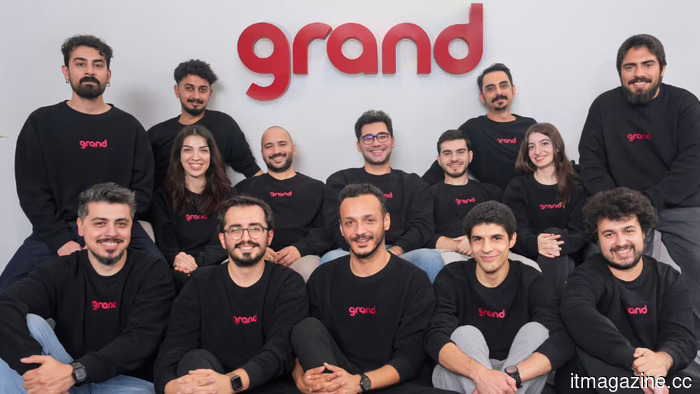 Turkey's Grand Games secures $70 million in Series B funding.
Istanbul's Grand Games has secured $70 million in a Series B funding round, with Balderton Capital's Growth Fund leading the investment.
Turkey's Grand Games secures $70 million in Series B funding.
Istanbul's Grand Games has secured $70 million in a Series B funding round, with Balderton Capital's Growth Fund leading the investment.
 Dutch company Eyeo secures €40 million to commercialize NCOS color-splitting image sensors.
Eyeo has secured a €40 million Series A funding round led by Innovation Industries to advance its imec-developed Nanophotonic Color Splitting sensor technology.
Dutch company Eyeo secures €40 million to commercialize NCOS color-splitting image sensors.
Eyeo has secured a €40 million Series A funding round led by Innovation Industries to advance its imec-developed Nanophotonic Color Splitting sensor technology.
 Anthropic reports that Claude learned the concept of blackmail through stories about malicious AI.
Anthropic has linked Claude's pre-release blackmail actions to online content that depicts AI as malevolent and self-protective.
Anthropic reports that Claude learned the concept of blackmail through stories about malicious AI.
Anthropic has linked Claude's pre-release blackmail actions to online content that depicts AI as malevolent and self-protective.
Amazon is set to issue its inaugural Swiss franc bond as part of a six-part initiative focused on AI and capital expenditures.
Amazon has appointed BNP Paribas, Deutsche Bank, and JPMorgan to manage its inaugural issuance of bonds in Swiss francs.