
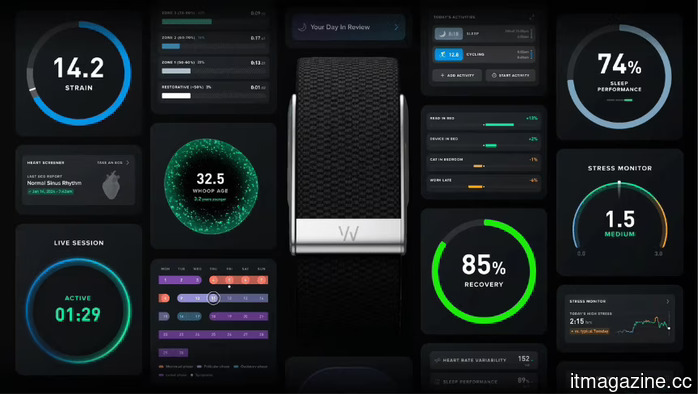
Whoop introduces consultations with licensed clinicians, while Google unveils the $99 Fitbit Air featuring the Gemini AI health coach.
**TL;DR** Google introduced the $99 screenless Fitbit Air and a $9.99 monthly Gemini-powered AI health coach. One day later, Whoop announced the addition of on-demand video consultations with licensed clinicians to its app.
Google unveiled a $99 fitness tracker without a screen along with a $9.99 monthly AI health coach utilizing Gemini technology. The following day, Whoop disclosed plans to provide on-demand video consultations with licensed clinicians via its app. Google is banking on artificial intelligence to analyze health data, while Whoop believes in the necessity of human doctors. The US Food and Drug Administration has eased its regulation on both AI health tools and consumer wearables since January, suggesting that minimal oversight is needed for both.
This timing reflects a philosophical divide within the wearable health sector, highlighted by the two companies' product announcements just a day apart. Both companies are addressing a fundamental question: what actions should be taken after data is collected by your wrist sensor? Google proposes an AI chatbot, while Whoop suggests the involvement of a trained medical professional. Ultimately, it will be up to the market to determine which approach individuals trust regarding their health.
**The Tracker**
The Fitbit Air is a $99 screenless band, the smallest Fitbit to date. It continuously tracks heart rate, heart rate variability, SpO2, sleep stages, and activity with about a week of battery life. Lacking a display, all data is accessible via the new Google Health app, replacing the Fitbit app on May 19.
The device will be available starting May 26, including a three-month free trial of Google Health Premium, priced at $9.99 monthly or $99 annually. The premium service features the Google Health Coach, an AI assistant built on Gemini, producing personalized workout plans, interpreting sleep trends, summarizing health records, and answering fitness and medical inquiries.
Google's strategy focuses on selling the AI component rather than hardware. The Google Health app aims to be compatible with various wearables, including Apple Watch, Oura, and Garmin devices, which will be supported later this year. The Fitbit Air serves as an entry point, not the ultimate goal; Google aspires to be the intelligence that bridges every sensor and health decision, irrespective of the data source.
**The Response**
Whoop's announcement came on May 8, just one day after Google's. The company is set to provide on-demand video consultations with licensed clinicians for its U.S. users, beginning this summer. The consultations will start with a review of continuous biometric data collected by the Whoop band. If users have synced their blood work or medical history via HealthEx, an electronic health records integration that Whoop is also launching, that information will be included.
The difference from Google's approach is intentional. A clinician can conduct follow-up questions, recognize patterns that require contextual understanding that a chatbot may lack, and take on the professional responsibility linked with a medical license. While an AI coach can inform you that your heart rate variability is declining, a doctor can explain the reasons behind it.
Blossom Health raised $20 million to develop AI copilots intended to support psychiatrists, positioning AI as an aid for clinicians instead of a substitute. Whoop applies the same rationale to wearable health data: AI processes the metrics while a human makes the decision.
Will Ahmed, the founder and CEO of Whoop, shared an image on X of a Whoop circuit board inscribed with the phrase “Don’t bother copying us, we will win.” Initially directed at Amazon, which launched and then discontinued the Halo fitness band, it now seems a response to a significantly larger competitor than Amazon's wearables division.
**The Economics**
Whoop secured $575 million in March 2026, achieving a valuation of $10.1 billion, with backing from the Qatar Investment Authority, Mubadala, Abbott, and the Mayo Clinic. The company reported $1.1 billion in annualized revenue for 2025, representing a 103 percent increase year-over-year, and indicated it is cash-flow positive. Whoop has over 2.5 million members.
Whoop’s subscription varies from $199 to $359 annually based on the tier, while Google Health Premium costs $99 per year. The Fitbit Air retails for $99. The combined cost of a year’s Fitbit Air and Google Health Premium is lower than Whoop's least expensive plan. The clinician consultations that Whoop will introduce will incur additional costs, with pricing yet to be determined.
This price disparity highlights the competitive landscape. Google is offering AI health coaching at a price that significantly undercuts Whoop’s subscription. In contrast, Whoop proposes human medical consultations that are likely to increase its overall cost. One company is pushing health guidance costs down, while the other argues for a premium based on the value of a human clinician. Both arguments are valid, but neither has been extensively tested within the wearable market.
**The Field**
ChatGPT Health
Other articles
 Amazon introduces vertical videos suitable for doomscrolling in the Prime Video app.
Discovering content on Prime Video might soon resemble scrolling through Shorts rather than navigating a traditional streaming menu.
Amazon introduces vertical videos suitable for doomscrolling in the Prime Video app.
Discovering content on Prime Video might soon resemble scrolling through Shorts rather than navigating a traditional streaming menu.
 Apple requires you to confirm your identity prior to receiving the Education discount on products.
Students confirm their status through the school portal or by uploading an ID; homeschool educators must provide a government ID along with a homeschool document. Most verifications are done immediately, while manual reviews are finalized within 24 hours.
Apple requires you to confirm your identity prior to receiving the Education discount on products.
Students confirm their status through the school portal or by uploading an ID; homeschool educators must provide a government ID along with a homeschool document. Most verifications are done immediately, while manual reviews are finalized within 24 hours.
 Anthropic Mythos AI discovers thousands of zero-day vulnerabilities while the Federal Reserve and Treasury gather bank CEOs to discuss cyber risks.
The preview of Anthropic's Claude Mythos revealed thousands of zero-day vulnerabilities in major software. The chair of the Federal Reserve and the Treasury secretary contacted bank executives to talk about the potential threat.
Anthropic Mythos AI discovers thousands of zero-day vulnerabilities while the Federal Reserve and Treasury gather bank CEOs to discuss cyber risks.
The preview of Anthropic's Claude Mythos revealed thousands of zero-day vulnerabilities in major software. The chair of the Federal Reserve and the Treasury secretary contacted bank executives to talk about the potential threat.
.jpg) This WWII thriller starring Tom Hanks is among the three best films to watch on Apple TV this weekend (May 8-10).
This weekend, Apple TV features three excellent movies, including a WWII thriller written by and starring Tom Hanks.
This WWII thriller starring Tom Hanks is among the three best films to watch on Apple TV this weekend (May 8-10).
This weekend, Apple TV features three excellent movies, including a WWII thriller written by and starring Tom Hanks.
 The University of Michigan's $20 million early investment in OpenAI has now escalated to a valuation of $2 billion, as trial documents concerning Musk disclose details about the endowment's wager.
Court documents from the Musk v. Altman trial reveal that the University of Michigan invested $20 million in OpenAI prior to the launch of ChatGPT. This investment now has a projected redemption value of $2 billion.
The University of Michigan's $20 million early investment in OpenAI has now escalated to a valuation of $2 billion, as trial documents concerning Musk disclose details about the endowment's wager.
Court documents from the Musk v. Altman trial reveal that the University of Michigan invested $20 million in OpenAI prior to the launch of ChatGPT. This investment now has a projected redemption value of $2 billion.
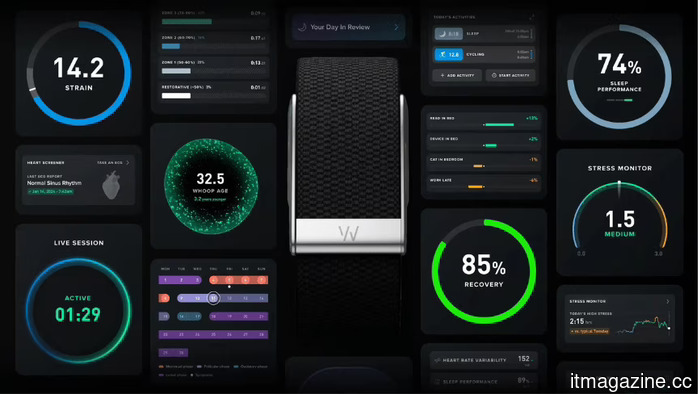 Whoop introduces consultations with licensed clinicians as Google unveils the $99 Fitbit Air featuring the Gemini AI health coach.
Google introduced the $99 Fitbit Air without a screen and a health coach service called Gemini for $9.99 per month. The following day, Whoop replied by offering on-demand video consultations with licensed professionals.
Whoop introduces consultations with licensed clinicians as Google unveils the $99 Fitbit Air featuring the Gemini AI health coach.
Google introduced the $99 Fitbit Air without a screen and a health coach service called Gemini for $9.99 per month. The following day, Whoop replied by offering on-demand video consultations with licensed professionals.
Whoop introduces consultations with licensed clinicians, while Google unveils the $99 Fitbit Air featuring the Gemini AI health coach.
Google introduced the $99 screenless Fitbit Air and the $9.99/month Gemini health coach. The following day, Whoop countered with on-demand video consultations featuring licensed clinicians.