
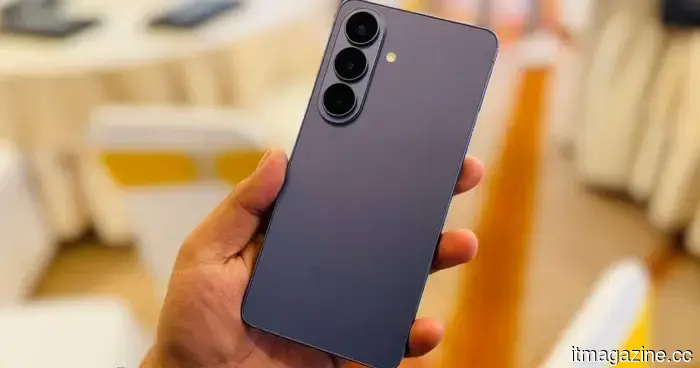
I tested the AI editing tools on my Galaxy S26, and it completely amazed me.
I have experimented with various AI photo editing tools on different smartphones, and most seem to follow a similar trend. They look impressive in demonstrations, appear helpful in theory, but become highly erratic when applied to actual photos that matter to me. I found AI erasers and other editing features to be quite inconsistent.
However, the Galaxy S26 is showing a different side.
I have been testing Samsung's AI editing features on some real photos, and what impressed me was not some outlandish image-generation gimmick, but rather the consistency. The Galaxy S26 accomplished the types of edits I really needed, and it did so swiftly enough that I didn't feel bogged down by using the device.
The most effective AI edits are often the simplest.
The standout aspect of Samsung's AI editing suite is its ability to handle routine fixes efficiently. I am not referring to transforming a grim day into a futuristic movie poster or substituting half the image with something fictional. Instead, I'm talking about eliminating fingers from the edge of a frame, tidying up small unwanted elements, filling in backgrounds, or enhancing an image for social media.
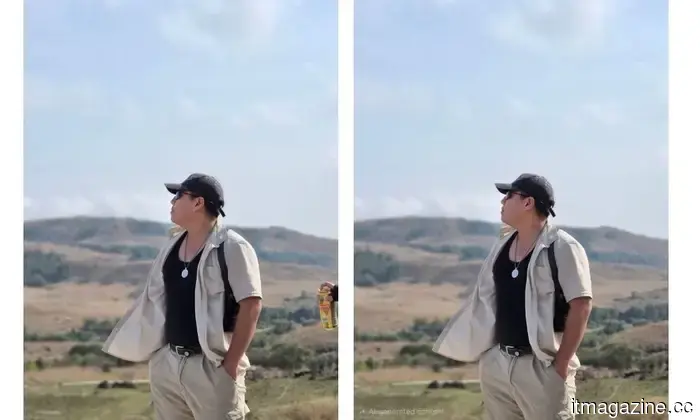
Before (L) and After (R): Visible AI Edit Watermark at the bottom. Vikhyaat Vivek / Digital Trends
One instance involved a portrait of a friend taken outside. The photo itself was nice, but an awkwardly positioned beer can was encroaching on the right side since someone was passing it over while the shot was being captured. Samsung’s AI eraser removed it seamlessly, making the edit look so natural that it was virtually undetectable. The backdrop was reconstructed to match the surrounding scenery, and the effort required on my part was minimal. This is where AI photo editing truly begins to show its utility.
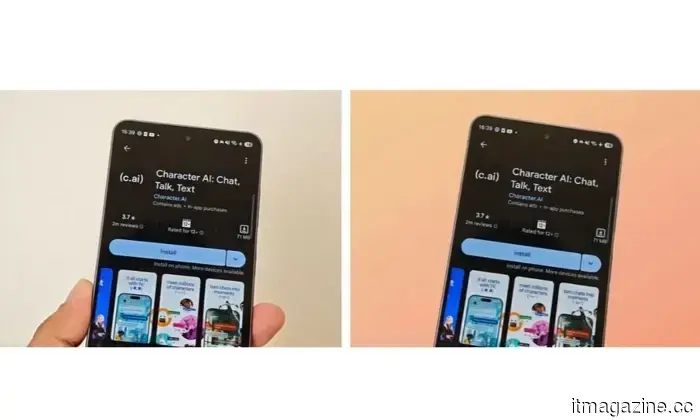
I had another image of the Galaxy S26 displaying a Play Store listing intended for my recent article titled “Character.AI gets sued.” It was supposed to be the main image, but my fingers were visible around the phone, and the background appeared too plain. By using Samsung’s AI features, I was able to erase my fingers and enter a prompt for a "sunset glow vibe color" background. The phone reconstructed the environment with a warmer, more refined appearance that suited the tech article much better.
Before (L) and After (R) Vikhyaat Vivek / Digital Trends
In the past, I have utilized Canva for work, mostly to create basic graphs and featured images, but I was curious about how a smartphone editing tool could fit into that workflow. While I don't consider myself skilled at photo editing, the time efficiency and ease provided by Galaxy AI in the image editor were impressively effective. The cleanup was done successfully, the edit was quick, the result was satisfactory, and I didn't need to export the image to another app.
I have tried similar editing tools on other Android devices, including a Xiaomi phone I had on hand, and Samsung’s offering has proven to be the most reliable in my experience. Some competitors may perform impressive edits under ideal conditions, but the Galaxy S26 produced fewer awkward errors. It interpreted the frame better, filled gaps more naturally, and generally delivered the desired outcome on the first or second attempt.
The watermark can be bothersome, but I recognize its purpose.
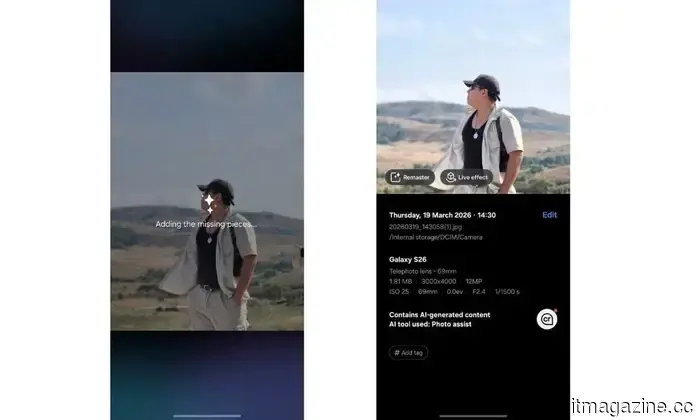
One noticeable feature of Samsung's editing process is the addition of a tag on AI-edited images. The Galaxy S26 includes a visible watermark for AI-generated content on the image, and the gallery indicates that Photo Assist was the AI tool utilized. In the metadata view, the photo is explicitly marked as containing AI-generated content. This indicates that Samsung is not attempting to pass these edits off as untouched images.
Edit in progress, with metadata showing the AI-generated tag. Vikhyaat Vivek / Digital Trends
I have mixed feelings about this. On the one hand, the visible tag can be irritating, especially for minor edits. For instance, if I remove a finger from the edge of a photo or erase a small object that accidentally made its way into the frame, it can seem excessive to label the entire image as AI-generated. The label seems more justified when the edit significantly alters the photo or reconstructs a major component of the frame. For trivial cleanup tasks, it can seem as though the phone is overstating the edit.
It is possible to slightly crop the image to eliminate the visible watermark, depending on its position, but this does not resolve the broader issue. Samsung’s system is designed to highlight AI involvement in both the image and file information. While it can be inconvenient for minor edits, I believe it represents a positive step forward.
AI photo editing tools are advancing to a point where they can no longer go unnoticed. If a smartphone can remove objects, create backgrounds, clean up images, and reconstruct missing elements within seconds, viewers deserve to be informed that the photo has been altered. This becomes crucial when the edit transcends simple changes like removing stray cans or tidying up a product shot and
Other articles
 Pet technology is absurd, and I can't stand how much I desire it.
Pet technology may seem anxiety-inducing due to Wi-Fi, but it becomes less easy to dismiss smart feeders, trackers, cameras, and health alerts when cats begin to behave oddly.
Pet technology is absurd, and I can't stand how much I desire it.
Pet technology may seem anxiety-inducing due to Wi-Fi, but it becomes less easy to dismiss smart feeders, trackers, cameras, and health alerts when cats begin to behave oddly.
 Fraudulent stalking apps have garnered millions of downloads, reflecting on both Google’s security measures and our own choices.
Twenty-eight counterfeit Android applications claiming to spy on call histories garnered 7.3 million downloads on Google Play. The most alarming aspect is not that these apps were deceptive, but rather that such a large number of people desired them to function.
Fraudulent stalking apps have garnered millions of downloads, reflecting on both Google’s security measures and our own choices.
Twenty-eight counterfeit Android applications claiming to spy on call histories garnered 7.3 million downloads on Google Play. The most alarming aspect is not that these apps were deceptive, but rather that such a large number of people desired them to function.
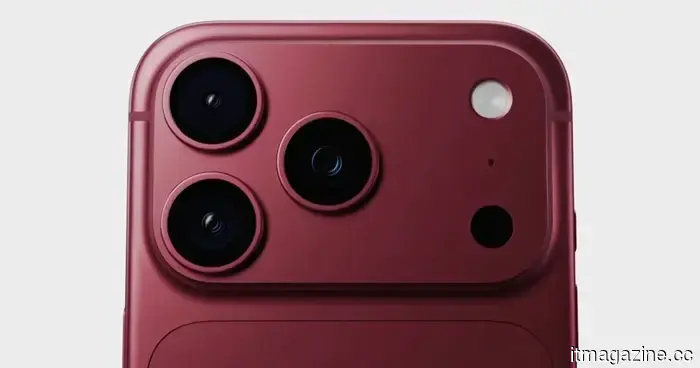 This might be the ultimate design of the iPhone 18 Pro, and it’s rather unexciting as expected.
A recent leak offers a preview of the iPhone 18 Pro, and although the anticipated enhancements appear to be well-developed, the overall experience might come across as somewhat repetitive. With changes like a smaller Dynamic Island and improved internal components, Apple appears to be enhancing the existing design rather than completely overhauling it.
This might be the ultimate design of the iPhone 18 Pro, and it’s rather unexciting as expected.
A recent leak offers a preview of the iPhone 18 Pro, and although the anticipated enhancements appear to be well-developed, the overall experience might come across as somewhat repetitive. With changes like a smaller Dynamic Island and improved internal components, Apple appears to be enhancing the existing design rather than completely overhauling it.
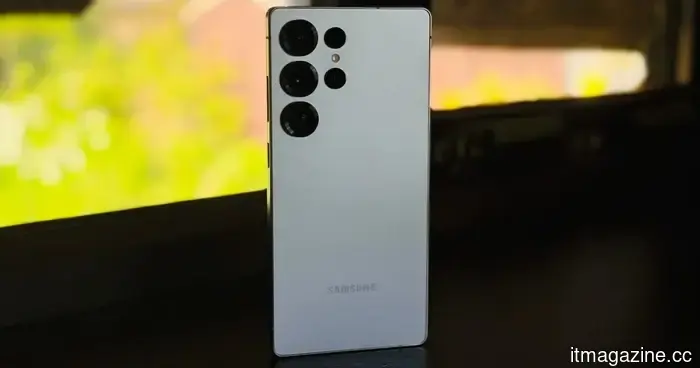 Samsung provided Galaxy S25 users with One UI 8.5, but left out the most sought-after features.
One UI 8.5 is being released for the Galaxy S25 series, introducing new features; however, users are primarily discussing the absence of the Now Nudge and 24MP camera mode.
Samsung provided Galaxy S25 users with One UI 8.5, but left out the most sought-after features.
One UI 8.5 is being released for the Galaxy S25 series, introducing new features; however, users are primarily discussing the absence of the Now Nudge and 24MP camera mode.
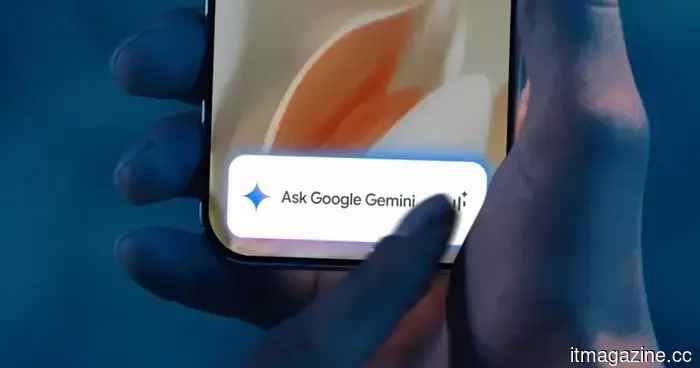 I'm really excited about the Google Gemini Intelligence leak, but I hope they reconsider that name.
Google might be working on a more integrated AI layer powered by Gemini that links more closely with your apps, photos, emails, and daily phone activities.
I'm really excited about the Google Gemini Intelligence leak, but I hope they reconsider that name.
Google might be working on a more integrated AI layer powered by Gemini that links more closely with your apps, photos, emails, and daily phone activities.
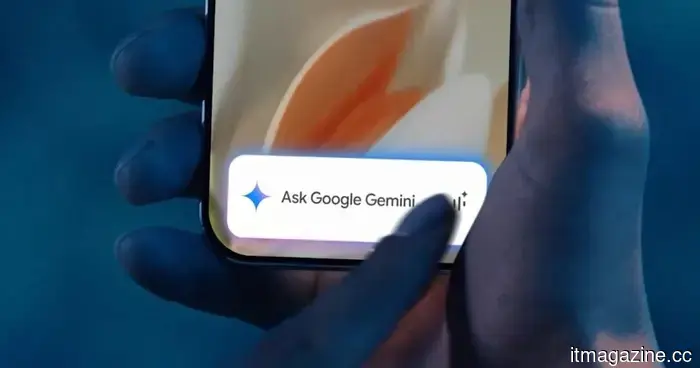 I'm thrilled about the leak of Google’s Gemini Intelligence, but I really hope they change that name.
Google might be working on a more integrated AI layer powered by Gemini that links more intimately with your applications, photos, emails, and daily phone activities.
I'm thrilled about the leak of Google’s Gemini Intelligence, but I really hope they change that name.
Google might be working on a more integrated AI layer powered by Gemini that links more intimately with your applications, photos, emails, and daily phone activities.
I tested the AI editing tools on my Galaxy S26, and it completely amazed me.
After experimenting with the AI eraser and generative editing features of the Galaxy S26 on actual photos, I've discovered an AI editing app for phones that is quick, practical, and surprisingly reliable.