

OpenAI's Codex has now integrated into Chrome, bringing both valuable functionality and potential risks.
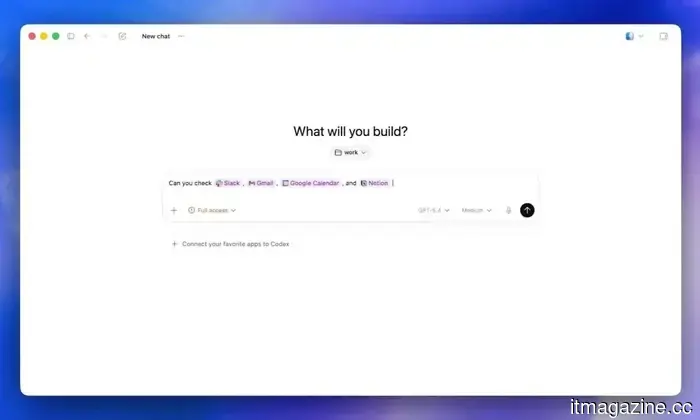
The new extension allows Codex to expand beyond mere coding and perform real tasks in web browsers across signed-in sites.
OpenAI is providing Codex with a broader platform than just a coding environment. Its latest Chrome extension enables the agent to utilize an authenticated web session, allowing it to assist with tasks that are already integrated within Gmail, Salesforce, LinkedIn, dashboards, and internal applications.
This development transitions Codex from the developer environment into the web applications where everyday work occurs. With access to Chrome, it can engage in research, CRM updates, dashboard monitoring, and browser-based debugging, addressing the challenges that often arise across multiple tabs.
The Codex Chrome extension is accessible via the Codex app in all regions except the EU and UK, where support is still forthcoming. This rollout is significant as the most beneficial version of an AI agent is one that operates within well-defined boundaries.
The Chrome extension broadens Codex’s capabilities beyond coding. It can now handle various tasks performed in the browser, from debugging browser processes to checking dashboards, conducting research, or updating CRMs. This is available today in the Codex app globally— OpenAI (@OpenAI) May 7, 2026.
What the Chrome access facilitates
The remarkable aspect is the state that Codex can maintain while working in web applications. Instead of starting anew with a blank prompt, it can function in environments where users are already signed in, enhancing its practicality for private dashboards, forms, and account-specific tools.
This access also introduces heightened sensitivity compared to a routine product update. Agentic AI raises security concerns when the elements of autonomy, tool usage, and external access align since each additional capability expands the potential for making poor decisions or following inadequate instructions.
Thus, this clever advancement also serves as a stress test. Codex within Chrome is advantageous because it can connect to real services, but it requires narrowly defined permissions for the same reasoning.
How much access is excessive?
Codex can now pursue a task online, utilize browser context, and provide results for assessment. OpenAI asserts that it does not take control of the active browsing session, allowing users to remain engaged with their tasks instead of fully transferring the tab.
The potential risks stem from the areas this autonomy can affect. A system capable of reading a dashboard, completing a form, or interacting with an internal tool necessitates more stringent review practices than a chatbot merely responding to inquiries in a separate window.
Where caution is beneficial
The next challenge is whether OpenAI can ensure that Codex’s browser functionalities feel regulated rather than simply impressive. Site approvals, permission configurations, and review procedures will determine if the extension enhances productivity or serves as a shortcut with excessive reach.
For initial users, a prudent approach is to start with limited access. Grant Codex permission for only the sites where the advantages are clear, steer clear of sensitive accounts until its workflow is validated, and review its actions before allowing the agent to manage higher-stakes tasks.
Paulo Vargas is an English major who transitioned into reporting and technical writing, with a career consistently looping back to...
The MacBook Neo's tremendous success for Apple may soon result in a price increase.
The demand for the $599 MacBook Neo has been so overwhelming that it has prompted Apple to significantly increase its production targets. Currently, as I write this piece, the official website lists a shipping time of two to three weeks.
Semiconductor analyst Tim Culpan from Culpium indicates that Apple has requested its manufacturing partners, Quanta and Foxconn, to nearly double production capacity to 10 million units, a significant rise from the original forecast. However, ramping up production may lead to a pricing issue for consumers in the near future.
Read more
Asus’ impressively sleek ExpertBook Ultra debuts in the US with a perplexing price tag.
The new Asus ExpertBook Ultra is aesthetically stunning, yet the $3,600 price is quite astonishing.
Asus has launched its top-tier ExpertBook in the US, featuring genuinely remarkable specifications. However, the most striking aspect is its price. The ASUS ExpertBook Ultra is now available in the United States through the ASUS Store, positioned as a flagship device aimed at professionals, executives, and enterprise users seeking a premium AI-ready Windows laptop.
What makes this business laptop so special?
Read more
Perplexity’s Personal Computer can operate independently on your Mac and is now accessible to everyone.
This might be the nearest experience to having a personal assistant on your Mac.
Perplexity has officially released its Personal Computer Mac app for public use, which could significantly transform how you manage tasks on your Mac. Personal Computer functions as an AI agent system that operates directly on your Mac, capable of searching local files, utilizing native Mac applications, browsing online, and connecting to over 400 tools autonomously.
Read more




Other articles
 Bumble will put an end to the frustration of swiping on dating apps. However, we are uncertain about what will follow.
The dating app Bumble is eliminating the swiping feature and its women-first messaging policy, with CEO Whitney Wolfe Herd announcing a groundbreaking AI-powered alternative set to launch in 2026.
Bumble will put an end to the frustration of swiping on dating apps. However, we are uncertain about what will follow.
The dating app Bumble is eliminating the swiping feature and its women-first messaging policy, with CEO Whitney Wolfe Herd announcing a groundbreaking AI-powered alternative set to launch in 2026.
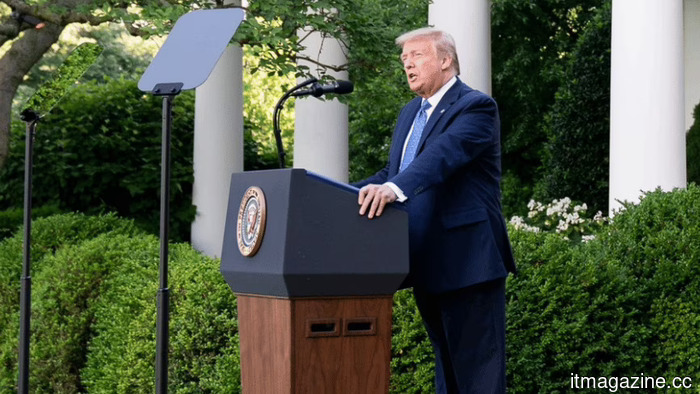 Trump's proposal for H-1B visas would set the minimum salary for entry-level tech positions at around $162,000.
A rule from the Trump administration would increase H-1B prevailing wages by approximately 30% at the entry-level tier, setting the minimum salary for foreign tech workers in San Francisco at $162,000.
Trump's proposal for H-1B visas would set the minimum salary for entry-level tech positions at around $162,000.
A rule from the Trump administration would increase H-1B prevailing wages by approximately 30% at the entry-level tier, setting the minimum salary for foreign tech workers in San Francisco at $162,000.
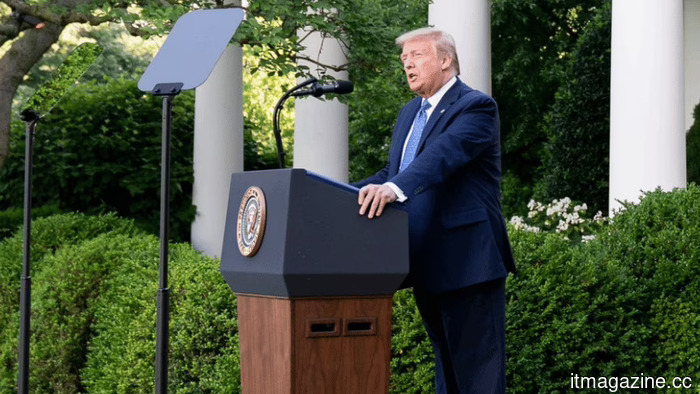 Trump's proposal for H-1B visas would raise the minimum salary for entry-level tech positions to approximately $162,000.
A rule from the Trump administration would increase H-1B prevailing wages by approximately 30% at the entry-level tier, setting the minimum salary for foreign tech workers in San Francisco at $162,000.
Trump's proposal for H-1B visas would raise the minimum salary for entry-level tech positions to approximately $162,000.
A rule from the Trump administration would increase H-1B prevailing wages by approximately 30% at the entry-level tier, setting the minimum salary for foreign tech workers in San Francisco at $162,000.
 The Top Thunderbolt 5 Docks for Mac in 2026
Quit accepting docks that restrict your Mac's ability to deliver a smooth desktop-grade experience on a daily basis. As we conclude the top Thunderbolt 5 docks for Mac in 2026, explore the top docking stations that transform cable clutter into an effective multi-display configuration.
The Top Thunderbolt 5 Docks for Mac in 2026
Quit accepting docks that restrict your Mac's ability to deliver a smooth desktop-grade experience on a daily basis. As we conclude the top Thunderbolt 5 docks for Mac in 2026, explore the top docking stations that transform cable clutter into an effective multi-display configuration.
 Korea greets a robotic Buddhist monk at an actual monastery, signaling a glimpse of the future.
The largest Buddhist organization in South Korea has unveiled Gabi, a humanoid robot monk, prompting new inquiries about the role of AI and robotics in spiritual practices.
Korea greets a robotic Buddhist monk at an actual monastery, signaling a glimpse of the future.
The largest Buddhist organization in South Korea has unveiled Gabi, a humanoid robot monk, prompting new inquiries about the role of AI and robotics in spiritual practices.
 The leak of the Xperia 1 VIII finally boosts Sony's confidence.
A vibrant leak of the Xperia 1 VIII indicates that Sony’s upcoming flagship may finally showcase more character, but the anticipated price and modifications to the camera could determine if the enthusiasm endures.
The leak of the Xperia 1 VIII finally boosts Sony's confidence.
A vibrant leak of the Xperia 1 VIII indicates that Sony’s upcoming flagship may finally showcase more character, but the anticipated price and modifications to the camera could determine if the enthusiasm endures.
OpenAI's Codex has now integrated into Chrome, bringing both valuable functionality and potential risks.
OpenAI's Codex Chrome extension brings the coding assistant into signed-in browser operations, enhancing its usefulness for practical tasks while also raising new concerns regarding access, permissions, and the risks associated with autonomous AI.