

Skyroot is hailed as India’s first space-tech unicorn, just before the Vikram-1 launch scheduled for June.
GIC and funds managed by BlackRock are leading a new funding round that more than doubles the company’s valuation in 2023. This funding coincides with the anticipated orbital launch of Vikram-1 from Sriharikota, marking the first attempt of a private Indian rocket to achieve this milestone. According to a report from Bloomberg on Wednesday, Skyroot Aerospace, a private launch vehicle developer based in Hyderabad, has reached unicorn status with this new financing. This makes Skyroot the first Indian space technology firm to surpass a valuation of $1 billion, a target that the country's emerging private space sector has aimed for since the regulatory changes of 2020.
The growth trajectory is notable. In 2023, Skyroot's last priced round, a $51 million Series B led by GIC, valued the firm at approximately $519 million. Speculation about an upcoming unicorn round began in April, with the latest funding expected to roughly double that valuation. The Bloomberg confirmation now includes GIC, Temasek, Greenko, Mukesh Bansal, and funds managed by BlackRock, the latter having previously provided Skyroot with ₹100 crore in debt financing in March.
This funding aligns with a specific operational goal. Skyroot is gearing up for the orbital launch of Vikram-1, its first commercial-grade rocket, with a launch window set for June 2026. The rocket has already been sent to the Satish Dhawan Space Centre in Sriharikota, the Indian government's launch facility along the Bay of Bengal, traditionally used for ISRO's state-led missions. A successful launch of Vikram-1 would mark the first instance of a privately developed orbital rocket reaching space from Indian territory.
The Vikram-1 launch represents a commercial advancement beyond Mission Prarambh, which took place in November 2022 and featured the Vikram-S sub-orbital demonstration, making Skyroot the first private Indian entity to reach space. Vikram-1 is fundamentally different, as it is a three-stage solid-fuel rocket designed to deliver up to 480 kg of payload to a 500 km sun-synchronous orbit, competing directly with international small-satellite launch providers.
The mix of investors is significant. GIC and Temasek, the two sovereign funds from Singapore, have been investing in Indian deeptech for years, and their continued involvement signals confidence that the regulatory environment is stable enough to support the long-term capital requirements of the rocketry sector.
Previous reports on the unicorn funding indicated that the investment will support the commercial operations of Vikram-1, the development of a larger Vikram-2 launch vehicle, and the necessary infrastructure for conducting repeated orbital missions at commercial scale.
The broader Indian context has shifted favorably for Skyroot. The Indian Space Policy 2023 has explicitly opened the country’s launch and satellite service sectors to private enterprises, with ISRO increasingly acting as a facilitator for commercial endeavors rather than the sole provider. Skyroot stands as a principal beneficiary of this change, alongside its Hyderabad-based competitor Agnikul Cosmos and several smaller firms.
The rationale for investing in Skyroot is based on three key points. First, the demand for small-satellite launch capacity is growing at a pace that existing providers, including SpaceX’s rideshare program, often cannot meet at the frequency required by small-satellite operators. Second, India's cost structure for labor and its engineering capabilities provide Skyroot with a significant economic advantage over U.S.-based competitors within the same payload class. Lastly, the now-liberalized regulatory framework has garnered political commitment to support private rocketry as a national strategic priority.
However, the funding does not yet resolve certain operational concerns. An independent assessment of Skyroot’s history notes that while the Vikram-S sub-orbital demonstration was a technical success, it did not test the orbital-class systems that Vikram-1 will need for commercial operations. The June launch window will be the first true test of the company's claims regarding commercial cadence.
If Vikram-1 successfully reaches orbit on schedule, the unicorn valuation of Skyroot will, based on its own logic, appear conservative. Conversely, if the launch is delayed or fails, the company will have time to address any operational shortcomings, yet the political and economic narrative surrounding Indian private space, which has been developing for years, would face a significant setback. The investors who finalized the unicorn round on Wednesday have accounted for successful execution in their valuations, and the Skyroot team has approximately six weeks to achieve this goal.
Other articles
 Lawrence Wong stands firm: AI will not lead to jobless growth in Singapore.
Singapore's parliament has reiterated Prime Minister Lawrence Wong's commitment made in February that the nation will not face jobless growth.
Lawrence Wong stands firm: AI will not lead to jobless growth in Singapore.
Singapore's parliament has reiterated Prime Minister Lawrence Wong's commitment made in February that the nation will not face jobless growth.
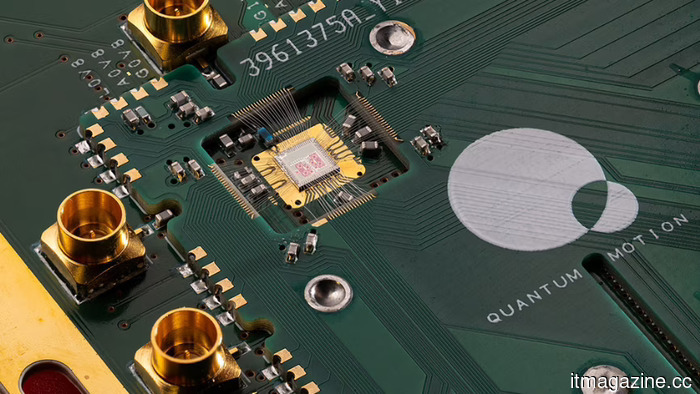 Quantum Motion secures $160 million in the EU's inaugural significant late-stage investment.
The new Scaleup Europe Fund of the European Union has spearheaded a $160 million funding round for Quantum Motion, a UK-based company specializing in silicon-CMOS spin-qubits.
Quantum Motion secures $160 million in the EU's inaugural significant late-stage investment.
The new Scaleup Europe Fund of the European Union has spearheaded a $160 million funding round for Quantum Motion, a UK-based company specializing in silicon-CMOS spin-qubits.
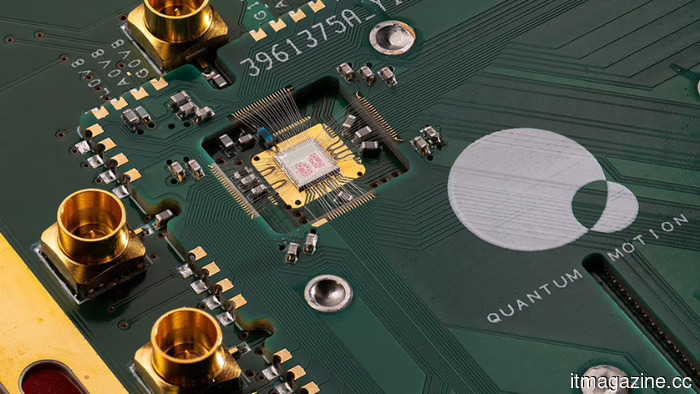 Quantum Motion secures $160 million in the EU's initial significant late-stage investment.
The new Scaleup Europe Fund of the European Union has spearheaded a $160 million investment round in Quantum Motion, a UK-based company specializing in silicon-CMOS spin-qubits.
Quantum Motion secures $160 million in the EU's initial significant late-stage investment.
The new Scaleup Europe Fund of the European Union has spearheaded a $160 million investment round in Quantum Motion, a UK-based company specializing in silicon-CMOS spin-qubits.
 Brussels reaches an agreement to streamline the AI Act and prohibit nudification applications.
Parliament and the Council have reached an agreement to extend the deadline for high-risk provisions of the EU AI Act to December 2027 and to prohibit AI nudification tools, resolving a prolonged stalemate.
Brussels reaches an agreement to streamline the AI Act and prohibit nudification applications.
Parliament and the Council have reached an agreement to extend the deadline for high-risk provisions of the EU AI Act to December 2027 and to prohibit AI nudification tools, resolving a prolonged stalemate.
 Brussels reaches an agreement to simplify the AI Act and prohibit nudification applications.
Parliament and the Council have reached an agreement to extend the deadline for high-risk classifications under the EU AI Act to December 2027 and to prohibit AI nudification tools, resolving a prolonged stalemate.
Brussels reaches an agreement to simplify the AI Act and prohibit nudification applications.
Parliament and the Council have reached an agreement to extend the deadline for high-risk classifications under the EU AI Act to December 2027 and to prohibit AI nudification tools, resolving a prolonged stalemate.
 Skyroot has achieved the status of India's first space-tech unicorn prior to the launch of Vikram-1 in June.
Skyroot Aerospace has completed a funding round that values the company at unicorn status, supported by GIC and funds managed by BlackRock, in anticipation of the scheduled June launch of Vikram-1.
Skyroot has achieved the status of India's first space-tech unicorn prior to the launch of Vikram-1 in June.
Skyroot Aerospace has completed a funding round that values the company at unicorn status, supported by GIC and funds managed by BlackRock, in anticipation of the scheduled June launch of Vikram-1.
Skyroot is hailed as India’s first space-tech unicorn, just before the Vikram-1 launch scheduled for June.
Skyroot Aerospace has completed a funding round that reached unicorn valuation, supported by funds managed by GIC and BlackRock, in anticipation of the scheduled launch of Vikram-1 in June.