
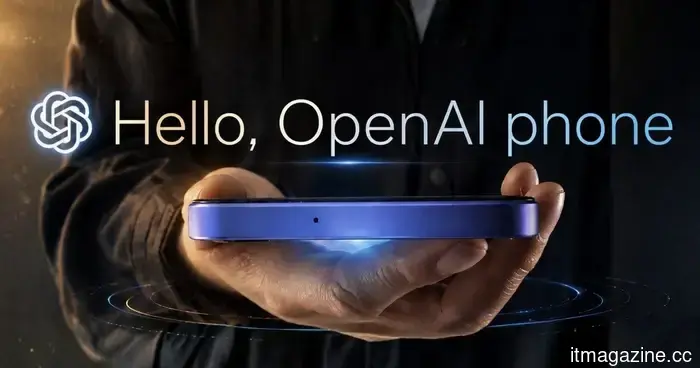
OpenAI may release its inaugural AI agent smartphone in 2027.
OpenAI may be gearing up to enter the hardware market with its inaugural AI-centered smartphone, according to analyst Ming Chi Kuo from TF Securities. The device is reportedly under active development, with plans for mass production potentially aimed at the first half of 2027. Although OpenAI has not formally acknowledged these intentions, Kuo’s supply chain insights imply the company is hastening its efforts to compete in the emerging sector of AI agent-driven devices.
A New Initiative in AI Hardware
The anticipated smartphone is expected to emphasize on-device AI functionalities over standard smartphone features. This trend mirrors a larger industry movement toward “AI agent” devices—products designed to execute tasks, comprehend context, and engage more autonomously with users.
OpenAI is reportedly accelerating the development of its first AI agent phone, with mass production possibly set for the first half of 2027. Factors influencing this move may include favorable narratives for a year-end IPO and the fast-paced competition in the AI agent smartphone market. MediaTek is the likely candidate for exclusive processor orders, with the device expected to utilize a custom version based on the Dimensity 9600, produced by TSMC’s N2P process in the second half of 2026.
Details from the report suggest that OpenAI is likely collaborating with MediaTek, which is viewed as the leading contender to supply the processor that may be based on a tailored version of future Dimensity technology. This processor is set to be produced with TSMC's advanced manufacturing process, emphasizing efficiency and performance.
Specifications Focused on AI Tasks
In contrast to standard smartphones, this device is expected to prioritize hardware specifically designed for AI tasks. Sources indicate a dual NPU (Neural Processing Unit) architecture aimed at efficiently managing complex AI workloads. This could facilitate quicker on-device processing for functions such as real-time language comprehension, visual recognition, and contextual computing.
Additional expected specs include LPDDR6 RAM and UFS 5.0 storage, intended to alleviate memory constraints that could hinder AI performance. An upgraded image signal processor (ISP) is also anticipated, which may enhance high dynamic range visuals and support real-world perception – crucial for AI systems dependent on camera input.
Security is expected to be a key focus, with features like pKVM (protected Kernel-based Virtual Machine) and inline hashing aimed at bolstering data integrity and device protection.
Rationale Behind OpenAI's Move into AI Smartphones
Insights from the industry suggest that OpenAI’s foray into smartphones is driven by a desire to fully control both hardware and software to provide an authentic AI agent experience. Unlike current devices reliant on apps, AI-first phones are likely to transition towards task-oriented interactions, enabling users to concentrate on results rather than maneuvering through various applications. Smartphones can also provide continuous real-time user context—such as location, activity, and usage patterns—which is essential for AI inference.
Reports indicate that OpenAI is collaborating with MediaTek and Qualcomm to develop custom processors, with Luxshare as a significant manufacturing ally, aiming for mass production around 2028. This strategy will likely merge on-device AI for immediate processing with cloud-based AI for tackling more complicated tasks. OpenAI’s strengths in consumer engagement, data, and AI modeling position it favorably to create a new ecosystem, possibly pairing hardware with subscription services and driving the next substantial upgrade cycle in smartphones.
OpenAI’s potential venture into hardware marks a shift in how AI firms are approaching product ecosystems. Rather than relying entirely on software platforms, companies are investigating dedicated devices to better manage performance, privacy, and user experience.
The timing may also be calculated, with reports suggesting that a hardware offering could bolster OpenAI's long-term strategy, particularly if the company is contemplating significant financial milestones, including a future IPO.
Implications for Users and the Market
Should this device be launched, it could establish a new category of smartphones focused on AI-first interactions. This could lead to more proactive assistance, enhanced real-time processing, and a reduced dependence on cloud computing.
For consumers, this might result in quicker responses, enhanced privacy, and more seamless integration of AI into everyday activities. For the industry, it indicates escalating competition, with more companies striving to define the characteristics of an AI-native device.
Looking Ahead
If development proceeds as scheduled, production could commence in late 2026, with shipments projected to reach approximately 30 million units across 2027 and 2028. However, timelines are still speculative, and much will hinge on the execution, partnerships, and readiness of the market.
As AI technology advances toward device-level integration, OpenAI’s reported plans suggest that the next competitive phase will focus not only on superior models but also on the hardware necessary to support them.
Other articles
 OpenAI may introduce its inaugural AI agent smartphone in 2027.
OpenAI might be working on an AI-centric smartphone aimed for release in 2027, emphasizing on-device intelligence, cutting-edge processors, and next-generation memory to facilitate more intelligent and autonomous user interactions.
OpenAI may introduce its inaugural AI agent smartphone in 2027.
OpenAI might be working on an AI-centric smartphone aimed for release in 2027, emphasizing on-device intelligence, cutting-edge processors, and next-generation memory to facilitate more intelligent and autonomous user interactions.
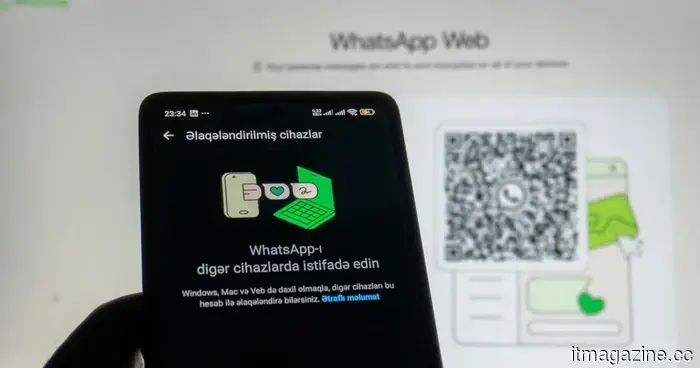 How to utilize WhatsApp Web
WhatsApp is a widely used messaging and calling application, and it can also be accessed through your web browser. Here’s how you can use it on a webpage.
How to utilize WhatsApp Web
WhatsApp is a widely used messaging and calling application, and it can also be accessed through your web browser. Here’s how you can use it on a webpage.
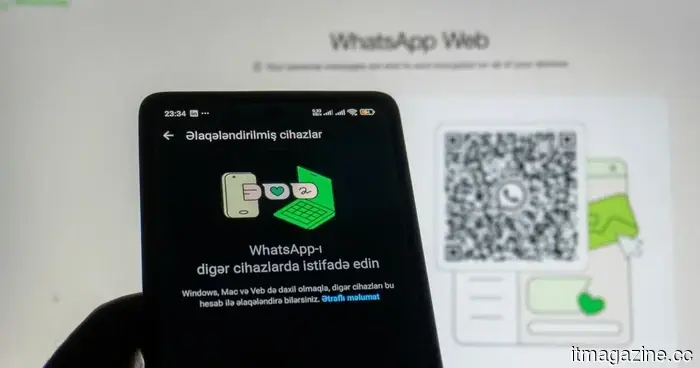 How to utilize WhatsApp Web
WhatsApp is a widely used app for messaging and calling, and it can also be accessed through your web browser. Here's how you can use it on a webpage.
How to utilize WhatsApp Web
WhatsApp is a widely used app for messaging and calling, and it can also be accessed through your web browser. Here's how you can use it on a webpage.
 Research reveals that online advertisements are revealing more about your private life than you anticipated.
Recent studies indicate that the advertisements displayed online contain sufficient information for AI to create a comprehensive personal profile, even without any clicks or data sharing from you.
Research reveals that online advertisements are revealing more about your private life than you anticipated.
Recent studies indicate that the advertisements displayed online contain sufficient information for AI to create a comprehensive personal profile, even without any clicks or data sharing from you.
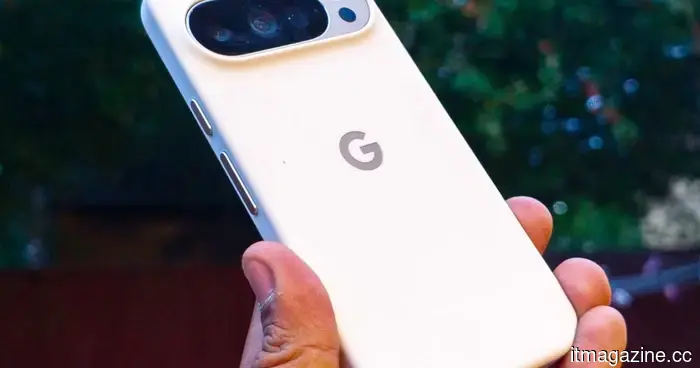 The hopes for a face unlock feature on the Pixel 11 that could rival the iPhone appear to be dashed.
Google's rumored competitor to Face ID might not make it into the Pixel 11 series, causing Pixel enthusiasts to wait even longer for the secure, hardware-supported face unlock feature they've desired since the Pixel 4.
The hopes for a face unlock feature on the Pixel 11 that could rival the iPhone appear to be dashed.
Google's rumored competitor to Face ID might not make it into the Pixel 11 series, causing Pixel enthusiasts to wait even longer for the secure, hardware-supported face unlock feature they've desired since the Pixel 4.
 5 excellent Netflix series to enjoy on New Year’s Day and afterwards
Whether you're looking for something casual that continues to play or a series you can immerse yourself in, these five selections offer both, presenting choices that are simple to begin and enjoyable enough to follow throughout the day.
5 excellent Netflix series to enjoy on New Year’s Day and afterwards
Whether you're looking for something casual that continues to play or a series you can immerse yourself in, these five selections offer both, presenting choices that are simple to begin and enjoyable enough to follow throughout the day.
OpenAI may release its inaugural AI agent smartphone in 2027.
OpenAI might be working on an AI-first smartphone aimed for release in 2027, concentrating on on-device intelligence, cutting-edge processors, and next-generation memory to facilitate more intelligent and autonomous interactions for users.