

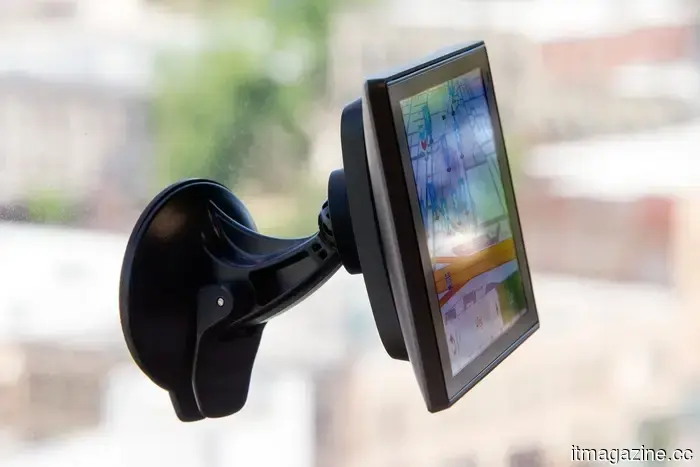
The renowned Oak Ridge laboratory has just created a portable device capable of detecting GPS spoofing in real time.
Thieves can take control of your GPS and make everything appear completely normal. Scientists have just developed a solution.
At Oak Ridge National Laboratory, we place our trust in GPS much like we do in gravity. It simply functions and guides us to our destinations. But what if someone could deceive it into providing false information, leaving you completely unaware?
In contrast to jamming, which inundates your GPS with interference and alerts you that something is wrong, spoofing transmits counterfeit signals that seem entirely authentic. You might track your vehicle or a delivery and believe everything is fine, while the shipment is actually redirected elsewhere, leaving you oblivious.
This phenomenon, known as GPS spoofing, is a more serious issue than many people understand. The Department of Energy's Oak Ridge National Laboratory is working to address this challenge.
How serious is the threat?
While GPS spoofing might not appear alarming on an individual basis, it poses a genuine risk to businesses and governments. International criminal organizations are already leveraging spoofing to steal loaded freight trucks.
In a notable incident, criminals spoofed GPS signals to take control of several shipments of specialty tequila from a brand co-founded by Guy Fieri and Sammy Hagar. They succeeded repeatedly because the GPS tracking indicated the truck was headed precisely where it was expected to be.
Now, consider the potential consequences if such tactics were applied to a truck transporting radioactive materials or pharmaceuticals.
So, what is the solution?
Researchers at the Department of Energy’s Oak Ridge National Laboratory have created the world's first highly sensitive, portable GPS spoofing detector that operates in real time, even while in motion. Its distinguishing feature is that it can identify spoofing even when the fraudulent signals are as strong as legitimate ones—something no other existing system can accomplish.
“Ours is the best in the world,” stated Austin Albright, the team leader. “The trucking industry needs a solution that operates without special conditions or reliance on a trusted reference source.”
The detector functions independently of a GPS receiver or prior knowledge of available signals. The team is currently focused on making it more affordable for widespread application.
Albright articulates the urgency succinctly. Similar to how a carbon monoxide detector identifies an invisible threat before it’s too late, this device serves the same purpose for GPS, preventing the loss of cargo or worse.
---
Kenya was expected to enhance access to more affordable healthcare options. However, a new investigation has revealed that its algorithm-based system is complicating matters for those it was intended to assist. According to reports from The Guardian, Africa Uncensored, and Lighthouse Reports, Kenya's recent Social Health Authority system employs a predictive machine-learning algorithm to determine how much individuals should pay for public health insurance.
This system was first introduced in October 2024 as part of President William Ruto’s commitment to extend healthcare access to Kenya's significant informal workforce.
---
I rely on AI every day, so I needed a solution I could consistently count on rather than just occasionally use. Eventually, it became evident that to achieve that level of reliability, I would have to make a payment. The real dilemma arose when it came to making a choice. It boiled down to ChatGPT versus Claude. I had been using ChatGPT for quite some time, and it already understood my thought processes and requirements, making it a comfortable option. However, the more I explored Claude's capabilities, the more challenging my decision became. It was no longer a straightforward choice.
I deliberated for a while, balancing familiarity against functionality. Ultimately, I opted for Claude, and in retrospect, I have no regrets about that decision.
---
The era of brain-tracking wearables might be closer than anticipated.
Recent advancements in consumer technology have focused on quantifying various bodily metrics over the past decade. Heart rate, sleep cycles, blood oxygen levels, recovery, stress, and readiness have all been consolidated into dashboards providing clearer insights into your health. Now, the next stage may involve a more personal approach by shifting the focus to the brain—not literally, of course.
Neurable, a company based in Boston developing noninvasive brain-computer interface technology, is transitioning to a licensing model, which suggests that its EEG-based system could soon be integrated into a broader array of consumer devices beyond the company's own headphones. Other manufacturers could potentially incorporate this technology into familiar items like gaming headsets, smart glasses, hats, helmets, and other wearable devices. One of the initial products expected to feature this is a gaming headset created in collaboration with HyperX.






Other articles
 Samsung's forthcoming Galaxy Z Flip 8 could potentially resolve a significant display issue.
Samsung's Galaxy Z Flip 8 appears to be a significant yet understated upgrade, featuring a long-awaited solution for the crease-free display alongside a series of minor hardware enhancements.
Samsung's forthcoming Galaxy Z Flip 8 could potentially resolve a significant display issue.
Samsung's Galaxy Z Flip 8 appears to be a significant yet understated upgrade, featuring a long-awaited solution for the crease-free display alongside a series of minor hardware enhancements.
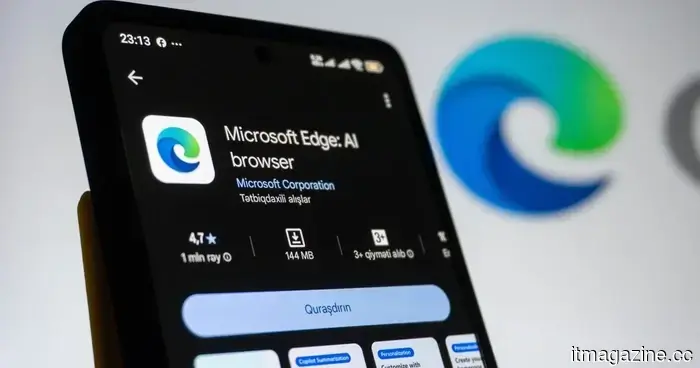 Microsoft Edge is eliminating sidebar applications as part of the ongoing effort to declutter Windows 11.
Microsoft is discontinuing the sidebar app list in Edge as part of its effort to simplify the browser, eliminating pinned web applications but retaining Copilot.
Microsoft Edge is eliminating sidebar applications as part of the ongoing effort to declutter Windows 11.
Microsoft is discontinuing the sidebar app list in Edge as part of its effort to simplify the browser, eliminating pinned web applications but retaining Copilot.
 China's rise in industry is propelled by commercialization rather than subsidies - and the West lacks a response to this.
China has invested $184 billion in AI venture capital, achieving 86% of its Made in China 2025 goals, with research and development expenditures exceeding those of the United States. The key factor is large-scale commercialization rather than government funding.
China's rise in industry is propelled by commercialization rather than subsidies - and the West lacks a response to this.
China has invested $184 billion in AI venture capital, achieving 86% of its Made in China 2025 goals, with research and development expenditures exceeding those of the United States. The key factor is large-scale commercialization rather than government funding.
 UCB is investing up to $2.2 billion to acquire Candid Therapeutics, reinforcing its commitment to T-cell engagers in the area of autoimmune diseases.
UCB is set to invest as much as $2.2 billion in Candid Therapeutics, focusing on cizutamig and the growing trend of T-cell engagers in autoimmune diseases.
UCB is investing up to $2.2 billion to acquire Candid Therapeutics, reinforcing its commitment to T-cell engagers in the area of autoimmune diseases.
UCB is set to invest as much as $2.2 billion in Candid Therapeutics, focusing on cizutamig and the growing trend of T-cell engagers in autoimmune diseases.
 UCB invests as much as $2.2 billion in Candid Therapeutics, reinforcing its commitment to T-cell engagers for treating autoimmune diseases.
UCB is set to invest as much as $2.2 billion in Candid Therapeutics, placing its confidence in cizutamig and the broader surge of T-cell engagers for autoimmune diseases.
UCB invests as much as $2.2 billion in Candid Therapeutics, reinforcing its commitment to T-cell engagers for treating autoimmune diseases.
UCB is set to invest as much as $2.2 billion in Candid Therapeutics, placing its confidence in cizutamig and the broader surge of T-cell engagers for autoimmune diseases.
The renowned Oak Ridge laboratory has just created a portable device capable of detecting GPS spoofing in real time.
GPS spoofing enables criminals to steal trucks, hijack shipments, and redirect hazardous cargo, all while maintaining the appearance of normalcy. A newly developed detector from Oak Ridge National Lab is the first to identify this activity in real time.