

ByteDance's Anew Labs introduces its first AI-created therapy as the TikTok parent company joins the competition in drug discovery.
ByteDance’s drug discovery division, Anew Labs, showcased its inaugural AI-designed therapy at a prominent immunology conference in Boston, demonstrating a generative AI-crafted small molecule aimed at IL-17, a protein-protein interaction that has long been deemed undruggable. In addition, the unit launched AnewOmni, a generative framework trained on five million biomolecular complexes, which claims to be the first to design functional molecules at all scales. ByteDance joins the ranks of companies such as Isomorphic Labs, Anthropic, and Insilico Medicine in the AI drug discovery race.
The same company responsible for TikTok’s precise recommendation algorithm is now employing similar AI technologies to predict the behavior of molecules in the human body. At the American Association of Immunologists’ annual meeting held in mid-April in Boston, Anew Labs introduced a small molecule designed by generative AI to inhibit IL-17, a cytokine associated with autoimmune disorders like psoriasis, rheumatoid arthritis, and ankylosing spondylitis. The molecule specifically targets a protein-protein interaction, a category often labeled as undruggable due to the broad and flat binding surfaces that conventional small molecules struggle to affect. Anew Labs asserts that its AI has found a way to navigate this challenge.
The Boston presentation marked the first public display of Anew Labs’ achievements, with further plans to showcase their work at the BIO International Convention in San Diego in June, and their head of computational chemistry is set to present at the Free Energy Workshop in Barcelona next week.
With a team based in Shanghai, Singapore, and San Jose, California, Anew Labs comprises 36 core members as listed on its website, alongside a scientific advisory board featuring notable experts like Liu Yongjun, a former president of Innovent Biologics, Ji Ma, a former principal scientist at Amgen, and Hua Zou, the scientific director of protein chemistry at Takeda California. The advisory board appears to draw from leaders in the biologics and immunology fields, areas where Anew Labs aims to create alternatives to costly injectable antibody therapies, using generative AI to develop small molecules that could replace those injections with oral medications.
At the Boston conference, Chris Li, leading biology at Anew Labs, presented one of the company’s four pipeline drug candidates: a pan-spectrum IL-17 inhibitor designed to obstruct multiple IL-17 variants rather than just one. Current IL-17 treatments, such as Novartis’s secukinumab and Eli Lilly’s ixekizumab, are injectable antibodies that have generated billions in revenue for treating inflammatory diseases. An oral small molecule achieving similar effectiveness would be revolutionary, being cheaper to produce and simpler for patients to use.
The significant challenge lies in IL-17's interaction with its receptor, which features a broad, shallow binding surface that provides little traction for small molecules. The gap between the capabilities of AI in a lab and its delivery to patients remains a central issue in health technology, and IL-17 exemplifies a target where this gap is particularly pronounced.
In March, Anew Labs released a preprint on bioRxiv detailing AnewOmni, a generative AI framework that has been trained on over five million biomolecular complexes. This model aims to function across varied molecular scales, from small chemical compounds to peptides and nanobodies, building chemically relevant structures at atomic resolution. The researchers showcased AnewOmni's ability to design functional molecules targeting KRAS G12D, a prominent oncology target, and PCSK9, a protein linked to cholesterol, with success rates ranging from 23 to 75 percent based solely on preliminary lab validations. The model utilizes programmable graph prompts that enable scientists to guide the generation process by setting specific chemical, geometric, and topological constraints.
This technical approach is noteworthy as it seeks to address a significant limitation affecting AI drug discovery in the industry: many generative models excel at only one molecular scale but struggle with cross-scale design. AnewOmni claims to be the pioneering framework capable of functional molecular design across all scales, which, if validated clinically, would provide Anew Labs with a robust platform for discovery rather than just isolated projects. Isomorphic Labs, the DeepMind spinoff supported by Eli Lilly and Novartis, recently introduced its own drug design tool, enhancing the accuracy of AlphaFold 3 and forming partnerships worth up to $3 billion. The global competition for establishing the premier AI drug design platform is underway, and ByteDance is entering the race with a model that seemingly addresses a challenge unaddressed by its competitors thus far.
ByteDance is not the first tech entity to venture into drug discovery; Anthropic's acquisition of Coefficient Bio for $400 million brought a small team to enhance its biological research, while Google’s DeepMind has been involved in protein structure prediction since AlphaFold's pivotal success, which earned the 2024 Nobel Prize in Chemistry. Microsoft also invests in biology-focused AI through its collaboration with Paige
Other articles
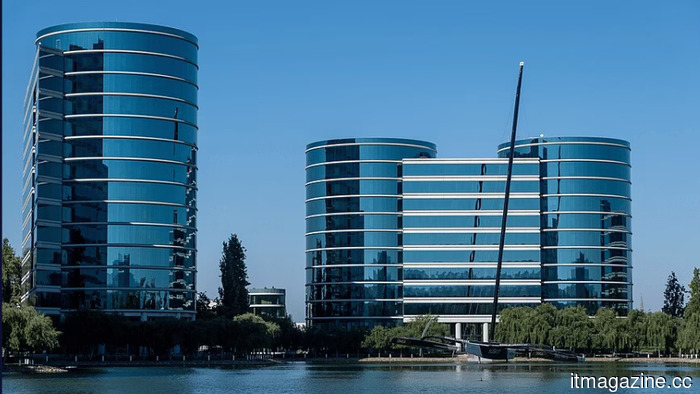 Oracle's stock drops by 50% despite a buy consensus from Wall Street, as concerns about concentration rise due to a $300B deal with OpenAI.
Out of 51 analysts, 41 recommend Oracle as a buy. The stock has decreased by 50%. The disparity represents a $300 billion wager on OpenAI's potential to increase its revenue tenfold.
Oracle's stock drops by 50% despite a buy consensus from Wall Street, as concerns about concentration rise due to a $300B deal with OpenAI.
Out of 51 analysts, 41 recommend Oracle as a buy. The stock has decreased by 50%. The disparity represents a $300 billion wager on OpenAI's potential to increase its revenue tenfold.
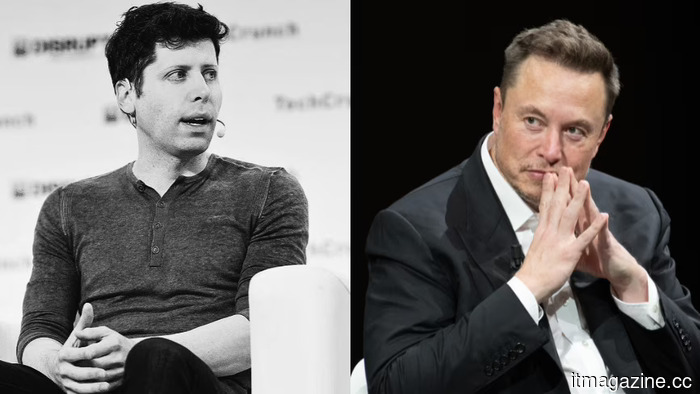 Musk’s lawsuit against OpenAI is situated around its initial week.
La demanda de Elon Musk por 130 mil millones de dólares contra OpenAI enfrentó varios obstáculos en su primera semana, incluyendo su reconocimiento de que xAI se entrena con los modelos de OpenAI.
Musk’s lawsuit against OpenAI is situated around its initial week.
La demanda de Elon Musk por 130 mil millones de dólares contra OpenAI enfrentó varios obstáculos en su primera semana, incluyendo su reconocimiento de que xAI se entrena con los modelos de OpenAI.
 Musk's lawsuit against OpenAI begins around its first week.
La demanda de Elon Musk de $130 mil millones contra OpenAI enfrentó varios obstáculos en su primera semana, incluyendo su confesión de que xAI se entrena en los modelos de OpenAI.
Musk's lawsuit against OpenAI begins around its first week.
La demanda de Elon Musk de $130 mil millones contra OpenAI enfrentó varios obstáculos en su primera semana, incluyendo su confesión de que xAI se entrena en los modelos de OpenAI.
 ByteDance's Anew Labs unveils its inaugural AI-designed therapy as the parent company of TikTok joins the competition in drug discovery.
ByteDance's pharmaceutical division presented an AI-created IL-17 inhibitor at a conference in Boston. This molecule aims at interactions deemed undruggable by the industry. Only clinical trials will provide answers.
Apple's $599 Mac mini is no longer available. The reason? The AI agents.
Apple has phased out the $599 Mac mini and increased the starting price to $799, citing high demand for AI and agentic tools that are putting pressure on its desktop supply.
ByteDance's Anew Labs unveils its inaugural AI-designed therapy as the parent company of TikTok joins the competition in drug discovery.
ByteDance's pharmaceutical division presented an AI-created IL-17 inhibitor at a conference in Boston. This molecule aims at interactions deemed undruggable by the industry. Only clinical trials will provide answers.
Apple's $599 Mac mini is no longer available. The reason? The AI agents.
Apple has phased out the $599 Mac mini and increased the starting price to $799, citing high demand for AI and agentic tools that are putting pressure on its desktop supply.
ByteDance's Anew Labs introduces its first AI-created therapy as the TikTok parent company joins the competition in drug discovery.
ByteDance's pharmaceutical division presented an AI-created IL-17 inhibitor at a conference in Boston. This molecule focuses on interactions previously deemed undruggable by the pharmaceutical industry. Only clinical trials will reveal its effectiveness.