

Meta's $145 billion AI initiative eclipses the child safety lawsuits that could potentially incur higher costs.
**TL;DR** Meta's Q1 2026 earnings call was solely focused on AI investments, planning to spend $125-$145 billion on capital expenditures, while overlooking the company's increasing child safety challenges, which include a lost addiction trial with $6 million in damages, a $375 million penalty in New Mexico, over 40 lawsuits from state attorneys general, bans on youth access in countries like Indonesia, Australia, France, and Spain, a recent EU inquiry, and proposed US Senate legislation aimed at AI chatbots for minors. CFO Susan Li acknowledged potential “material loss,” but no investor questioned Zuckerberg about the child safety issues.
Mark Zuckerberg's earnings call on Wednesday centered on AI, particularly the $125 to $145 billion that Meta intends to allocate for capital expenditures in 2026, discussing Llama models, recommendation engines, and the advertising systems generating $56 billion in quarterly revenue. However, the topic of children was absent. No investor raised concerns about the social media addiction trial that Meta lost in March, the numerous similar lawsuits pending, the EU investigation into underage users disclosed this week, or the Senate committee's support for legislation to restrict AI chatbot access for minors, nor did they mention the ban on under-16 users in Indonesia that took Meta's platforms offline for millions of young individuals. Zuckerberg informed employees that 8,000 layoffs this month were aimed at reallocating resources from human capital to infrastructure; however, he did not describe the company's strategy to tackle the rising legal, regulatory, and reputational costs linked to its existing products.
**The Verdict**
On March 25, a jury in Los Angeles County found Meta and Google culpable for creating addictive platforms that harmed a young user, attributing 70 percent of the $6 million damages to Meta—marking the first verdict in a social media addiction case. A separate jury in New Mexico determined that Meta breached the state’s Unfair Practices Act by hiding information about child sexual exploitation and its platforms' impact on children's mental health, resulting in a $375 million penalty. The highest court in Massachusetts ruled in April that Meta must respond to a state lawsuit claiming it intentionally designed features to keep young users addicted. More than 40 attorneys general across various states have launched child safety cases against Meta, with key trials set for 2026. CFO Susan Li noted in her prepared statements that Meta “continues to face scrutiny over youth-related issues” and that ongoing trials “could ultimately lead to a material loss.”
The term “material” carries significant weight in that context. The tobacco industry's master settlement in 1998 cost $206 billion over 25 years, compared to Meta's quarterly revenue of $56 billion. A settlement equivalent to that scale for Meta could become the largest corporate liability in history. The cases currently advancing through the courts are testing the same legal principle that resulted in the tobacco settlement: whether the company was aware of the harm its product caused, concealed the information, and continued to market it to minors. Regulatory bodies in various jurisdictions are simultaneously examining platforms for failures in child safety under new online safety laws, thereby broadening the potential legal implications beyond U.S. courts.
**The Bans**
While the lawsuits address historical harm, governments are taking steps to prevent future risks. Indonesia was the first Southeast Asian nation to prohibit social media access for users under 16, banning platforms like Google’s YouTube, ByteDance’s TikTok, and Meta’s Instagram, Facebook, and Threads from hosting minors. Australia imposed a similar ban in December 2025. France enacted an under-15 prohibition in January, and Spain has announced its own under-16 restriction. This week, the European Commission intensified its investigation into Meta's failure to prevent underage users from accessing its platforms, potentially leading to fines up to 6 percent of global revenue. Additionally, a U.S. Senate committee has supported legislation that would require Meta and other AI companies to prohibit minors from using chatbots, thereby expanding regulatory oversight from social media to AI-driven conversational products.
This trend is both global and rapid. Each ban and investigation incurs compliance costs, shrinks Meta's market for young users, and increases the regulatory scrutiny acknowledged by Li during the earnings call. Furthermore, the restrictions serve as a natural experiment: should social media use among minors decline in countries with such bans, and if related improvements in youth mental health are observable, it would strengthen the case for addiction lawsuits in the U.S.
**The Spending**
Meta has been laying off hundreds of employees across Reality Labs, recruiting, and sales while simultaneously doubling its AI budget. The planned $125 billion to $145 billion in capital expenditures for 2026 is about twice last year’s spending, predominantly directed towards data centers, GPUs, custom silicon, and the infrastructure needed to support Llama models and Meta’s Superintelligence Labs. The extended Broadcom chip agreement, valid until 2029, commits Meta to an expensive custom silicon initiative. Wall Street responded negatively
Other articles
 Nebius has purchased Eigen AI, a company with 20 employees, for $643 million as inference optimization emerges as the most crucial component of AI infrastructure.
Nebius has acquired Eigen AI, a 20-person MIT spinout that optimizes tokens per GPU, for $643 million. In the neocloud competition, inference optimization provides a significant advantage.
Nebius has purchased Eigen AI, a company with 20 employees, for $643 million as inference optimization emerges as the most crucial component of AI infrastructure.
Nebius has acquired Eigen AI, a 20-person MIT spinout that optimizes tokens per GPU, for $643 million. In the neocloud competition, inference optimization provides a significant advantage.
 Meta's $145 billion AI initiative eclipses the child safety lawsuits that may incur even higher costs.
Meta faced its first loss in an addiction trial, is dealing with over 40 lawsuits from state attorneys general, and is experiencing a rise in bans. During Zuckerberg's earnings call, the focus was on AI, with no investors inquiring about issues related to children.
Meta's $145 billion AI initiative eclipses the child safety lawsuits that may incur even higher costs.
Meta faced its first loss in an addiction trial, is dealing with over 40 lawsuits from state attorneys general, and is experiencing a rise in bans. During Zuckerberg's earnings call, the focus was on AI, with no investors inquiring about issues related to children.
 Apple has confirmed that the Mac mini will be in limited supply for the next few months.
Apple indicates that the Mac mini and Mac Studio might continue to experience supply constraints for several months due to demand that was higher than anticipated, surprising the company.
Apple has confirmed that the Mac mini will be in limited supply for the next few months.
Apple indicates that the Mac mini and Mac Studio might continue to experience supply constraints for several months due to demand that was higher than anticipated, surprising the company.
 Meta purchases Assured Robot Intelligence to develop the Android for humanoid robots.
Meta acquired ARI, a robotics AI startup, and integrated it into Superintelligence Labs. The aim is to become the essential platform for all humanoid manufacturers.
Meta purchases Assured Robot Intelligence to develop the Android for humanoid robots.
Meta acquired ARI, a robotics AI startup, and integrated it into Superintelligence Labs. The aim is to become the essential platform for all humanoid manufacturers.
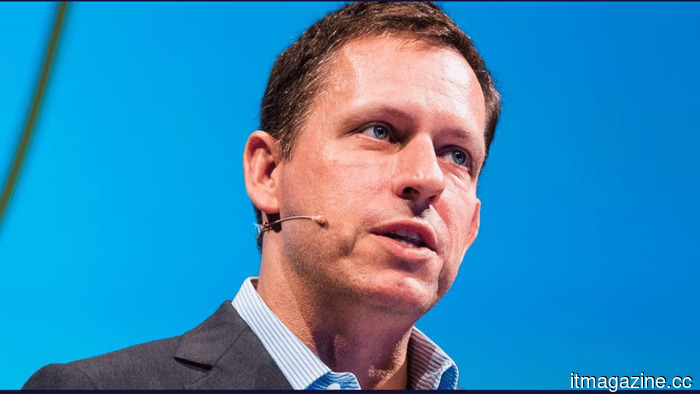 Founders Fund has raised $6 billion following the expenditure of $4.6 billion in less than a year on investments in Anthropic, Anduril, and OpenAI.
Founders Fund has launched a $6 billion fund, succeeding its previous $4.6 billion fund, which was utilized in less than a year. The average investment amount is $600 million. Their portfolio includes Anthropic, Anduril, SpaceX, and OpenAI.
Founders Fund has raised $6 billion following the expenditure of $4.6 billion in less than a year on investments in Anthropic, Anduril, and OpenAI.
Founders Fund has launched a $6 billion fund, succeeding its previous $4.6 billion fund, which was utilized in less than a year. The average investment amount is $600 million. Their portfolio includes Anthropic, Anduril, SpaceX, and OpenAI.
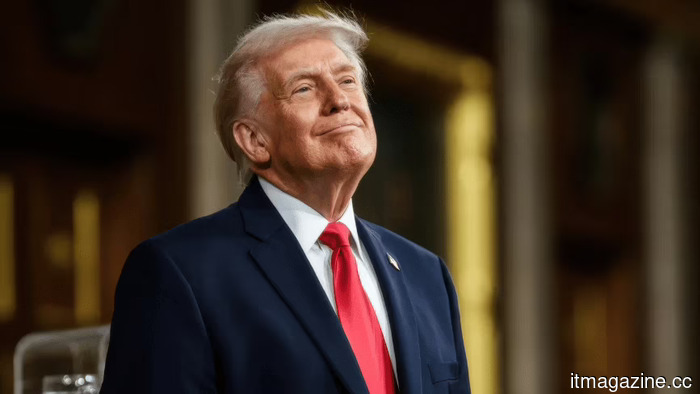 Trump's 25% tariff on EU automobiles violates the Turnberry Agreement, which also addresses semiconductors and digital commerce.
Next week, Trump will increase EU car tariffs to 25%, violating the Turnberry agreement. This pact also includes chips and AI. The cars will serve as a trial.
Trump's 25% tariff on EU automobiles violates the Turnberry Agreement, which also addresses semiconductors and digital commerce.
Next week, Trump will increase EU car tariffs to 25%, violating the Turnberry agreement. This pact also includes chips and AI. The cars will serve as a trial.
Meta's $145 billion AI initiative eclipses the child safety lawsuits that could potentially incur higher costs.
Meta experienced a defeat in its initial addiction trial, is confronted with over 40 lawsuits from state attorneys general, and is seeing an increase in bans. During Zuckerberg's earnings call, the focus was on AI, and no investors inquired about issues concerning children.