
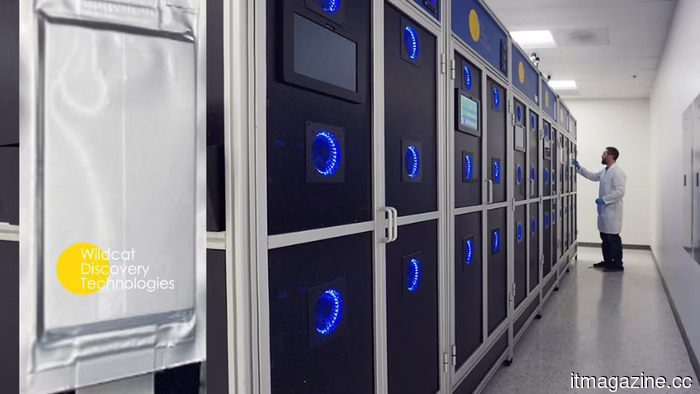
Holyvolt acquires the American battery innovator Wildcat Discovery for $73 million.
The battery industry faces a challenge in translating laboratory discoveries into practical applications. While researchers can pinpoint promising new materials, the significant hurdle lies in successfully navigating the processes of chemistry, engineering, and manufacturing without incurring substantial time and financial losses. This gap between discovery and production has been a longstanding obstacle for the clean energy transition.
Holyvolt, a battery technology startup from Sweden established in 2022, believes it has a solution to bridge this gap. On Thursday, the company, which is backed by Volvo, announced its acquisition of Wildcat Discovery Technologies, a battery materials company based in San Diego, in a deal valued at $73 million, comprising cash, equity, and deferred milestone payments.
This acquisition brings together two parallel technological advancements: Holyvolt's water-based manufacturing process and screen-printing techniques, and Wildcat's High Throughput Platform (HTP), which allows for the simultaneous synthesis and screening of thousands of material combinations.
Mathias Ingvarsson, CEO of Holyvolt, shared with Impact Loop that the company had previously been a client of Wildcat before deciding to acquire it. “Wildcat is today the world leader, hands down the best in the world, in battery chemistry,” he stated. “They have dedicated 18 years to battery chemistry, becoming leaders in anodes, cathodes, electrolytes, and essentially all components related to a battery.”
At its core, Wildcat’s HTP serves as a materials discovery engine. It conducts combinatorial experiments in parallel, a method initially developed for drug discovery, and can identify the best battery chemistries up to ten times faster than traditional research techniques. Importantly, the platform generates large, structured datasets of materials, which are crucial for machine learning applications to be effective rather than superficial.
Holyvolt adds value on the manufacturing front by replacing organic solvents typically used in traditional battery electrode coating with a water-based process, employing screen-printing methods developed over two decades of research. This approach is intended to be flexible, modular, and scalable, which is crucial for transitioning from pilot-scale production to commercial volume without the need for extensive factory modifications.
Together, the two companies outline a workflow that spans from molecular discovery to pilot-scale production. The newly merged entity will operate from locations in Stockholm, Munich, and San Diego, catering to clients across the battery supply chain through technology development collaborations and licensing agreements.
This acquisition follows a €20 million funding round for Holyvolt, specifically intended to facilitate this deal. Ingvarsson noted that the company secured around €12 million at a €182 million valuation in February, building on a previous funding round of about €5.5 million. Investors include Volvo, climate tech venture capital firm Course Corrected, and FAM, the investment division of Sweden's Wallenberg family.
The intellectual roots of Wildcat’s platform trace back to Professor Peter Schultz, the founder of the company and a Chemistry Professor at Scripps Research in San Diego. Schultz is a leading pioneer in combinatorial chemistry, which involves conducting numerous parallel experiments to uncover promising compounds, revolutionizing drug discovery in the 1990s and 2000s. He founded Symyx Technologies to apply this methodology to materials science and later established Wildcat to focus on batteries.
“With Holyvolt, we can replicate the advancements high throughput and AI have achieved in drug discovery for batteries,” Schultz remarked.
Schultz's credentials are impressive: he is a recipient of the Wolf Prize in Chemistry, a member of the National Academy of Sciences, and has earned many other prestigious scientific awards.
The significance of Schultz's combinatorial chemistry methodology is indisputable. However, the critical questions that will unfold over the next few years are whether this approach can be effectively applied to battery materials at the envisioned scale and speed, and whether the newly formed entity can successfully convert its promising technology into commercial agreements.
Other articles
 Gemini is transforming the in-car experience — here’s how they are doing it.
Google is introducing Gemini to vehicles, offering more natural dialogue and more intelligent in-car assistance that truly comprehends your intent.
Gemini is transforming the in-car experience — here’s how they are doing it.
Google is introducing Gemini to vehicles, offering more natural dialogue and more intelligent in-car assistance that truly comprehends your intent.
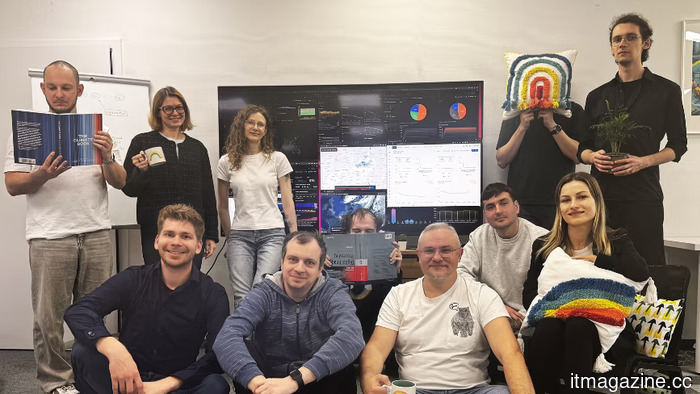 Rainbow Weather secures $5.5 million to enhance real-time weather forecasting.
Rainbow Weather has secured $5.5 million to enhance its AI-powered weather predictions, broadening its focus from precipitation information to enterprise forecasting.
Rainbow Weather secures $5.5 million to enhance real-time weather forecasting.
Rainbow Weather has secured $5.5 million to enhance its AI-powered weather predictions, broadening its focus from precipitation information to enterprise forecasting.
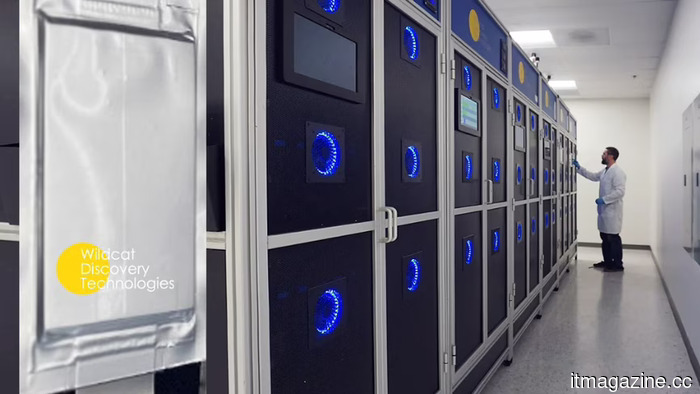 Holyvolt acquires US battery innovator Wildcat Discovery for $73 million.
Holyvolt has purchased Wildcat Discovery Technologies for $73 million, merging screen-printing production with high-throughput discovery of battery materials.
Holyvolt acquires US battery innovator Wildcat Discovery for $73 million.
Holyvolt has purchased Wildcat Discovery Technologies for $73 million, merging screen-printing production with high-throughput discovery of battery materials.
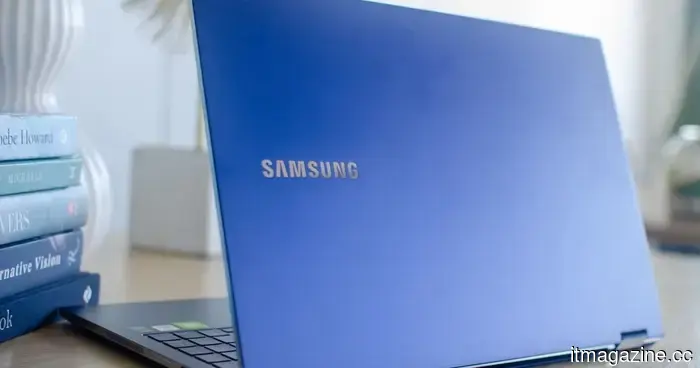 Samsung's upcoming Galaxy Book laptops may operate on an Android-based operating system rather than Windows.
Samsung's Android Galaxy Books are expected to operate on One UI 9, which is based on Android 17 and likely developed on Google's forthcoming Aluminium OS.
Samsung's upcoming Galaxy Book laptops may operate on an Android-based operating system rather than Windows.
Samsung's Android Galaxy Books are expected to operate on One UI 9, which is based on Android 17 and likely developed on Google's forthcoming Aluminium OS.
Holyvolt acquires the American battery innovator Wildcat Discovery for $73 million.
Holyvolt has purchased Wildcat Discovery Technologies for $73 million, integrating screen-printing manufacturing with the rapid development of battery materials.