
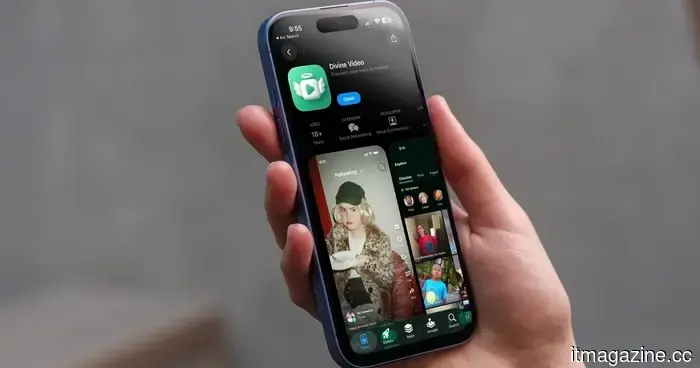
The internet's beloved app Vine has returned from the grave, now under the name Divine.
The six-second videos that inspired countless creators are returning, and this time they're here for the long haul.
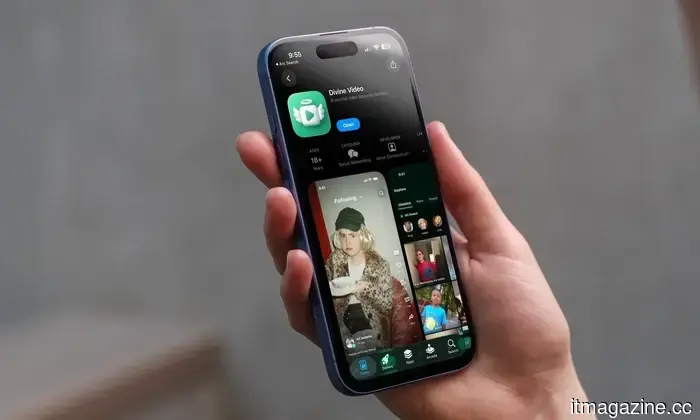
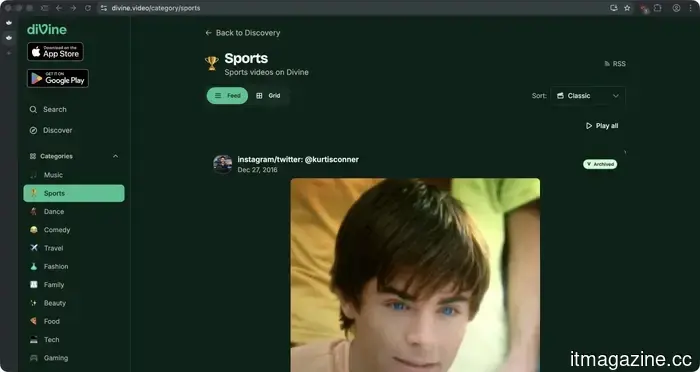
Vine is back, and if you're feeling a wave of nostalgia, you're not alone. Divine, a revived version of Vine supported by Twitter co-founder Jack Dorsey, is now accessible on the App Store and Google Play. The app reinstates about 500,000 archived Vine videos and allows creators to share new six-second looping videos again.
According to TechCrunch, Dorsey’s nonprofit, “and Other Stuff,” financed the initiative. He isn’t looking for any financial returns; his aim is more straightforward: to correct the error he made when he shut down Vine in 2017.
So, how was Vine resurrected?
Evan Henshaw-Plath, also known online as “Rabble,” a former Twitter employee, spearheaded the project. He found that much of Vine’s original content had been preserved by a community archiving effort called the Archive Team.
The files were stored as large 40-50 GB binary files, which required Rabble to write extensive data scripts to rebuild the videos along with their original views, likes, and comments.
The app was initially launched for testing last November with 100,000 videos, increased to 300,000 just before today’s release, and now features videos from nearly 100,000 original Vine creators.
Is this simply a trip down memory lane?
Not quite. The original Viners encouraged the team to take their time and approach it correctly. “It was actually the Viners who insisted that this is about more than just nostalgia,” Rabble explained.
A significant draw of Divine is its position on AI-generated content. It strictly prohibits it. “I don’t like feeling deceived,” Rabble stated. The app mandates that users either record videos within the app or confirm how uploaded videos were made.
Several original Viners are already participating, including Lele Pons, who remarked, “Many of us started on Vine, and it was the beginning of everything.”
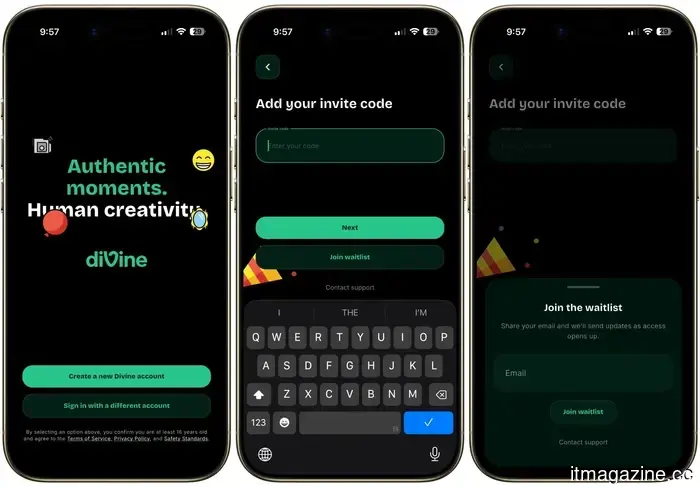
Divine is free to download and is currently being rolled out via invitation codes. I just hope it endures longer than Digg did.
Social media scams have resulted in over two billion dollars in losses for consumers last year.
Fraud on Facebook led to significant financial losses as social media scams surged in 2025.
Social media platforms have become the most costly scam environments in America. According to the Federal Trade Commission (FTC), consumers reported $2.1 billion in losses due to platform-based fraud in 2025, a figure that has increased eightfold within five years. Nearly one in three fraud victims stated that the scam began on a social platform.
Why does Facebook attract so many scams?
I discovered an app that finally ended my toxic relationship with doomscrolling.
I won’t pretend I’m immune to it — I watch Instagram Reels and YouTube Shorts like everyone else, and it typically begins innocently enough. A notification appears, I unlock my phone, and I convince myself to just check one thing. Next thing I know, I’m lost in a feed of random videos, unaware of how I got there or how much time has vanished. I’ve earnestly attempted to address this — I’ve set app limits and told myself to adhere to them. I even removed Shorts from my YouTube feed, hoping it would resolve the issue. I tried various apps that promise to curb usage and keep you accountable. For a day or two, it felt like I had control. But gradually, almost unnoticed, I found myself right back in the same cycle. This habit sneaks in during moments of boredom, and before I know it, I’m scrolling again.
At some point, I had to face it — doomscrolling was no longer an occasional occurrence; it had become a habitual action I returned to mindlessly. Then, almost inadvertently, I discovered an app that genuinely made a difference. It didn’t provide an overnight solution, but it offered something more crucial. It prompted me to pause and reflect on what I was doing at that moment. That small interruption was sufficient to help me regain my focus before going too far. It granted me a semblance of control, precisely what I needed.
The new WhatsApp for Windows is frustrating, and I’m tired of pretending otherwise.
The redesigned WhatsApp for Windows is polarizing, laggy, and oddly hard to trust.
WhatsApp on PC is meant to be a straightforward app you wouldn’t normally think twice about. Much like its Android or iOS versions, it should work as a dependable daily messaging tool to keep you connected with friends, family, and colleagues. You would launch it, respond to a message, drag in a file, perhaps take a brief call, and move on with your day. However, the current iteration of WhatsApp for Windows feels as if it’s working against you in every one of these respects.


Other articles
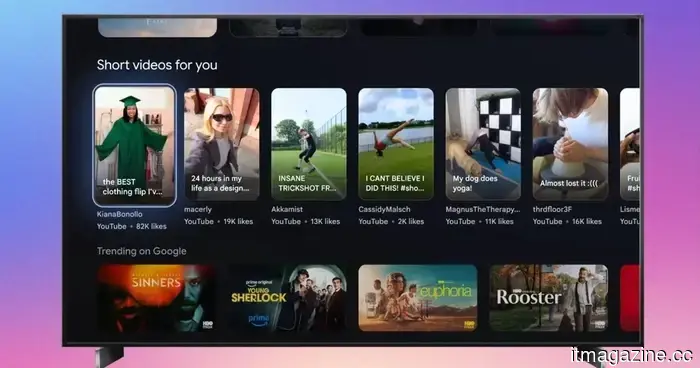 Your Google TV experience is set to become more dynamic with a specific YouTube Shorts feed.
The recent Google TV update will introduce YouTube Shorts to the home screen this summer through a new "Short videos for you" section, although there are no confirmed options to opt out.
Your Google TV experience is set to become more dynamic with a specific YouTube Shorts feed.
The recent Google TV update will introduce YouTube Shorts to the home screen this summer through a new "Short videos for you" section, although there are no confirmed options to opt out.
 Each call you make is helping to create a map of your city, and it could potentially alleviate our traffic issues.
A group of researchers has developed a tool that illustrates how cities function, utilizing only anonymous cell phone data.
Each call you make is helping to create a map of your city, and it could potentially alleviate our traffic issues.
A group of researchers has developed a tool that illustrates how cities function, utilizing only anonymous cell phone data.
 Nvidia and Atlassian are supporting Legora’s $600 million Series D funding round.
Nvidia's NVentures and Atlassian have participated in Legora's Series D extension, raising the total to $600 million at a valuation of $5.6 billion.
Nvidia and Atlassian are supporting Legora’s $600 million Series D funding round.
Nvidia's NVentures and Atlassian have participated in Legora's Series D extension, raising the total to $600 million at a valuation of $5.6 billion.
 Nvidia and Atlassian support Legora's $600 million Series D funding round.
Nvidia's NVentures and Atlassian have participated in Legora's Series D extension, raising the total to $600 million with a valuation of $5.6 billion.
Nvidia and Atlassian support Legora's $600 million Series D funding round.
Nvidia's NVentures and Atlassian have participated in Legora's Series D extension, raising the total to $600 million with a valuation of $5.6 billion.
 Anthropic is targeting a $900 billion valuation in a possible $50 billion funding round.
Anthropic is considering a funding round of $50 billion, which would value the company at over $900 billion, potentially making it more valuable than OpenAI.
Anthropic is targeting a $900 billion valuation in a possible $50 billion funding round.
Anthropic is considering a funding round of $50 billion, which would value the company at over $900 billion, potentially making it more valuable than OpenAI.
 Anthropic aims for a $900 billion valuation in a possible $50 billion funding round.
Anthropic is considering a funding round of $50 billion at a valuation exceeding $900 billion, which could potentially surpass OpenAI's value.
Anthropic aims for a $900 billion valuation in a possible $50 billion funding round.
Anthropic is considering a funding round of $50 billion at a valuation exceeding $900 billion, which could potentially surpass OpenAI's value.
The internet's beloved app Vine has returned from the grave, now under the name Divine.
Divine, a reboot of Vine supported by Jack Dorsey, has launched on the App Store and Google Play Store. It features 500,000 archived Vine videos and enables creators to upload new content.