
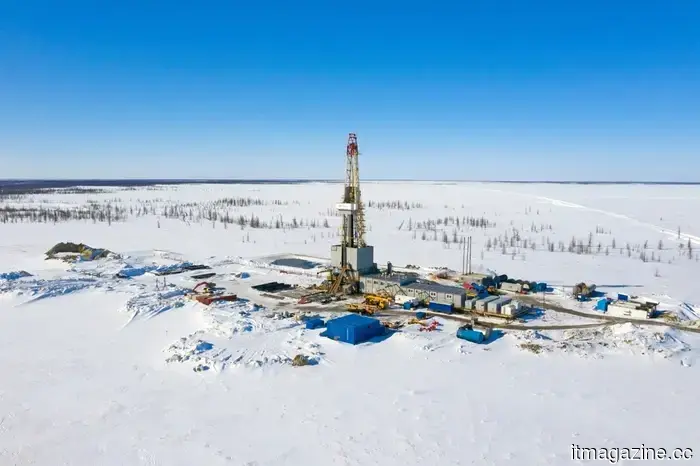
Scientists from Perm Polytechnic and China have created a neural network that predicts underground pressure with an accuracy of 99.5%.
Drilling wells has long ceased to be just "drilling a hole in the ground." Today, it is a confrontation between man and rock, where mistakes can have serious consequences in the literal sense.
The Earth's interior is dynamic. Due to the movement of tectonic plates, colossal horizontal pressure builds up in the rocks. For specialists drilling wells for oil and gas, this is the main problem, as the drilling fluid must precisely counteract this pressure. Even a small error in calculations can lead to the collapse of the well walls, the breakage of expensive equipment, work stoppages, and environmental disasters.
Today, such stresses are measured in two ways: by rock samples or using geophysical formulas, which often do not take tectonic forces into account. Neural networks speed up calculations but only provide accuracy of 65-85% and operate slowly. To solve this problem, scientists from Perm Polytechnic, in collaboration with Chinese colleagues, developed a hybrid model based on AI. It predicts horizontal stresses with 99.5% accuracy, using standard data from geophysical well studies.
Did you know that the Earth's interior is not a dead mass of rock, but a living, dynamic world where colossal forces have been at work for millions of years? Continents move, collide, and drift apart like giant icebergs in the ocean. These processes create mountains, cause earthquakes, and generate a complex system of stresses within the Earth.
There, at depths of several kilometers, the rock is compressed from all sides. The weight of the overlying layers exerts vertical pressure from above, which is relatively simple to calculate. But there is also a more insidious force—horizontal stress. It arises because the Earth's crust is never at rest. For example, the Himalayan mountains are still growing because the Indian plate is colliding with the Eurasian plate. It is these tectonic processes that create colossal lateral compression in the depths, which specialists drilling wells to reach oil and gas deposits must contend with. For them, these giant tectonic forces transform from abstract geology into a major practical problem: how to drill a channel through compressed rock and keep it open without destroying either the tool or the formation itself?
To understand what they are up against, it is enough to recall a sandbox. When digging in dry sand, the walls of the pit begin to collapse, while in wet sand they hold their shape—the water binds the grains together. In the well, the role of water is played by the drilling fluid: it is pumped inside to counteract the pressure of the rock and keep the walls from collapsing. If it exerts too little pressure, the walls will collapse, and the drilling tool will break. If it exerts too much pressure, the formation will deform, and oil and gas will uncontrollably burst out. An error of just a few percent can lead to multimillion-dollar losses, work stoppages, and sometimes even environmental disasters.
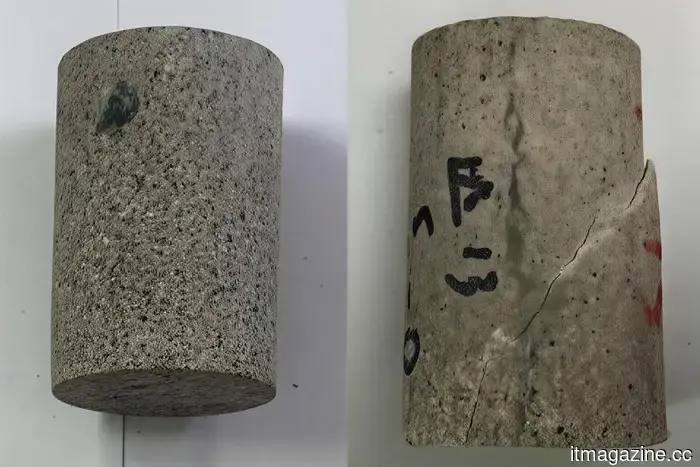
Today, several methods are used to measure horizontal stresses. One of them is laboratory studies of rock samples (cores) that are brought up from the well to the surface. However, such samples are not available along the entire depth—they are taken only at specific intervals, and when extracted, the natural stress disappears, and it can only be approximated.
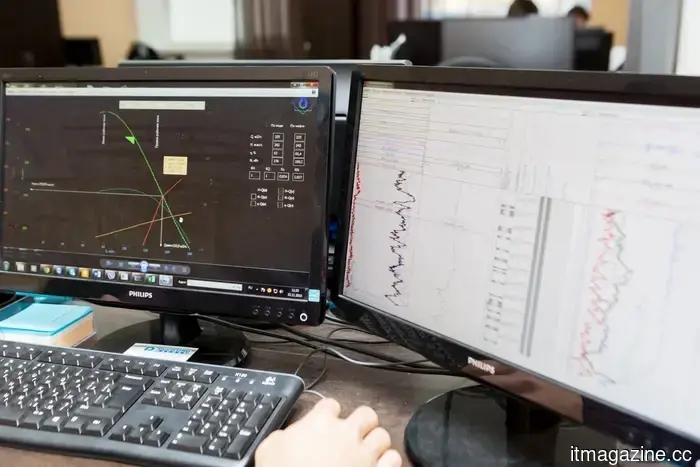
Another method is geophysical studies. Instruments are lowered into the well that continuously measure the properties of the rock: sound velocity, density, porosity. A lot of data is obtained, but by themselves, they do not provide a ready answer. To calculate horizontal stresses from them, complex mathematical formulas are needed, which often use simplifications, such as not accounting for tectonic forces.
Therefore, today neural networks are increasingly being used for calculations. They are good at finding hidden patterns in large data sets. However, existing models have drawbacks: they often "overfit," meaning they work well on familiar wells but make mistakes on new ones, resulting in prediction accuracy fluctuating between 65-85%. Moreover, they operate slowly: a single calculation can take dozens of seconds, which is unacceptably long in drilling conditions.
To address this problem, scientists from Perm Polytechnic, in collaboration with colleagues from China, developed a hybrid model based on artificial intelligence that allows predicting horizontal stresses in rocks with 99.5% accuracy, using only standard data from geophysical well studies.
"The development represents a hybrid algorithm that combines two approaches. The first is a neural network with a self-tuning structure. The second is a special mathematical method that helps it quickly find the most accurate solution. The model analyzes nine parameters that are continuously measured in the well: sound velocity, rock density, electrical resistance, natural radioactivity, porosity, and other indicators. Based on these, the algorithm calculates the minimum and maximum horizontal stress," said Dmitry Martyushev, a professor in the Department of Oil and Gas Technologies and a Doctor of Technical Sciences.
The scientists trained the neural network on a vast data set—over 10,000 measurements taken from three wells in the Junggar Basin in northwestern China. This field is considered geologically complex, as tectonic plates have collided there over millions of years, mountains and faults have formed, and the rocks are compressed from the sides with varying strength at different depths. It is in such challenging conditions that traditional calculation methods often fail. In Russia, there are many similar areas, for example, in Western and Eastern Siberia, on the Sakhalin shelf, in the Urals, and in the Caucasus.
In working with such complex data, the algorithm learned to find patterns. Unlike traditional neural networks, which often "overfit," meaning they memorize data well from familiar wells but get lost and start making mistakes when encountering new, unfamiliar rock, the developed model determines which of the nine parameters truly affect horizontal pressure and which merely create "noise" that hinders accurate predictions. This allows it to work confidently even on wells where it has never been "trained."
Imagine you are learning to predict rain. You are given a lot of data: temperature, humidity, day of the week, and even the results of a football match. If you try to account for everything, you might find random correlations—for example, noticing that it often rains after your favorite team wins. This is "noise": there is a connection, but it is random, and it won't work on new data. Traditional neural networks often fall into this trap: they memorize both real patterns and random coincidences. Therefore, they make mistakes on new wells. The developed model determines which parameters are truly important and which just happened to coincide. It ignores "football" and only considers what genuinely affects the outcome. Thus, it does not make mistakes on new, unfamiliar objects.
"When tested on wells that were not involved in training, the model's accuracy was 99.5%. This means that the prediction error is less than one percent. At the same time, the calculation time was reduced by 87% compared to existing analogs," shared Dmitry Martyushev.
The application of the algorithm allows for precise knowledge of how much the rock is compressed from the sides before drilling begins. This helps engineers calculate the ideal weight of the drilling fluid so that the well walls do not collapse and prevent accidental oil or gas blowouts.
Moreover, accurate knowledge of horizontal stresses is critically important during hydraulic fracturing—a technology that allows for the extraction of hard-to-reach oil. A fluid is pumped into the well under pressure, creating fractures in the rock to open a path for oil and gas. Their direction depends on how the rock is compressed from the sides. Knowing this, engineers can direct the fractures exactly where the reserves are concentrated, rather than into empty rocks or neighboring wells. This increases extraction efficiency and reduces risks.
Therefore, the scientists' development allows for the abandonment of costly and labor-intensive methods of measuring horizontal stresses, replacing them with a fast and accurate AI solution. The hybrid algorithm could become a promising tool for the oil and gas industry, reducing accident rates during drilling, cutting costs, and ensuring the safety of developing complex fields.
Other articles
 The European Commission officially files charges against Meta.
The EU has released initial findings indicating that Meta violated DSA regulations by not preventing underage users from accessing Facebook and Instagram, marking the first accusation of this kind against a major social media platform.
The European Commission officially files charges against Meta.
The EU has released initial findings indicating that Meta violated DSA regulations by not preventing underage users from accessing Facebook and Instagram, marking the first accusation of this kind against a major social media platform.
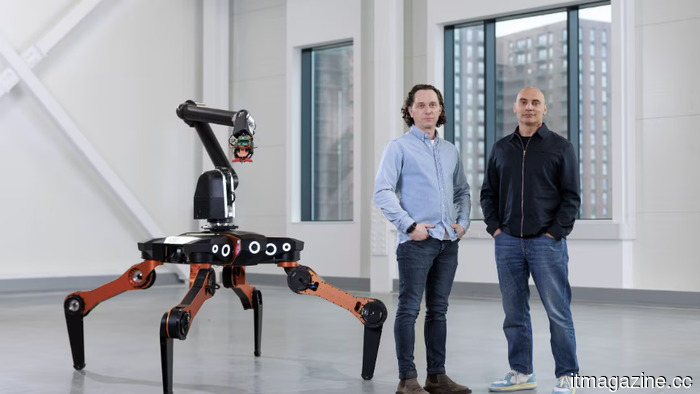 All3 secures $25 million to automate construction using legged robots.
All3 secures $25 million in seed funding, led by RTP Global, to implement legged robots and AI software at construction sites in Germany, aiming to address the housing crisis.
All3 secures $25 million to automate construction using legged robots.
All3 secures $25 million in seed funding, led by RTP Global, to implement legged robots and AI software at construction sites in Germany, aiming to address the housing crisis.
 After 12 hours of discussions, the EU and Parliament could not reach an agreement on the modifications to the AI Act, delaying the deal until next month.
After 12 hours of discussions on April 29, EU member states and the European Parliament were unable to reach an agreement on amendments to the AI Act, leaving May as the final opportunity before the August 2026 deadline.
After 12 hours of discussions, the EU and Parliament could not reach an agreement on the modifications to the AI Act, delaying the deal until next month.
After 12 hours of discussions on April 29, EU member states and the European Parliament were unable to reach an agreement on amendments to the AI Act, leaving May as the final opportunity before the August 2026 deadline.
 After 12 hours of discussions, the EU and Parliament could not reach an agreement on changes to the AI Act, delaying the deal until next month.
After 12 hours of discussions on April 29, EU member states and the European Parliament were unable to reach a consensus on amendments to the AI Act, with May remaining the final opportunity before the August 2026 deadline.
After 12 hours of discussions, the EU and Parliament could not reach an agreement on changes to the AI Act, delaying the deal until next month.
After 12 hours of discussions on April 29, EU member states and the European Parliament were unable to reach a consensus on amendments to the AI Act, with May remaining the final opportunity before the August 2026 deadline.
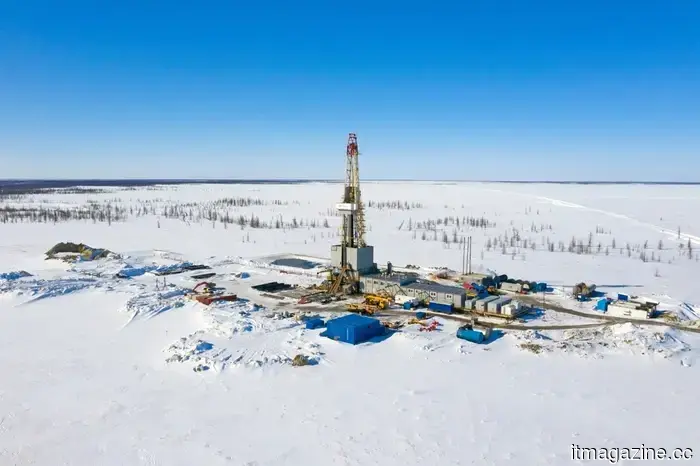 Scientists from Perm Polytechnic and China have created a neural network that predicts underground pressure with 99.5% accuracy.
Drilling wells has long ceased to be just "drilling a hole in the ground." Today, it is a confrontation between man and rock, where mistakes can have serious consequences in the literal sense.
Scientists from Perm Polytechnic and China have created a neural network that predicts underground pressure with 99.5% accuracy.
Drilling wells has long ceased to be just "drilling a hole in the ground." Today, it is a confrontation between man and rock, where mistakes can have serious consequences in the literal sense.
 The European Commission officially accuses Meta.
The EU has released initial findings indicating that Meta violated DSA regulations by not preventing underage users from gaining access to Facebook and Instagram, marking the first accusation of this kind against a major social media platform.
The European Commission officially accuses Meta.
The EU has released initial findings indicating that Meta violated DSA regulations by not preventing underage users from gaining access to Facebook and Instagram, marking the first accusation of this kind against a major social media platform.
Scientists from Perm Polytechnic and China have created a neural network that predicts underground pressure with an accuracy of 99.5%.
Drilling wells has long ceased to be just "drilling a hole in the ground." Today, it is a confrontation between man and rock, where mistakes can have serious consequences in the literal sense.