

Scams on social media led to more than two billion dollars in losses for consumers last year.
Facebook scams resulted in significant consumer losses as social media fraud soared in 2025.
Social media has now emerged as the leading forum for scams in the United States. The Federal Trade Commission (FTC) reported that consumers experienced $2.1 billion in losses from fraud linked to these platforms in 2025, reflecting an eightfold increase over five years. Nearly one-third of those who fell victim to fraud mentioned that it began on a social media platform.
What makes Facebook such a prime target?
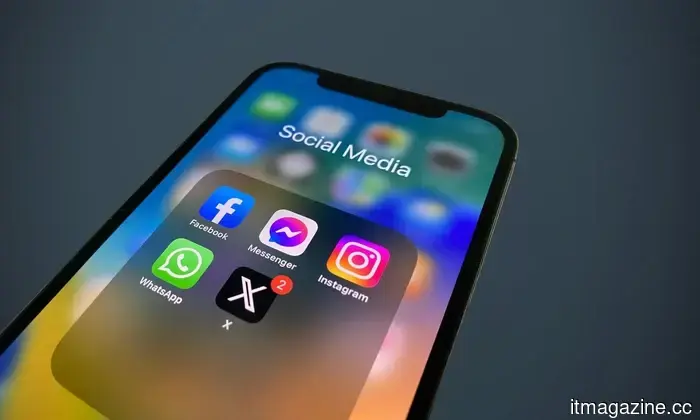
Facebook was identified as the primary source of reported losses. According to the FTC, scams initiated on Facebook resulted in greater financial damage than those that began on other social media platforms, with WhatsApp and Instagram following far behind. The losses attributed to Facebook scams also surpassed those originating from text messages or emails.
The situation is particularly alarming since Facebook remains one of the most popular platforms among adults. Its extensive reach across various age demographics gives fraudsters a vast pool of potential victims, especially targeting older individuals who often use the platform to maintain connections with family, community organizations, local sellers, and long-time friends.
The FTC noted that scammers exploit social media's features to their benefit. They can purchase targeted advertisements, analyze public posts, impersonate brands, hack accounts, or pretend to be familiar individuals. For example, a misleading shopping advertisement can lead to a fraudulent retail website, a seemingly friendly message might turn into an investment scam, and a romance scam can initiate from a casual profile review and escalate into a false emergency situation.
How are these scams reaching users?
Investment scams created the most significant financial losses, amounting to $1.1 billion in 2025. Many of these scams started with advertisements, posts, or WhatsApp groups displaying false success narratives. Shopping scams emerged as the most frequently reported, with victims often purchasing items from social media ads that never arrived. Additionally, romance scams flourished on these platforms, with nearly 60% of reported losses from such scams beginning there.
As AI tools enhance the creation of deceptive messages, images, voices, and profiles, social media scams may become increasingly believable in the future. Presently, the FTC recommends that users keep their profiles private, refrain from trusting investment tips from online-only acquaintances, and research a company's name alongside terms like "scam" or "complaint" prior to making purchases through social media ads.






Other articles
 AWS will offer OpenAI models following the end of Microsoft's exclusivity, as OpenAI falls short of revenue expectations and confronts $100 billion in infrastructure obligations.
AWS starts offering OpenAI models just a day after Microsoft concluded its exclusivity agreement. Amazon has invested $50 billion in OpenAI, yet the Wall Street Journal reports that they missed revenue goals and are projected to experience a $25 billion cash burn in 2026.
AWS will offer OpenAI models following the end of Microsoft's exclusivity, as OpenAI falls short of revenue expectations and confronts $100 billion in infrastructure obligations.
AWS starts offering OpenAI models just a day after Microsoft concluded its exclusivity agreement. Amazon has invested $50 billion in OpenAI, yet the Wall Street Journal reports that they missed revenue goals and are projected to experience a $25 billion cash burn in 2026.
 Logitech’s latest G512 X gaming keyboard combines top-tier performance with extensive customization options.
Logitech's newest gaming keyboard offers PC gamers additional options to customize, adjust, and display their setup, including the responsiveness of each key.
Logitech’s latest G512 X gaming keyboard combines top-tier performance with extensive customization options.
Logitech's newest gaming keyboard offers PC gamers additional options to customize, adjust, and display their setup, including the responsiveness of each key.
 Valve has confirmed that development of the Steam Deck 2 is progressing rapidly, but they have not disclosed any additional information.
Valve has announced that development of the Steam Deck 2 is progressing rapidly, but the company is not yet sharing specifics as it anticipates a significant advancement in hardware.
Valve has confirmed that development of the Steam Deck 2 is progressing rapidly, but they have not disclosed any additional information.
Valve has announced that development of the Steam Deck 2 is progressing rapidly, but the company is not yet sharing specifics as it anticipates a significant advancement in hardware.
 AWS to offer OpenAI models following Microsoft's end of exclusivity, as OpenAI falls short of revenue goals and confronts $100 billion in infrastructure obligations.
AWS starts offering OpenAI models just a day after Microsoft concluded its exclusivity agreement. Although Amazon has invested $50 billion in OpenAI, the Wall Street Journal reports that revenue targets were missed and that there was a $25 billion cash burn projected for 2026.
AWS to offer OpenAI models following Microsoft's end of exclusivity, as OpenAI falls short of revenue goals and confronts $100 billion in infrastructure obligations.
AWS starts offering OpenAI models just a day after Microsoft concluded its exclusivity agreement. Although Amazon has invested $50 billion in OpenAI, the Wall Street Journal reports that revenue targets were missed and that there was a $25 billion cash burn projected for 2026.
 Amazon attempted to sell office software and was unsuccessful. Now, it is wagering that office software has become outdated.
TL;DRAWS has introduced AI-driven business applications: Connect Decisions for supply chain management and Connect Talent for recruitment, complementing Connect Health from March. This move enters the $300 billion SaaS market, competing with Microsoft, Oracle, and Salesforce. AWS CMO Jul
Amazon attempted to sell office software and was unsuccessful. Now, it is wagering that office software has become outdated.
TL;DRAWS has introduced AI-driven business applications: Connect Decisions for supply chain management and Connect Talent for recruitment, complementing Connect Health from March. This move enters the $300 billion SaaS market, competing with Microsoft, Oracle, and Salesforce. AWS CMO Jul
 The shift in venture capital from software to deep tech is driven by several factors.
Venture capital is expanding its focus beyond software, as deep technology, artificial intelligence, and innovations in the physical world are reshaping long-term value generation and investment approaches.
The shift in venture capital from software to deep tech is driven by several factors.
Venture capital is expanding its focus beyond software, as deep technology, artificial intelligence, and innovations in the physical world are reshaping long-term value generation and investment approaches.
Scams on social media led to more than two billion dollars in losses for consumers last year.
FTC data reveals that consumers incurred losses of $2.1 billion due to social media scams in 2025, with Facebook responsible for the largest reported losses. The most damaging scams were related to investments, shopping, and romance.