

Amazon attempted to sell office software but did not succeed. Now, it is wagering that office software is no longer relevant.
TL;DRAWS has introduced AI-driven business applications including Connect Decisions for supply chain management, Connect Talent for recruitment, and Connect Health, launched in March, marking its entry into the $300 billion SaaS market where it will compete against Microsoft, Oracle, and Salesforce. Julia White, AWS CMO, notes that lacking a SaaS legacy is beneficial for them. However, Amazon's previous application ventures (such as WorkMail, Chime, and WorkDocs) faced failure and were eventually discontinued. The expectation is that AI agents will replace traditional applications instead of merely enhancing them, while Amazon's proficiency in logistics and hiring offers a competitive edge that other companies may not possess.
On Tuesday, Amazon Web Services launched a suite of AI-powered business applications, signaling a shift from solely providing cloud infrastructure to offering the software that operates on it. This strategic move positions Amazon against Microsoft, Oracle, and Salesforce in the software-as-a-service domain. The new tools, Amazon Connect Decisions for supply chain management and Amazon Connect Talent for recruitment, complement Amazon Connect Health, a healthcare platform introduced in March, creating a growing collection of AI-driven business solutions built on similar agent-driven technology. AWS has also rebranded its leading call center product from Amazon Connect to Amazon Customer Connect, indicating that the company sees its contact center division, which is projected to reach a $1 billion annual revenue run rate in 2025, as a core part of a larger enterprise software initiative rather than just a standalone offering. Julia White stated, “We don’t have a significant SaaS legacy or a franchise to uphold, which allows us to adopt this agentic-first strategy in a way that may present challenges for others.”
The offerings include Amazon Connect Decisions, designed for supply chain optimization utilizing over 25 internal tools developed for Amazon’s logistics, including SCOT foundation models for demand forecasting. This product leverages AI agents to create and optimize demand forecasts, manage supply chain alerts, conduct root-cause analyses, and generate scenario-planning spreadsheets, aimed at supply chain planners rather than data scientists. Amazon Connect Talent automates voice-based job interviews around the clock, assessing candidates based on skills instead of resumes, targeting high-volume recruitment in sectors like manufacturing, logistics, retail, and hospitality. This platform autonomously schedules, initiates calls, and interviews candidates without human interference, marking AWS's first product where an AI agent independently engages in real-time voice conversations on behalf of the company.
Amazon Connect Health, which became widely available on March 5, provides five AI agents for tasks such as patient identity verification, appointment scheduling, medical history summaries, clinical documentation, and medical coding, available for $99 per user monthly. Collectively, these three Connect products embody a consistent strategy: Amazon transforms an operational feature developed for its own business, such as retail logistics, high-volume recruitment, and healthcare management via Amazon Clinic and One Medical, into an AI-first product for enterprise sales through AWS. This method is not novel for Amazon, which has historically converted internal systems into cloud services, but the focus on the application layer is new. The $285 billion SaaS market uncertainty that impacted software stocks in February points to genuine doubt regarding whether AI agents will supplant traditional per-seat software or simply enhance it. Amazon is wagering on the replacement model, but only in areas where it has operational experience that competitors lack.
The introduction of these products places AWS in a competitive landscape it has previously steered clear of. Amazon has spent years reassuring enterprise clients, including firms like Netflix that compete with Amazon's consumer businesses while utilizing AWS infrastructure, that it would not leverage its cloud dominance to undermine their software. AWS has hesitated to launch a comprehensive suite of business applications, opting instead for isolated tools like WorkMail, Chime, and WorkDocs, all of which faced shutdown due to lack of traction. WorkDocs was discontinued in April 2025, Chime in February 2026, and WorkMail will end support in March 2027. The earlier iteration of AWS application products stumbled as they attempted to compete with Microsoft on Microsoft's terms, offering generic productivity tools rather than engaging in operational-focused sales to frontline workers in areas where Amazon excels.
Microsoft's extensive enterprise Copilot deployment at Accenture, reaching 743,000 employees and achieving an 89 percent monthly active usage rate, illustrates the significant advantage AWS must overcome in the knowledge worker segment. With 450 million users of enterprise Microsoft 365, Microsoft has a vast potential for Copilot upsells. Oracle’s Fusion Cloud applications and Salesforce’s Agentforce platform have established enterprise user bases and valuable workflow data, while AWS lacks these assets. Instead, AWS boasts the largest cloud infrastructure customer base globally and the operational know-how of managing an unparalleled logistics network. The strategic premise is that AI agents do not require an existing software install base as traditional SaaS does since they replace applications rather than merely functioning as add-ons. If this holds true, AWS's infrastructure relationships could serve as the distribution channel, enabling Amazon
Other articles
 Logitech's latest G512 X gaming keyboard delivers exceptional performance alongside extensive customization options.
Logitech's newest gaming keyboard offers PC gamers additional options to customize, adjust, and showcase their setup, including the responsiveness of each key.
Logitech's latest G512 X gaming keyboard delivers exceptional performance alongside extensive customization options.
Logitech's newest gaming keyboard offers PC gamers additional options to customize, adjust, and showcase their setup, including the responsiveness of each key.
 AWS to offer OpenAI models following Microsoft's end of exclusivity, as OpenAI falls short of revenue goals and confronts $100 billion in infrastructure obligations.
AWS starts offering OpenAI models just a day after Microsoft concluded its exclusivity agreement. Although Amazon has invested $50 billion in OpenAI, the Wall Street Journal reports that revenue targets were missed and that there was a $25 billion cash burn projected for 2026.
AWS to offer OpenAI models following Microsoft's end of exclusivity, as OpenAI falls short of revenue goals and confronts $100 billion in infrastructure obligations.
AWS starts offering OpenAI models just a day after Microsoft concluded its exclusivity agreement. Although Amazon has invested $50 billion in OpenAI, the Wall Street Journal reports that revenue targets were missed and that there was a $25 billion cash burn projected for 2026.
 GIGABYTE will release a thin laptop with AI for sale.
GIGABYTE, a well-known manufacturer of computer hardware, has announced the AERO X16 laptop. The new product is positioned as an ultra-thin device for those who need mobility, modern neural networks, and the ability to create something. It combines everything that is currently fashionable in one case.
GIGABYTE will release a thin laptop with AI for sale.
GIGABYTE, a well-known manufacturer of computer hardware, has announced the AERO X16 laptop. The new product is positioned as an ultra-thin device for those who need mobility, modern neural networks, and the ability to create something. It combines everything that is currently fashionable in one case.
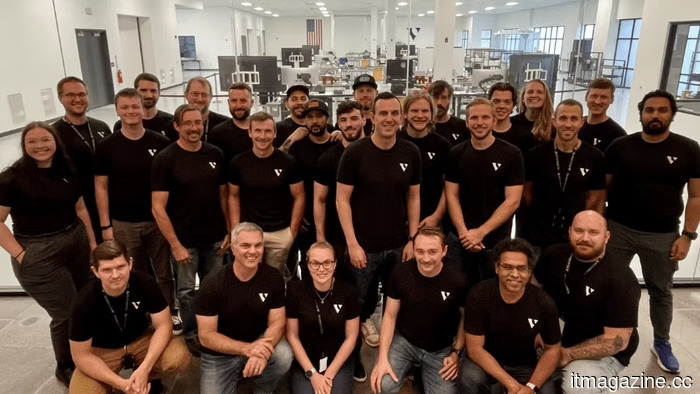 True Anomaly secures $650 million in Series D funding at a valuation of $2.2 billion as contracts for the Golden Dome space interceptor total $3.2 billion.
True Anomaly secured $650 million just four days after being chosen for the Golden Dome space-based interceptor prototypes. The project could have a price tag ranging from $185 billion to $3.6 trillion. The Space Force has indicated that it may decide against proceeding with its construction.
True Anomaly secures $650 million in Series D funding at a valuation of $2.2 billion as contracts for the Golden Dome space interceptor total $3.2 billion.
True Anomaly secured $650 million just four days after being chosen for the Golden Dome space-based interceptor prototypes. The project could have a price tag ranging from $185 billion to $3.6 trillion. The Space Force has indicated that it may decide against proceeding with its construction.
 The release date for season 4 of Ted Lasso is scheduled for this summer, and the trailer appears promising.
In Season 4, Ted returns to Richmond, facing an entirely new challenge: coaching a women's football team in the second division.
The release date for season 4 of Ted Lasso is scheduled for this summer, and the trailer appears promising.
In Season 4, Ted returns to Richmond, facing an entirely new challenge: coaching a women's football team in the second division.
 Last year, consumers suffered losses exceeding two billion dollars due to social media scams.
FTC data indicates that consumers fell victim to $2.1 billion in losses due to social media scams in 2025, with Facebook accounting for the largest reported losses. Investment, shopping, and romance scams emerged as the primary contributors to this damage.
Last year, consumers suffered losses exceeding two billion dollars due to social media scams.
FTC data indicates that consumers fell victim to $2.1 billion in losses due to social media scams in 2025, with Facebook accounting for the largest reported losses. Investment, shopping, and romance scams emerged as the primary contributors to this damage.
Amazon attempted to sell office software but did not succeed. Now, it is wagering that office software is no longer relevant.
TL;DRAWS introduced AI-driven business applications: Connect Decisions for supply chain management, Connect Talent for recruitment, and will add Connect Health in March, targeting the $300 billion SaaS market in competition with Microsoft, Oracle, and Salesforce. AWS CMO Jul