

OpenAI advances ChatGPT's capabilities for autonomous tasks with GPT-5.5.
OpenAI has introduced GPT-5.5, its newest artificial intelligence model that powers ChatGPT, as the company transitions from conversational AI to systems capable of managing intricate, real-world tasks. The new model is being deployed across ChatGPT and Codex for Plus, Pro, Business, and Enterprise users, with a more sophisticated “Pro” version made available for higher-tier subscribers.
In contrast to previous updates that concentrated on enhancing responses, GPT-5.5 is tailored to perform multi-step tasks more efficiently. The model can comprehend less structured prompts, plan workflows, execute tasks, and verify its own output with fewer iterations needed from the user.
A Shift From Answers To Execution
GPT-5.5 signifies a broader transformation in how OpenAI envisions ChatGPT. Instead of merely serving as a tool for responding to inquiries, the model is designed to complete tasks comprehensively. This spans coding, debugging, research, document generation, and data analysis across various tools and environments.
OpenAI asserts that the model is more adept at grasping intent and needs less back-and-forth prompting to provide useful results. In internal trials and initial enterprise applications, GPT-5.5 has successfully handled complex workflows more efficiently, minimizing the need for constant user engagement.
The company also highlights advancements in efficiency. GPT-5.5 utilizes fewer tokens in coding workflows, making it more economical and quicker to operate, especially for developers and businesses working on a large scale.
Why This Upgrade Matters
The release of GPT-5.5 underscores the rapid advancement in AI development. OpenAI had only recently launched GPT-5.4, yet it is already advancing with a more powerful system geared towards real-world productivity.
What sets GPT-5.5 apart is not only its inherent capability but also the way it transforms user interaction.
The model is intended to manage "messy" instructions—requests that may be incomplete or vaguely detailed—and still generate structured outputs. This alleviates challenges for users who might struggle to articulate prompts precisely.
OpenAI also reports notable enhancements in reliability and safety, with stronger safety measures aimed at reducing errors and boosting output quality. These improvements are especially crucial as AI tools become more woven into professional workflows, where precision is more critical than novelty.
The launch occurs amid intensified competition in the AI market. Companies like Anthropic are debuting advanced models that emphasize enterprise and security applications, urging OpenAI to accelerate its advancements in both capability and usability.
What It Means For Users
For general users, GPT-5.5 may seem like an enhanced version of ChatGPT rather than a drastic transformation. The model demands less effort to utilize, as it can understand broader instructions and provide results without needing meticulous prompts.
For developers, researchers, and professionals, the consequences could be more pronounced. GPT-5.5’s ability to plan, execute, and refine tasks renders it more adept for complex workflows, such as coding projects, data-intensive analysis, and multi-step problem solving.
Early applications indicate that users are starting to regard the model less as a search tool and more as a collaborative partner. Rather than posing individual questions, they can set a broader goal and allow the system to navigate it.
What Comes Next
GPT-5.5 is part of OpenAI’s broader initiative towards more autonomous AI systems. The company is increasingly concentrating on models capable of operating across various tools, sustaining effort through prolonged tasks, and diminishing the need for human intervention.
Upcoming updates are anticipated to further enhance these capabilities, with deeper integrations into software ecosystems and superior handling of real-world workflows. The long-term vision is evident: transitioning from reactive AI systems to proactive ones that can tackle tasks with minimal input.
As this evolution progresses, the important challenge will be achieving a balance between capability and reliability. GPT-5.5 demonstrates that AI is becoming more capable of executing work, but its success hinges on how reliably it can deliver accurate and trustworthy results.


Other articles
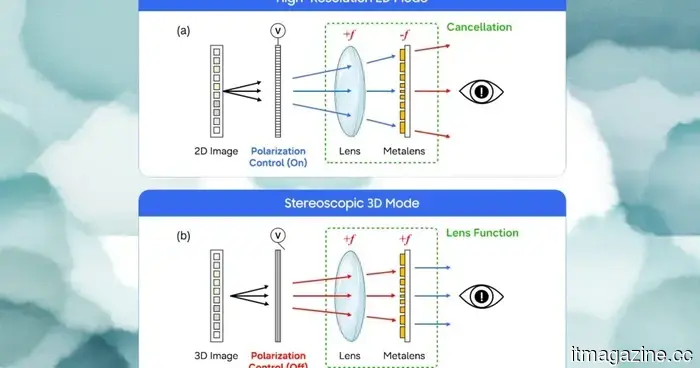 Samsung's latest display technology allows for switching between 2D and 3D on OLED panels without the need for glasses.
Samsung's innovative metasurface lenticular lens, detailed in Nature, transitions from clear 2D images to glasses-free 3D using voltage control and provides a 100-degree viewing angle within a 1.2mm thickness.
Samsung's latest display technology allows for switching between 2D and 3D on OLED panels without the need for glasses.
Samsung's innovative metasurface lenticular lens, detailed in Nature, transitions from clear 2D images to glasses-free 3D using voltage control and provides a 100-degree viewing angle within a 1.2mm thickness.
 Microsoft Copilot can now perform real tasks within your Word, Excel, and PowerPoint documents.
Copilot's new Agent Mode can create and reorganize Word documents, formulate and create tables in Excel, and modify PowerPoint presentations, all in real time.
Microsoft Copilot can now perform real tasks within your Word, Excel, and PowerPoint documents.
Copilot's new Agent Mode can create and reorganize Word documents, formulate and create tables in Excel, and modify PowerPoint presentations, all in real time.
 After Australia, Norway is set to prohibit social media use for those under 16 years old.
Norway's Labour government plans to suggest prohibiting social media for individuals under 16 and holding platforms accountable for verifying users' ages.
After Australia, Norway is set to prohibit social media use for those under 16 years old.
Norway's Labour government plans to suggest prohibiting social media for individuals under 16 and holding platforms accountable for verifying users' ages.
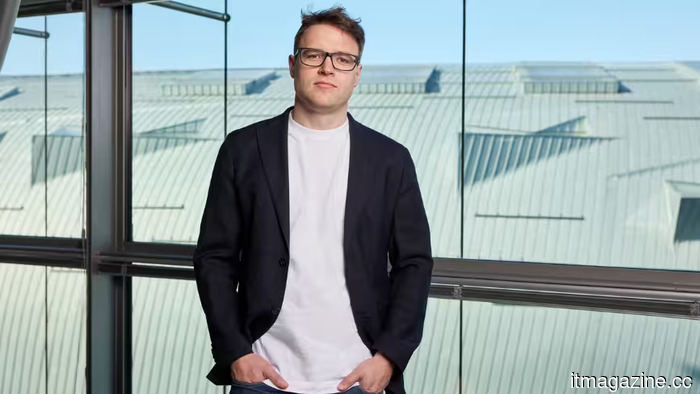 Verda secures $117 million to grow its GPU cloud platform.
Helsinki-based Verda has secured $117 million, with Lifeline Ventures leading the investment, to grow its cash-flow positive GPU cloud platform in the US, UK, and Asia.
Verda secures $117 million to grow its GPU cloud platform.
Helsinki-based Verda has secured $117 million, with Lifeline Ventures leading the investment, to grow its cash-flow positive GPU cloud platform in the US, UK, and Asia.
 Steam Machine seems to be the advancement in gaming PCs that I genuinely desire — thanks to Windows.
The new Steam Machine has caught my eye since Valve is designing it with an operating system that prioritizes gaming as the primary focus.
Steam Machine seems to be the advancement in gaming PCs that I genuinely desire — thanks to Windows.
The new Steam Machine has caught my eye since Valve is designing it with an operating system that prioritizes gaming as the primary focus.
 Instagram's new Instants app is essentially a repeat of Snapchat.
Instagram introduces Instants, a new application for sharing temporary photos and videos, providing a Snapchat-esque experience centered on private, real-time communication.
Instagram's new Instants app is essentially a repeat of Snapchat.
Instagram introduces Instants, a new application for sharing temporary photos and videos, providing a Snapchat-esque experience centered on private, real-time communication.
OpenAI advances ChatGPT's capabilities for autonomous tasks with GPT-5.5.
OpenAI has released GPT-5.5, which aims to enhance ChatGPT’s capacity for managing intricate tasks and real-world processes.