
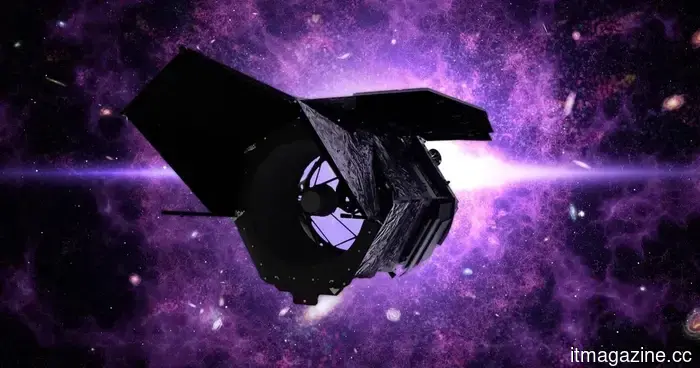
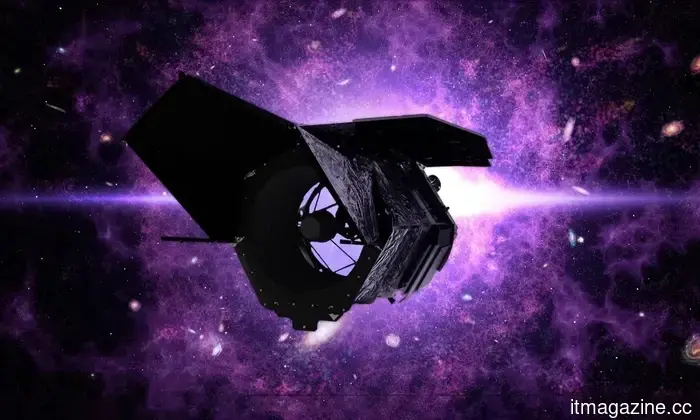
NASA is targeting a September launch for the Roman space telescope, signaling a significant change.
An updated launch schedule for the Roman mission indicates that one of NASA's most ambitious observatories is nearing readiness, potentially ushering in a new era of space exploration.
NASA now aims to launch the Nancy Grace Roman Space Telescope as early as September 2026, ahead of its previous target of no later than May 2027. This expedited timeline makes the mission one of the agency's most crucial to monitor in the coming months.
The rationale behind this urgency is straightforward: Roman is engineered to survey extensive sections of the sky with exceptional infrared clarity.
Rather than concentrating on small areas, it is designed to execute wide-ranging, in-depth surveys that will enable scientists to investigate dark energy, dark matter, exoplanets, galaxies, and stars on an unprecedented scale.
NASA anticipates that the telescope will produce a 20,000 terabyte data archive throughout its five-year primary mission. This archive is expected to facilitate research on 100,000 exoplanets, hundreds of millions of galaxies, and billions of stars, highlighting why an earlier launch is significant beyond just timing.
A telescope designed for extensive coverage
The main advantage of Roman is its expansive coverage. NASA states that it will merge a wide field of view with sharp infrared imaging, providing astronomers with a tool capable of efficiently surveying large areas of space compared to observatories designed for narrow perspectives.
This is important because the mission is not limited to one specific area of study. Although Roman was developed with dark energy, dark matter, and exoplanets in mind, NASA believes its capabilities will also assist astronomers in discovering unusual objects and rare events that have previously gone unnoticed.
The implications for astronomers
The long-term significance of Roman is likely to stem from the data it collects as much as from its initial discoveries. A mission that broadly maps the sky can offer researchers a common resource to revisit over the years, facilitating comparisons of observations, testing hypotheses, and identifying promising targets for follow-up with other telescopes.
This broad impact enhances the mission's relevance across the field of astronomy, extending beyond NASA. Roman has the potential to influence future scientific inquiries, illustrating how a major observatory can leave a lasting impact.
What to anticipate prior to launch
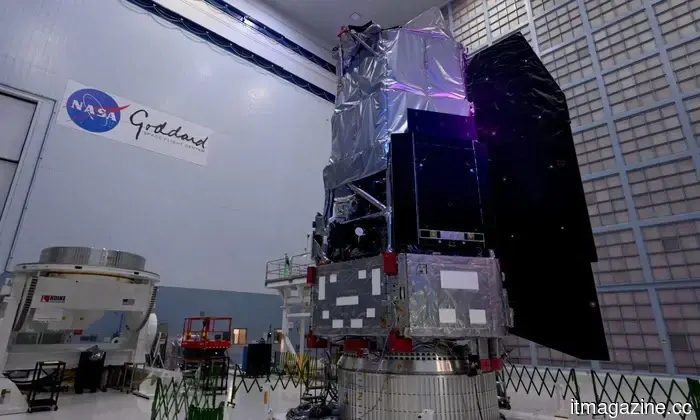
The telescope is scheduled for delivery to Kennedy Space Center in June, with plans for it to be launched aboard a SpaceX Falcon Heavy from Launch Complex 39A in Florida.
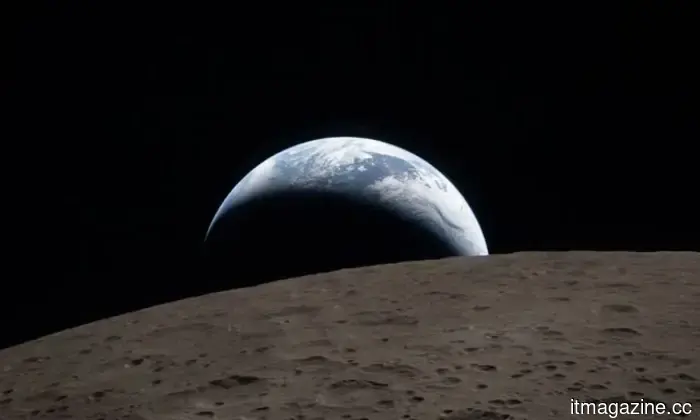
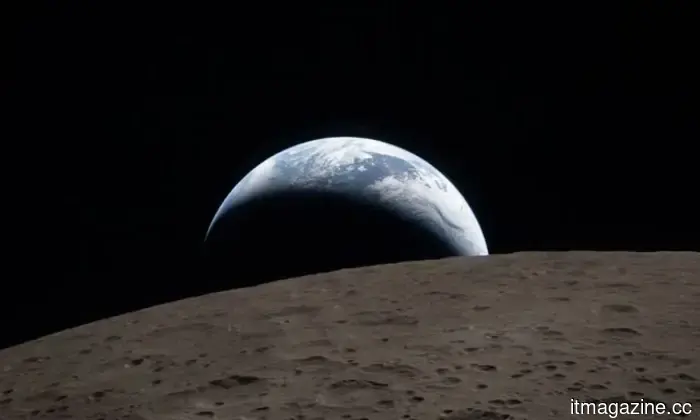
Following shortly after Artemis II, NASA's first crewed lunar flyby in more than half a century, Roman’s accelerated schedule adds to a rare phase of progress for the agency.
NASA has indicated that more details regarding the specific launch date will be shared as prelaunch preparations progress, making the confirmation of the early September timeline the next key milestone to watch.
Paulo Vargas, an English major turned reporter and technical writer, has a career deeply rooted in this field.
Blue Origin marks a significant achievement by successfully reusing a New Glenn rocket booster for the very first time. The historic launch, which took place on April 19, represents a notable advancement for Jeff Bezos’ space company as it aims to compete with rivals like SpaceX in the fast-evolving commercial launch sector.
A milestone with mixed results
In other updates, remarkable close-up footage showcases NASA’s moon rocket as it blasts off into space.
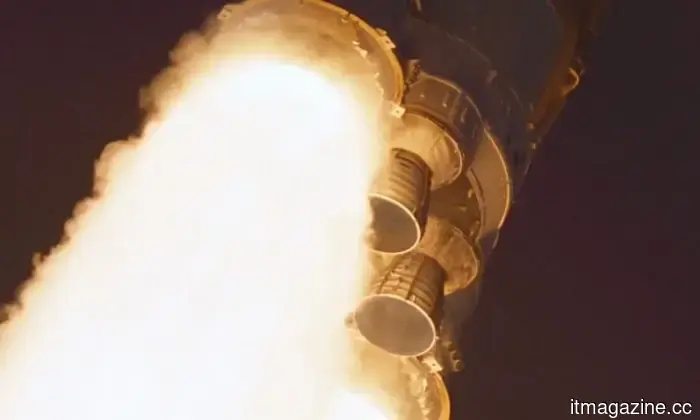
During its first crewed mission, NASA's lunar rocket demonstrates its impressive power. As the Artemis II astronauts make their way back to Earth after their thrilling encounter with the moon earlier this week, NASA has released stunning footage of the rocket launch that took the crew on their journey on April 1.
The close-up tracking shot highlights the incredible power of the Space Launch System (SLS) rocket’s four core RS-25 engines and its two solid rocket boosters as the 98-meter-tall vehicle ascends from the launchpad at Kennedy Space Center in Florida.
Additionally, viewers can learn how to watch NASA’s moon crew land at the conclusion of their historic mission.
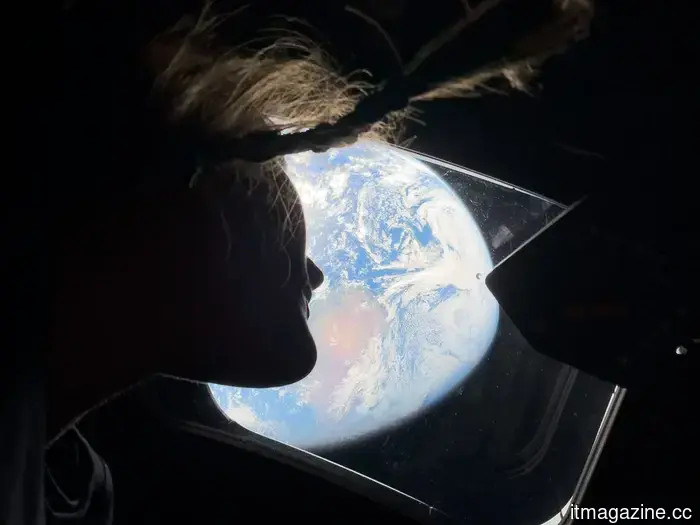
The Orion spacecraft's final descent is anticipated to be the most challenging part of the entire mission. The Artemis II astronauts have circled the moon, captured remarkable images, set multiple records, and are now returning to Earth.
The 10-day mission will peak on Friday, April 10, during a thrilling return that will see the Orion spacecraft re-entering Earth's atmosphere at nearly 25,000 miles per hour.

Other articles
 SoftBank is looking for a $10 billion margin loan collateralized by OpenAI shares at a rate of SOFR+425 basis points as its leverage structure becomes more complex.
SoftBank is securing a $10 billion loan using its stake in OpenAI as collateral, with a spread nearly three times higher than that of its 2018 margin loan with Alibaba. S&P has downgraded its credit outlook to negative.
SoftBank is looking for a $10 billion margin loan collateralized by OpenAI shares at a rate of SOFR+425 basis points as its leverage structure becomes more complex.
SoftBank is securing a $10 billion loan using its stake in OpenAI as collateral, with a spread nearly three times higher than that of its 2018 margin loan with Alibaba. S&P has downgraded its credit outlook to negative.
 Tesla sales and soaring gas prices: Interest in electric vehicles is increasing, yet the US market has contracted by 28% following the expiration of the tax credit.
Gas prices in the US exceeded $4 per gallon, and interest in electric vehicles reached levels not seen since 2026. However, overall electric vehicle sales declined by 28%, and Tesla fell short of its delivery projections. The tax credit had a greater impact than fuel prices.
Tesla sales and soaring gas prices: Interest in electric vehicles is increasing, yet the US market has contracted by 28% following the expiration of the tax credit.
Gas prices in the US exceeded $4 per gallon, and interest in electric vehicles reached levels not seen since 2026. However, overall electric vehicle sales declined by 28%, and Tesla fell short of its delivery projections. The tax credit had a greater impact than fuel prices.
 Data from 500,000 UK Biobank volunteers is being offered for sale on Alibaba after Chinese research institutions violated access agreements.
Health information from 500,000 volunteers in the UK Biobank was listed for sale on Alibaba after three Chinese research organizations breached data-sharing agreements. The ICO is currently conducting an investigation.
Rilian secures $17.5 million to introduce agentic AI in sovereign defense.
Rilian has secured $17.5 million in funding led by 8VC to implement agentic AI in air-gapped defense and sovereign cloud settings.
Data from 500,000 UK Biobank volunteers is being offered for sale on Alibaba after Chinese research institutions violated access agreements.
Health information from 500,000 volunteers in the UK Biobank was listed for sale on Alibaba after three Chinese research organizations breached data-sharing agreements. The ICO is currently conducting an investigation.
Rilian secures $17.5 million to introduce agentic AI in sovereign defense.
Rilian has secured $17.5 million in funding led by 8VC to implement agentic AI in air-gapped defense and sovereign cloud settings.
NASA is targeting a September launch for the Roman space telescope, signaling a significant change.
NASA is targeting a launch for the Roman Space Telescope in early September 2026. This advanced observatory has the potential to revolutionize astronomy through extensive infrared sky surveys, substantial data returns, and quicker follow-up discoveries.