
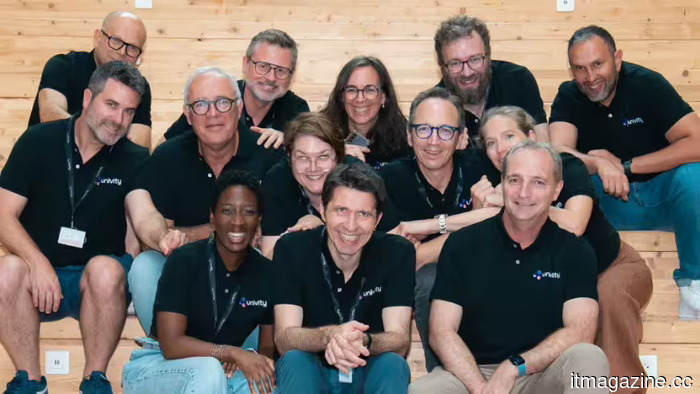
French satellite startup Univity secures €27 million in Series A funding.
Founded in 2022 and previously known as Constellation Technologies & Operations, Univity aims to establish a network of at least 1,600 satellites in very low Earth orbit, utilizing telecom operators' own 5G mmWave spectrum rather than competing with them. With the completion of its Series A funding round, the company has raised a total of €68 million through a mix of equity, debt, subsidies, and contract revenues.
The Paris-based satellite connectivity startup, Univity, has secured approximately €27 million (around $32 million) in its Series A round, led by investment firms Blast and Expansion Ventures, alongside France’s Deeptech 2030 fund managed by Bpifrance and two family offices. Founder and president Charles Delfieux reports that the company has raised a total of €68 million to date from various sources including equity, debt, subsidies, and contract revenues from France’s CNES space agency.
The Series A funding will be used for the uniShape demonstration program, which involves constructing, launching, and operating two very low Earth orbit (VLEO) satellites by February 2028. This initiative aims to validate the company’s complete 5G connectivity system before it enters commercial deployment.
Univity’s strategic approach is distinctive in the satellite connectivity industry. Rather than providing internet access directly to consumers, as Starlink does—operating over 6,000 satellites and dominating the market—Univity focuses on building infrastructure that enables telecom operators to extend their existing 5G services from space. The technology leverages the operators' own 5G mmWave spectrum for satellite connectivity, which means that users can use their existing phone plans and SIM cards with Univity’s satellites similar to how they would connect to a ground-based tower.
By acting as a neutral wholesale infrastructure provider, Univity avoids direct competition with potential customers, positioning itself as a space-based extension of an operator’s existing network rather than as a rival service. The company’s focus on a VLEO altitude of about 375 kilometers, significantly lower than Starlink’s approximate 550 kilometers, is central to its technical claims. This closer proximity to Earth reduces signal latency, enhances performance for smartphones and connected vehicles, and enables smaller, more affordable ground terminals. However, this design entails a trade-off in terms of increased aerodynamic drag, which accelerates fuel consumption. To address this, Univity’s satellites have been aerodynamically designed to minimize drag, allowing for an operational lifespan of approximately seven years before depleting their propellant, according to Delfieux.
The core technology has already been demonstrated; in June 2025, Univity launched its first regenerative 5G mmWave payload—a technology demonstrator named uniSpark—that actively processes and manages the 5G signal in orbit rather than merely relaying it. The Series A funding will support the next phase: launching two full prototype satellites (the uniShape mission) in 2027, which will demonstrate high-throughput, low-latency end-to-end 5G connectivity via VLEO satellites connected to gateway stations and ground terminals. A successful demonstration would lead to Phase 3: the commercial deployment of the uniSky constellation from 2028 onwards.
Univity’s ambitions for the satellite constellation have increased since earlier announcements. The company is now seeking to establish an initial constellation of at least 1,600 satellites, up from a previously indicated 1,500, with plans that could ultimately scale to 3,400 spacecraft. At full capacity, Delfieux envisions a manufacturing rate of two satellites per day, launched in batches of approximately 30 once a month, following a seven-year replenishment cycle. The total cost of deploying the constellation at such a scale could reach several billion euros.
The company’s funding structure reflects both commercial and governmental aspects of the project. In September 2025, CNES awarded Univity €31 million as part of France’s national investment program, France 2030, within a larger €44 million initiative that includes additional industrial co-financing. Bpifrance’s involvement in this Series A round, through the Deeptech 2030 fund, underscores the project’s state-supported nature. Stéphane Lefevre-Sauli, senior investment director at Bpifrance, noted that Univity’s VLEO and space-based 5G technologies are crucial for helping European telecommunications companies stay competitive amid the merging of space and terrestrial networks.
French telecommunications infrastructure operator TDF has entered into a strategic agreement with Univity to host and operate three gateway stations, two on the French mainland and one overseas, which will be critical for linking the satellite system to terrestrial operator networks.
The competitive landscape for European satellite connectivity continues to be influenced by the dominance of US and Chinese companies. Starlink maintains a strong position in low Earth orbit broadband; Amazon’s Kuiper constellation is rapidly expanding; OneWeb (now Eutelsat OneWeb) services enterprise and government sectors from medium Earth
Other articles
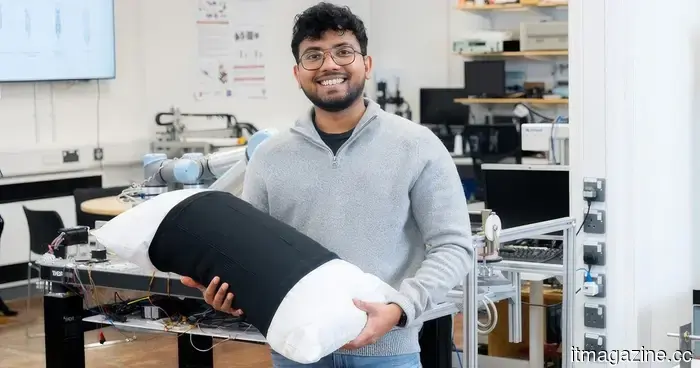 This intelligent pillow guarantees that you won’t miss an emergency alert or a phone call while you sleep.
Researchers from Nottingham Trent University have created a vibrating smart pillow sleeve designed to notify deaf individuals about fires, burglar alarms, and phone calls during the night.
This intelligent pillow guarantees that you won’t miss an emergency alert or a phone call while you sleep.
Researchers from Nottingham Trent University have created a vibrating smart pillow sleeve designed to notify deaf individuals about fires, burglar alarms, and phone calls during the night.
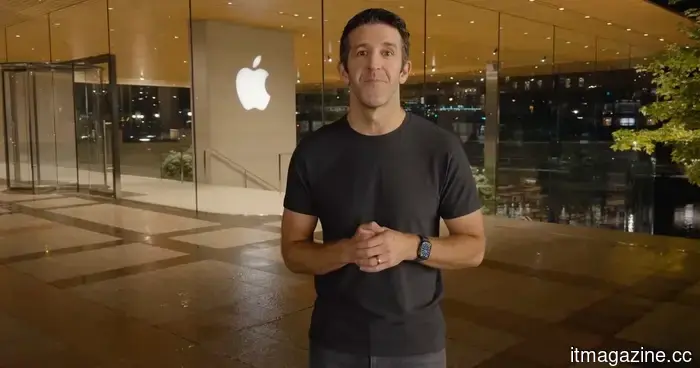 Apple's new CEO assures that there will be thrilling advancements in AI while maintaining a commitment to design.
Apple's future CEO, John Ternus, states that the company recognizes significant potential in AI, but he emphasizes that design and Apple's fundamental principles will remain a priority during this development.
Apple's new CEO assures that there will be thrilling advancements in AI while maintaining a commitment to design.
Apple's future CEO, John Ternus, states that the company recognizes significant potential in AI, but he emphasizes that design and Apple's fundamental principles will remain a priority during this development.
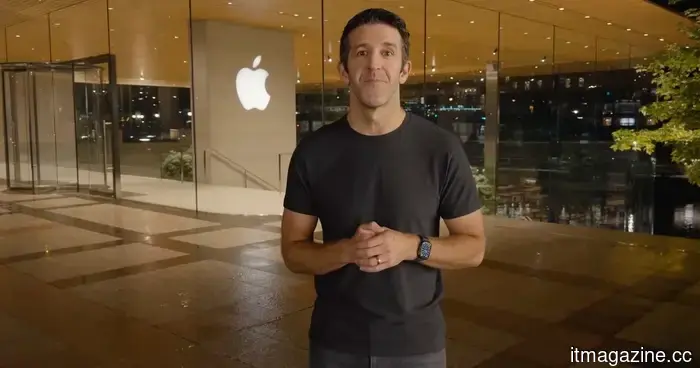 Apple's new CEO pledges to make significant advancements in AI while maintaining a commitment to design.
John Ternus, the new CEO of Apple, states that the company recognizes significant potential in AI. However, he emphasizes that design and Apple's fundamental values will not be compromised in this pursuit.
Apple's new CEO pledges to make significant advancements in AI while maintaining a commitment to design.
John Ternus, the new CEO of Apple, states that the company recognizes significant potential in AI. However, he emphasizes that design and Apple's fundamental values will not be compromised in this pursuit.
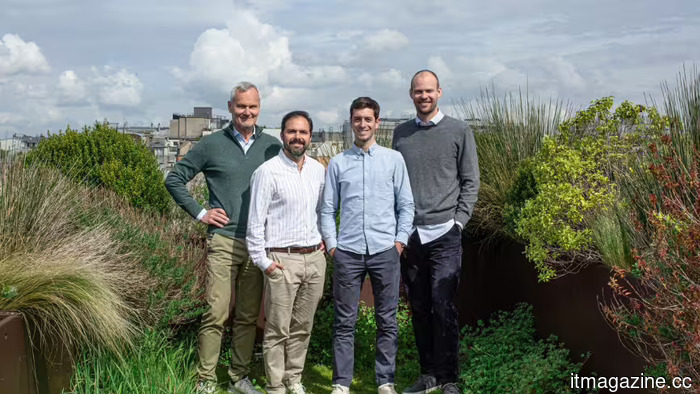 Decade Energy secures €22M to develop zero-capex energy infrastructure.
Decade Energy has secured €22 million to implement over 100MW of Battery Energy Storage Systems (BESS) at logistics depots in France and to broaden its zero-capex electrification approach throughout Europe.
Decade Energy secures €22M to develop zero-capex energy infrastructure.
Decade Energy has secured €22 million to implement over 100MW of Battery Energy Storage Systems (BESS) at logistics depots in France and to broaden its zero-capex electrification approach throughout Europe.
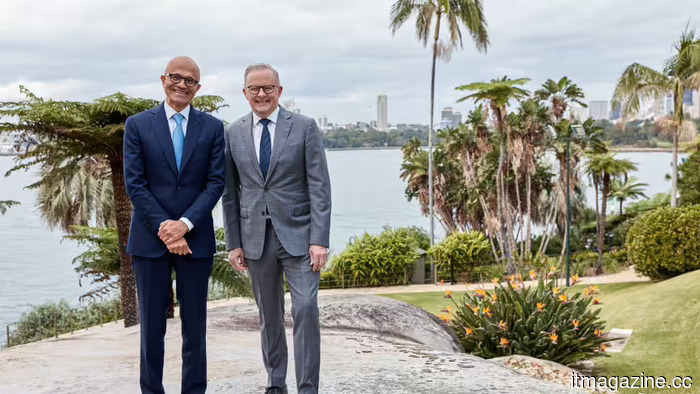 Microsoft pledges A$25 billion to Australia by the year 2029.
Microsoft reveals plans for A$25 billion investment in Australian digital infrastructure by 2029, which will encompass the expansion of Azure AI, the extension of Cyber-Shield, and the development of AI skills.
Microsoft pledges A$25 billion to Australia by the year 2029.
Microsoft reveals plans for A$25 billion investment in Australian digital infrastructure by 2029, which will encompass the expansion of Azure AI, the extension of Cyber-Shield, and the development of AI skills.
French satellite startup Univity secures €27 million in Series A funding.
Univity has secured €27 million in a Series A funding round, aiming to develop a 1,600-satellite constellation as a wholesale option for telecommunications companies, serving as an alternative to Starlink.