
Microsoft pledges A$25 billion to Australia by the year 2029.
The investment represents Microsoft's largest commitment in Australia to date and builds on an A$5 billion pledge made in October 2023. It encompasses a more than 140% enhancement of Azure AI supercomputing capacity, the expansion of the Microsoft-ASD Cyber-Shield to more government agencies, and plans to train three million Australians in AI skills by 2028.
Microsoft has unveiled a commitment of A$25 billion (around USD 18 billion) in capital and operational spending in Australia, scheduled to be fulfilled by the end of 2029. This marks the company's most significant commitment to the region.
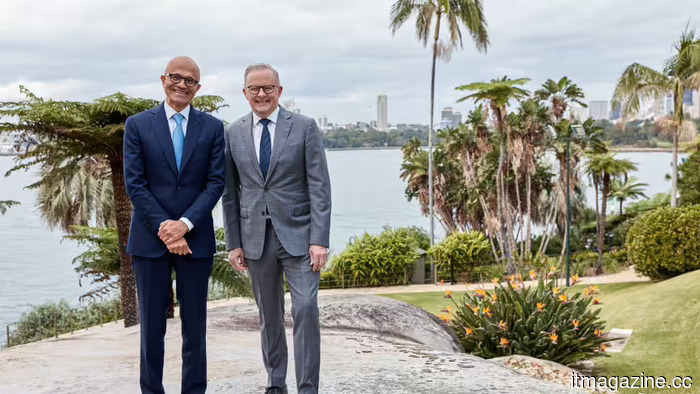
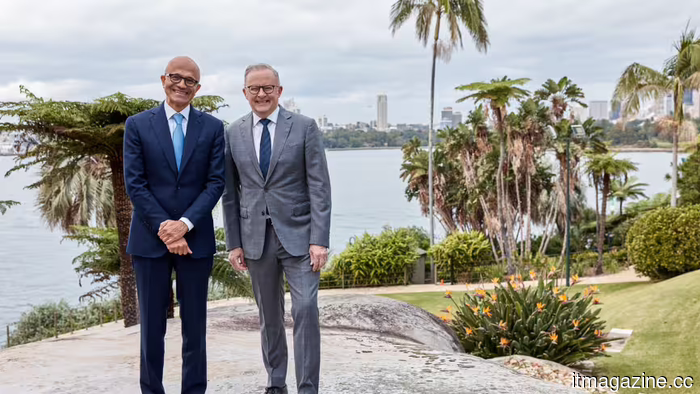
Chairman and CEO Satya Nadella announced this initiative alongside Prime Minister Anthony Albanese in Sydney on 23 April, during a stop on Microsoft’s global AI Tour. The investment is supported by a Memorandum of Understanding with the Australian government, which is in line with the government's recently articulated expectations for data center and AI infrastructure developers.
The total figure encompasses capital and operational expenditures across four main areas. The foremost element is infrastructure, with plans to grow Microsoft's existing Azure AI presence in Australia by over 140% by 2029, incorporating advanced AI processors and significantly boosting local AI supercomputing capabilities.
Currently, Australia hosts 29 Microsoft data center sites spread across three Azure regions as a result of the A$5 billion commitment made in 2023. This new investment will greatly expand that presence.
The second focus area is cybersecurity. Microsoft intends to broaden its existing Cyber-Shield program, developed in collaboration with the Australian Signals Directorate, to include more essential government agencies, and will enhance its partnership with the Department of Home Affairs on national resilience.
The Cyber-Shield initiative was established under the 2023 commitment; its extension to more agencies indicates a closer integration of Microsoft's infrastructure with Australia's national security framework, a trend seen in hyperscaler agreements with governments pursuing sovereign AI capabilities.
The third aspect is skill development. Microsoft plans to equip three million Australians with workforce-ready AI skills by 2028, in addition to the over one million Australians and New Zealanders it had earlier committed to training under the 2023 agreement.
The fourth area pertains to AI safety and governance: Microsoft will partner with the Australian AI Safety Institute and engage in what it describes as an industry-first dialogue with workers about the implications of AI on employment.
An analysis by EY-Parthenon, commissioned by Microsoft, estimates that for the 2025 financial year, the company contributed A$36 billion to the local economy and supported over 186,000 full-time jobs—figures that will be referenced to bolster the economic rationale for the deal but should be viewed as Microsoft-commissioned modeling rather than an independent evaluation.
During his first trip to Australia since 2019, Nadella characterized the investment as a strategic bet on Australia becoming an active player in AI-driven economic growth, instead of merely a consumer of AI products produced elsewhere.
Australia has also attracted investments from Amazon and OpenAI, highlighting the nation’s broader initiative to position itself as a center for AI innovation in the Asia-Pacific region. This announcement follows similar commitments made by Microsoft in Japan, Singapore, and Thailand.
Prime Minister Albanese remarked on X: “More training, better technology, and new opportunities for Australians to get ahead. That’s what the massive AI investment Microsoft announced today will mean for Australia.” He also emphasized that the deal aligns with the government’s National AI Plan, designed to seize economic prospects from AI while addressing associated risks.
Other articles
 Decade Energy secures €22M to develop zero-capex energy infrastructure.
Decade Energy has secured €22 million to implement over 100MW of Battery Energy Storage Systems (BESS) at logistics depots in France and to broaden its zero-capex electrification approach throughout Europe.
Bain Capital is looking for a purchaser for its share in Bridge Data Centres.
Bain Capital is looking for a purchaser for a share in Bridge Data Centres, which is valued at $5 billion, with Citi and JPMorgan overseeing the transaction.
Bain Capital is looking for a purchaser for its share in Bridge Data Centres.
Bain Capital is looking for a purchaser for a share in Bridge Data Centres, valuing the company at $5 billion, and Citi and JPMorgan are overseeing the transaction.
Decade Energy secures €22M to develop zero-capex energy infrastructure.
Decade Energy has secured €22 million to implement over 100MW of Battery Energy Storage Systems (BESS) at logistics depots in France and to broaden its zero-capex electrification approach throughout Europe.
Bain Capital is looking for a purchaser for its share in Bridge Data Centres.
Bain Capital is looking for a purchaser for a share in Bridge Data Centres, which is valued at $5 billion, with Citi and JPMorgan overseeing the transaction.
Bain Capital is looking for a purchaser for its share in Bridge Data Centres.
Bain Capital is looking for a purchaser for a share in Bridge Data Centres, valuing the company at $5 billion, and Citi and JPMorgan are overseeing the transaction.
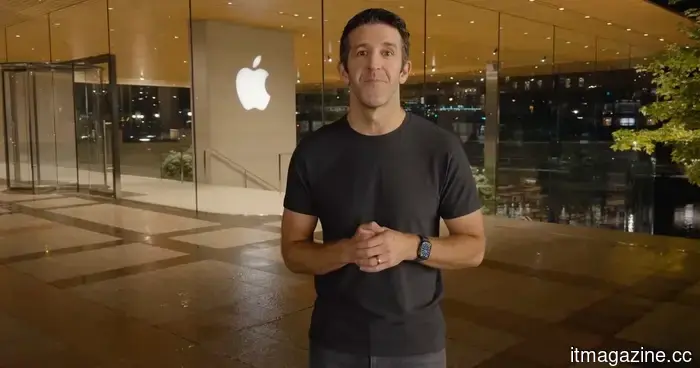 Apple's new CEO assures that there will be thrilling advancements in AI while maintaining a commitment to design.
Apple's future CEO, John Ternus, states that the company recognizes significant potential in AI, but he emphasizes that design and Apple's fundamental principles will remain a priority during this development.
Apple's new CEO assures that there will be thrilling advancements in AI while maintaining a commitment to design.
Apple's future CEO, John Ternus, states that the company recognizes significant potential in AI, but he emphasizes that design and Apple's fundamental principles will remain a priority during this development.
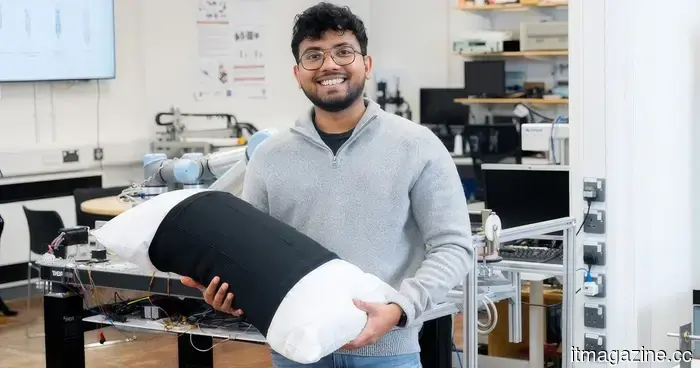 This intelligent pillow guarantees that you won't miss an emergency alarm or a phone call while you sleep.
Researchers from Nottingham Trent University have created a vibrating smart pillow sleeve designed to notify deaf individuals about fires, burglar alarms, and phone calls during the night.
This intelligent pillow guarantees that you won't miss an emergency alarm or a phone call while you sleep.
Researchers from Nottingham Trent University have created a vibrating smart pillow sleeve designed to notify deaf individuals about fires, burglar alarms, and phone calls during the night.
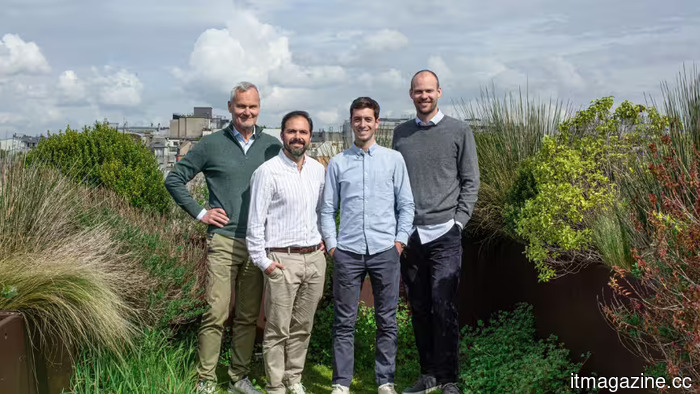 Decade Energy secures €22 million to develop zero-capex energy infrastructure.
Decade Energy has secured €22 million to implement over 100MW of Battery Energy Storage Systems (BESS) at logistics depots in France and to broaden its zero-capex electrification approach throughout Europe.
Decade Energy secures €22 million to develop zero-capex energy infrastructure.
Decade Energy has secured €22 million to implement over 100MW of Battery Energy Storage Systems (BESS) at logistics depots in France and to broaden its zero-capex electrification approach throughout Europe.
Microsoft pledges A$25 billion to Australia by the year 2029.
Microsoft reveals plans for A$25 billion investment in Australian digital infrastructure by 2029, which will encompass the expansion of Azure AI, the extension of Cyber-Shield, and the development of AI skills.