
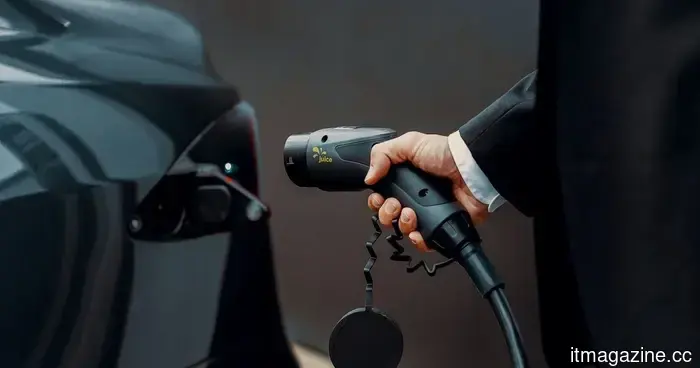
Battery technology is addressing issues that consumers remain indifferent to.
For a long time, the electric vehicle sector has been striving toward a seemingly straightforward goal: to make charging as quick as refueling a gasoline car. This was the vision, the sales pitch, and in many ways, the rationale behind everything from massive battery investments to government incentives.
As of 2026, that goal is no longer just a concept.
Companies like CATL and BYD have made remarkable strides in battery technology, reducing charging times to mere minutes. CATL’s third-generation Shenxing battery, introduced in April 2026, can go from 10% to 98% charge in just over six minutes, thanks to extremely low internal resistance and enhanced thermal management. BYD’s second-generation Blade battery, combined with its Flash Charging system, can charge from 10% to 70% in five minutes and nearly achieve a full charge in under ten minutes, all while functioning well in extremely cold temperatures down to -30°C.
Now, firms such as CATL and BYD are reporting charging times that fall into single-digit minutes. This means that you could nearly charge your vehicle in the time it takes to grab a coffee and return to your car. On the surface, this represents the breakthrough the industry has aimed for over the last decade. However, there seems to be a disconnect.
At the same time that charging is becoming a technological reality, electric vehicle adoption—particularly in places like the United States—appears to be slowing down. This contradiction is where the situation becomes intriguing and, frankly, where the narrative of the industry starts to unravel.
We Addressed the Wrong Issue First
Over the years, I've heard automakers discuss range anxiety as if it were the single largest obstacle for potential buyers. Then the focus shifted to charging anxiety, which felt more relevant. After all, no one wants to spend 40 minutes waiting for their car to charge during a long trip. Now that waiting time is decreasing.
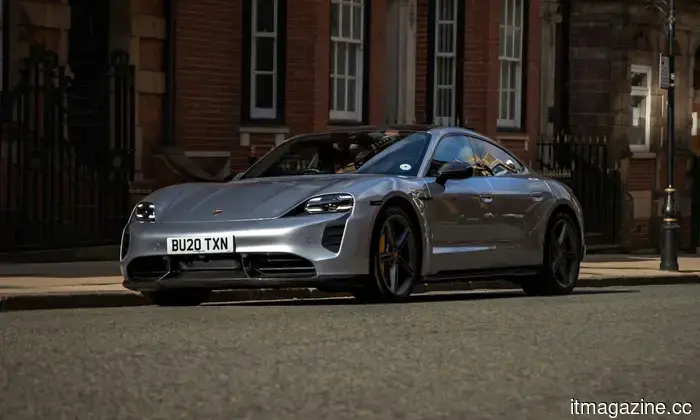
Even the so-called slower competitors in the West aren’t lagging behind. The Porsche Taycan can add a substantial charge in under 20 minutes, which would have seemed incredibly fast a few years ago. The Tesla Model 3 still offers respectable charging times within the 15-20 minute range, and newer models like the Audi Q6 e-tron continue to make incremental improvements.
But "incremental" is the key term here. What’s happening in China is not incremental; it’s transformative. Moving to 800V and 1000V systems, rethinking thermal management, and aggressively scaling lithium iron phosphate (LFP) batteries allow companies like BYD to accomplish what Western automakers are still only discussing.
“Six minutes isn’t just an improvement; it represents a reset.”
That’s a statement that could easily make its way into a press release, and to its credit, the engineering behind it is genuinely remarkable. However, this also highlights a more significant problem: the industry has been optimizing for headlines rather than addressing consumer habits.
Speedy Charging Doesn't Remedy a Flawed Experience
Here’s a point that isn’t discussed enough.
A six-minute charge means nothing if the charger you need is occupied, broken, or simply unavailable. The speed at which your car can charge doesn’t matter if the surrounding ecosystem can’t support that pace in real life.
This disparity between China and the West is more complex than just technology. China’s advantage lies not only in superior batteries but also in a tightly controlled infrastructure where policy, manufacturing, and charging networks operate in harmony.
In contrast, the EV experience in the West still feels disjointed. You may have a fast-charging vehicle, but you often depend on a network that isn’t consistently reliable. You might find available chargers, but they often don’t deliver the speeds your car can handle. Moreover, you’re likely paying more for the service.
This is why I continuously return to a straightforward idea. The industry didn’t just resolve issues around charging speed; it jumped ahead of the real problems buyers face.
Tesla Grasped This Before Anyone Else
Tesla’s association with EV adoption isn't solely due to its range or performance. The company established an ecosystem before most manufacturers even recognized the need for one.
The Supercharger network wasn’t designed to only provide the fastest charging speeds on paper; it was developed to make the charging process predictable, accessible, and most importantly, reliable.
When buyers express concerns about charging, they are primarily indicating a lack of trust in the experience. They worry that a charger won’t be available when needed, that it won’t operate as expected, or that the process won’t be as fluid as filling up a gas tank.
No peak charging speed can bridge that trust gap. It’s almost ironic that Google is attempting to address "charging anxiety" with features in its navigation software. Earlier this year, Google Maps expanded battery predictions and route planning to cover over 300 EV models.
The Breakthrough in Cold Weather Is What Really Matters
If there’s one area where

Other articles
 Apple addresses security vulnerability that allowed the FBI to retrieve messages from notification history on the iPhone.
A flaw in Apple's notification system was discreetly keeping the content of incoming messages for as long as a month, irrespective of whether the messages were standard or configured for auto-deletion.
Apple addresses security vulnerability that allowed the FBI to retrieve messages from notification history on the iPhone.
A flaw in Apple's notification system was discreetly keeping the content of incoming messages for as long as a month, irrespective of whether the messages were standard or configured for auto-deletion.
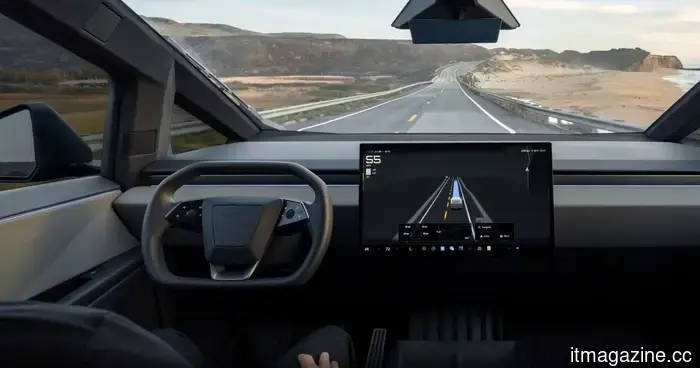 Tesla has finally revealed the reality about full self-driving capabilities in older vehicles, and it brings a glimmer of hope amid uncertainty.
Elon Musk stated during Tesla's Q2 2026 earnings call that vehicles with Hardware 3 require physical upgrades, and Tesla intends to establish micro-factories to manage the necessary scale of replacements.
Tesla has finally revealed the reality about full self-driving capabilities in older vehicles, and it brings a glimmer of hope amid uncertainty.
Elon Musk stated during Tesla's Q2 2026 earnings call that vehicles with Hardware 3 require physical upgrades, and Tesla intends to establish micro-factories to manage the necessary scale of replacements.
 Cloudsmith in Belfast secures $72 million in Series C funding led by TCV.
Cloudsmith has secured $72 million in a Series C funding round, led by TCV and Insight Partners, to manage and protect the software supply chain generated by AI.
Cloudsmith in Belfast secures $72 million in Series C funding led by TCV.
Cloudsmith has secured $72 million in a Series C funding round, led by TCV and Insight Partners, to manage and protect the software supply chain generated by AI.
 The TORRAS × FPF Collection Merges Intelligent Design With the Essence of International Football.
The collection focuses on TORRAS' iconic accessories, notably its kickstand phone cases for the iPhone 17 series. Instead of highlighting typical usage situations, the spotlight is on sports-oriented settings – training practices, match readiness, post-game reviews, and leisure times where football remains integral to everyday life. The kickstand mechanism is a crucial […]
The TORRAS × FPF Collection Merges Intelligent Design With the Essence of International Football.
The collection focuses on TORRAS' iconic accessories, notably its kickstand phone cases for the iPhone 17 series. Instead of highlighting typical usage situations, the spotlight is on sports-oriented settings – training practices, match readiness, post-game reviews, and leisure times where football remains integral to everyday life. The kickstand mechanism is a crucial […]
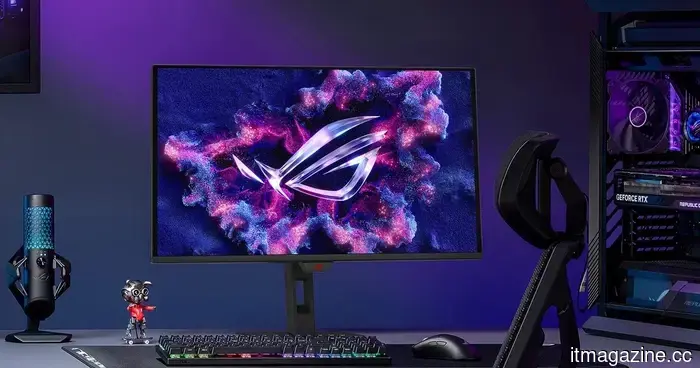 Monitors have evolved beyond just being basic upgrades. Here’s what’s different.
Monitor technology is advancing beyond just basic upgrades. With enhancements in OLED technology, extremely high refresh rates, and the introduction of 6K displays, here's what is genuinely transforming and why it is significant.
Monitors have evolved beyond just being basic upgrades. Here’s what’s different.
Monitor technology is advancing beyond just basic upgrades. With enhancements in OLED technology, extremely high refresh rates, and the introduction of 6K displays, here's what is genuinely transforming and why it is significant.
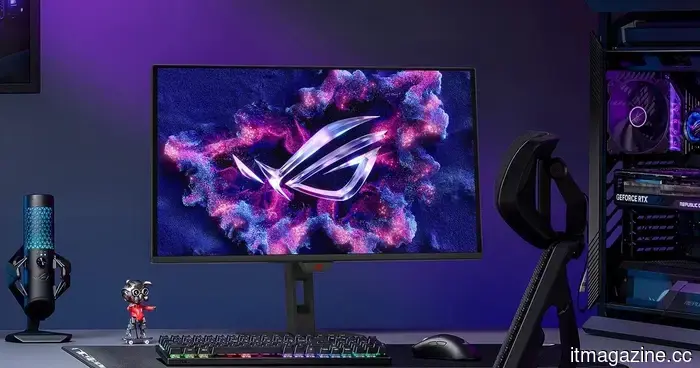 Monitors have evolved beyond just basic upgrades. Here’s what’s new.
Monitor technology is advancing past mere enhancements. With advancements in OLED technology, extremely high refresh rates, and the introduction of 6K displays, here's what is genuinely transforming and its significance.
Monitors have evolved beyond just basic upgrades. Here’s what’s new.
Monitor technology is advancing past mere enhancements. With advancements in OLED technology, extremely high refresh rates, and the introduction of 6K displays, here's what is genuinely transforming and its significance.
Battery technology is addressing issues that consumers remain indifferent to.
QuickCharge: This Week in EV This article is part of our ongoing series, QuickCharge: This Week in EV, updated less than 8 hours ago. For a considerable period, the electric vehicle sector has been pursuing a goal that seemed straightforward: to make charging as quick as filling up a gasoline vehicle. That was the commitment, […]