
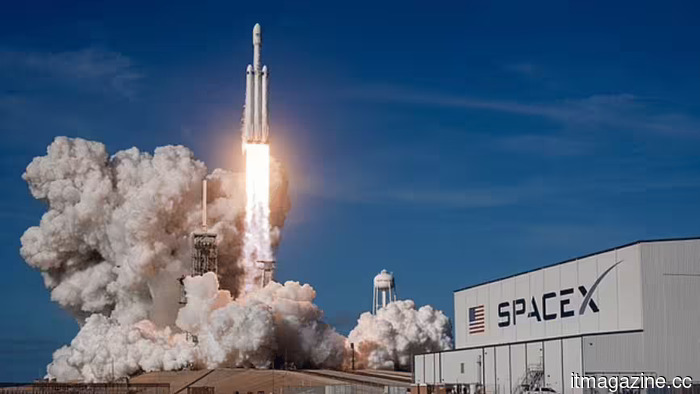
SpaceX S-1 cautions that orbital AI data centers might not be feasible, just months after Musk referred to space-based AI as an obvious choice.
Summary: SpaceX's confidential S-1 pre-IPO filing indicates that its plans for orbital AI data centres entail "significant technical complexity and unproven technologies, and may not achieve commercial viability," contradicting Elon Musk’s earlier assertion at Davos that space-based AI was a straightforward venture achievable within two to three years. This filing arises as SpaceX seeks a $1.75 trillion IPO valuation and has requested permission from the FCC for one million data centre satellites, while competitors such as Starcloud, Google (Project Suncatcher), and Blue Origin are also advancing their own orbital computing initiatives.
In its confidential S-1 pre-IPO filing, SpaceX warned potential investors that the development of orbital AI data centres is fraught with substantial technical challenges and may not reach commercial success. The company cautioned that any future space-based computing infrastructure would have to function “in the harsh and unpredictable environment of space,” exposing it to unique risks that could lead to malfunctions or failures. This disclosure, first reported by Reuters, is standard for a company nearing what could be the largest initial public offering ever. It also reflects a notable moment of transparency from an organization whose CEO had previously described data centres in orbit as a “no-brainer” just three months prior.
At the World Economic Forum in Davos in January, Elon Musk stated that space would be the most cost-effective location for AI implementation “within two years, maybe three at the latest.” He argued that space-based solar energy would be “10 times cheaper than terrestrial solar” since “batteries aren’t necessary,” claimed that cooling issues could be managed by orienting a radiator away from the sun at three degrees Kelvin, and predicted that more AI capacity would be in orbit than on Earth within five years. In February, SpaceX filed with the Federal Communications Commission to launch and manage up to one million satellites as part of the "SpaceX Orbital Data Center system" at altitudes ranging from 500 to 2,000 kilometers. This filing suggested that the satellites would "directly harness near-constant solar power with minimal operating or maintenance costs." However, the S-1, submitted confidentially to the Securities and Exchange Commission ahead of a planned June listing that would value the company at $1.75 trillion and seek to raise $75 billion, conveys a different message.
The underlying physics presents challenges
The discrepancy between Musk's public remarks and SpaceX's legal filings illustrates a set of engineering constraints that remain unaltered since Davos. In a vacuum, heat dissipation relies solely on radiation, with no convection, liquid cooling, or fans. To emit just one megawatt of heat at 20 degrees Celsius, an orbital data centre would require approximately 1,200 square meters of radiator surface, equivalent to the size of four tennis courts. For comparison, the entire electrical system of the International Space Station generates only 0.2 megawatts, while ground-based hyperscale data centres are approaching a gigawatt capacity. The three-degree Kelvin temperature in space is inconsequential if the radiators needed for cooling outweigh the servers.
Energy supply is similarly limited. Solar panels in orbit receive about five times more energy compared to those on Earth, free from atmospheric interference, weather disruptions, or nighttime in certain orbits. However, to generate one gigawatt of energy at a 30% efficiency rate, it would take about one square mile of solar arrays in Earth orbit. The ISS produces only 0.2 megawatts from arrays that are the length of a football field. Increasing to the gigawatt levels that a single hyperscale data centre on Earth requires would necessitate the deployment and maintenance of solar facilities significantly larger than any human-made infrastructures in space.
Hardware obsolescence may be the least recognized limitation. Graphics processing units (GPUs) depreciate every two to three years as new architectures are developed. On Earth, servers are frequently updated, but in orbit, hardware replacement necessitates a launch, docking, or robotic servicing mission. Moreover, radiation exposure can result in bit flips and permanent damage to circuits. Radiation-hardened chips lag several generations behind commercial processors. Triple modular redundancy—which involves running three parallel systems and selecting the majority outcome—would triple the hardware needs. The increasing energy demands of AI, projected by the IEA to elevate data centre electricity consumption to beyond 1,000 terawatt-hours by the end of 2026, are legitimate concerns. The critical question is whether addressing these needs in orbit introduces more complications than it resolves.
The competitive landscape for orbital compute
SpaceX is not alone in the pursuit of orbital computing, which makes the S-1 disclaimer particularly noteworthy amid competitive pressures. Starcloud, previously known as Lumen Orbit, successfully launched the first powerful GPU into orbit in November 2025—a Nvidia H100, which provided 100 times the computational power ever utilized in space. In December, Starcloud achieved the distinction of being
Other articles
 VAST Data secures $1 billion in funding, achieving a valuation of $30 billion, supported by Nvidia, as the demand for AI data infrastructure grows rapidly.
VAST Data has increased its valuation threefold to $30 billion following a $1 billion Series F round led by Drive Capital and Access Industries, with participation from Nvidia. The company's revenue is also tripling annually.
Google transforms Chrome into a proactive AI workplace tool featuring Auto Browse, Skills, and enterprise DLP for $6 per month.
Chrome now includes Auto Browse, AI Skills, a Gemini side panel, and an enterprise DLP service for $6 per month. Google states that the browser has evolved from being just a window to an AI platform for the workplace.
VAST Data secures $1 billion in funding, achieving a valuation of $30 billion, supported by Nvidia, as the demand for AI data infrastructure grows rapidly.
VAST Data has increased its valuation threefold to $30 billion following a $1 billion Series F round led by Drive Capital and Access Industries, with participation from Nvidia. The company's revenue is also tripling annually.
Google transforms Chrome into a proactive AI workplace tool featuring Auto Browse, Skills, and enterprise DLP for $6 per month.
Chrome now includes Auto Browse, AI Skills, a Gemini side panel, and an enterprise DLP service for $6 per month. Google states that the browser has evolved from being just a window to an AI platform for the workplace.
 Gemini can now generate documents, slides, meetings, and additional items in chat.
Google has incorporated Gemini into Chat, enabling users to generate documents, slides, and handle tasks directly within their conversations.
Mozilla has addressed 271 vulnerabilities in Firefox that were identified by Anthropic's Claude Mythos during a single evaluation process.
Firefox 150 includes 271 bug fixes identified by Claude Mythos Preview. Mozilla states that the issues are limited. The UK AI Security Institute indicates that the model has the capability to conduct autonomous attacks as well.
Gemini can now generate documents, slides, meetings, and additional items in chat.
Google has incorporated Gemini into Chat, enabling users to generate documents, slides, and handle tasks directly within their conversations.
Mozilla has addressed 271 vulnerabilities in Firefox that were identified by Anthropic's Claude Mythos during a single evaluation process.
Firefox 150 includes 271 bug fixes identified by Claude Mythos Preview. Mozilla states that the issues are limited. The UK AI Security Institute indicates that the model has the capability to conduct autonomous attacks as well.
 Motorola has recently released a sleek mid-range device featuring a notably large battery.
The Motorola Edge 70 Pro has officially launched in India, featuring a sleek 6.99mm profile and an impressive 6,500mAh battery, with a broader rollout across Europe expected soon.
Motorola has recently released a sleek mid-range device featuring a notably large battery.
The Motorola Edge 70 Pro has officially launched in India, featuring a sleek 6.99mm profile and an impressive 6,500mAh battery, with a broader rollout across Europe expected soon.
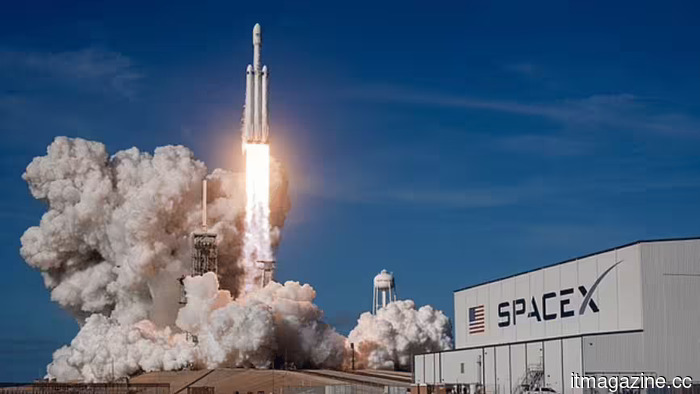 SpaceX S-1 cautions that orbital AI data centers could be unfeasible, just months after Musk referred to space-based AI as an obvious choice.
A pre-IPO filing by SpaceX indicates that space data centers rely on untested technology and might never be feasible. Musk mentioned at Davos that they would become the most cost-effective solution within the next three years.
SpaceX S-1 cautions that orbital AI data centers could be unfeasible, just months after Musk referred to space-based AI as an obvious choice.
A pre-IPO filing by SpaceX indicates that space data centers rely on untested technology and might never be feasible. Musk mentioned at Davos that they would become the most cost-effective solution within the next three years.
SpaceX S-1 cautions that orbital AI data centers might not be feasible, just months after Musk referred to space-based AI as an obvious choice.
SpaceX's filing prior to its IPO indicates that space data centers rely on untested technology and might not be feasible. Musk mentioned at Davos that they could become the most cost-effective solution within three years.