
Google Cloud Next 2026: AI agents, A2A protocol, Workspace Studio, and the comprehensive strategy against OpenAI and Anthropic.
Summary: At Cloud Next 2026, Google rebranded its AI platform, renaming Vertex AI to the Gemini Enterprise Agent Platform and incorporating Agentspace into the Gemini Enterprise product lineup. Key announcements include Workspace Studio (a no-code agent builder), over 200 models in the Model Garden including Anthropic Claude, partner agents from Box, Workday, Salesforce, and ServiceNow, stable releases of ADK v1.0 in four languages, Project Mariner (a web-browsing agent), managed MCP servers with Apigee as an API-to-agent bridge, and A2A protocol v1.0 now in production at 150 organizations. Kurian emphasized the comprehensive strategy of controlling everything from chip to inbox, contrasting it with competitors who provide only components.
During the opening keynote of Cloud Next 2026, Google showcased a comprehensive rebranding and consolidation of its AI platform centered on agents. Vertex AI has been transformed into the Gemini Enterprise Agent Platform, with Google Agentspace integrated into the new Gemini Enterprise product. The announcements included a no-code agent builder for Google Workspace, an upgraded developer platform featuring over 200 models with third-party options like Anthropic’s Claude, a web-browsing agent named Project Mariner, managed MCP servers across Google Cloud services, and the production-ready Agent2Agent protocol for communication between agents across platforms. Thomas Kurian, Google Cloud’s CEO, titled the keynote "The Agentic Cloud," highlighting how other vendors are "handing you the pieces, not the platform," which forces teams to handle integration themselves.
The timing of these announcements is strategic. OpenAI’s Operator is achieving an 87% success rate on complex browser tasks and has partnered with Cognizant and CGI to advance its Codex coding agent into enterprise software, with enterprise revenue now constituting 40% of its overall total. Anthropic has introduced a marketplace for Claude-based enterprise tools, with its Model Context Protocol now operational on 10,000 servers and achieving 97 million monthly SDK downloads. Google currently ranks third in cloud market share behind AWS and Microsoft Azure, but ended Q4 2025 with the highest growth rate among the three at 50% year-on-year, betting that vertical integration—encompassing the model, runtime, silicon, and distribution channel via Workspace—provides it an unmatchable edge.
The agent stack
The most user-facing announcement from Google is Workspace Studio, a no-code platform enabling business users to create and deploy AI agents across Gmail, Docs, Sheets, Drive, Meet, and Chat by simply describing tasks in everyday language. For instance, a user can request, "every Friday, remind me to update my tracker," and Gemini automates this. Workspace Studio integrates with third-party applications like Asana, Jira, Mailchimp, and Salesforce, and can also utilize external APIs via webhooks or custom logic through Apps Script. It will be made available to Google Workspace business, enterprise, and education users.
The developer-oriented platform, now rebranded as the Gemini Enterprise Agent Platform, has undergone significant enhancements. Agent Designer, a visual flow canvas for architecting agent workflows, is currently in preview. Features such as Agent Engine Sessions and Memory Bank, which enable agents to maintain context throughout interactions, are now generally available. The new Agent Garden offers prebuilt agent solutions for customer service, analytics, and creative tasks, with a free tier through Express mode easing entry barriers. The Model Garden boasts more than 200 models, including Google’s Gemini and Gemma families, third-party models like Anthropic Claude, and various open models, such as Llama. Furthermore, six new agents for data engineering and coding in BigQuery have been unveiled, including a data engineering agent that automates pipeline creation from natural language inputs and a code interpreter that converts queries into executable Python code with visualizations. Partner agents from Box, Workday, Salesforce, ServiceNow, Dun and Bradstreet, and S&P Global have been integrated into the platform, offering enterprise customers ready-made capabilities for document intelligence, HR self-service, IT operations, and financial data handling.
Project Mariner, developed by Google DeepMind, features a web-browsing agent powered by Gemini 2.0, boasting an 83.5% score on the WebVoyager benchmark while managing ten concurrent tasks on cloud-based virtual machines. This project automates shopping, information retrieval, and form filling, and is accessible to Google AI Ultra subscribers in the U.S. Future developments include a visual builder called Mariner Studio set to launch in the second quarter, cross-device synchronization in the third quarter, and an agent marketplace scheduled for the fourth quarter.
Among the announcements, the most strategically critical may be the least visible to end users: Google’s Agent2Agent (A2A) protocol, initially launched with over 50 tech partners, is now in production with 150 organizations, effectively routing real tasks between agents across different platforms. This protocol is governed by the Linux
Other articles
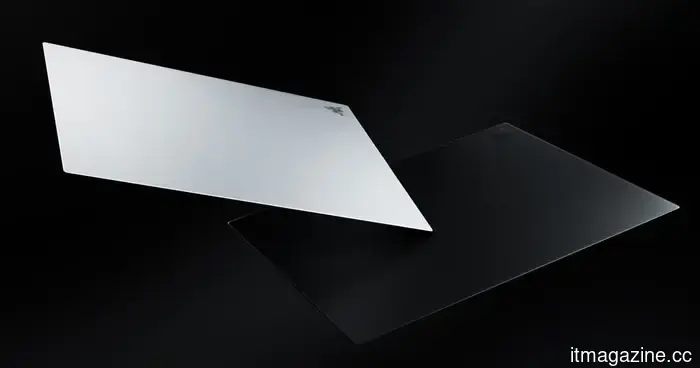 Razer has created the thinnest glass mouse pad in the world, and your wrists will appreciate it.
Razer's Atlas Pro is the thinnest glass gaming mouse mat globally, measuring only 1.9mm, and it aims to enhance the comfort of your gaming setup.
Razer has created the thinnest glass mouse pad in the world, and your wrists will appreciate it.
Razer's Atlas Pro is the thinnest glass gaming mouse mat globally, measuring only 1.9mm, and it aims to enhance the comfort of your gaming setup.
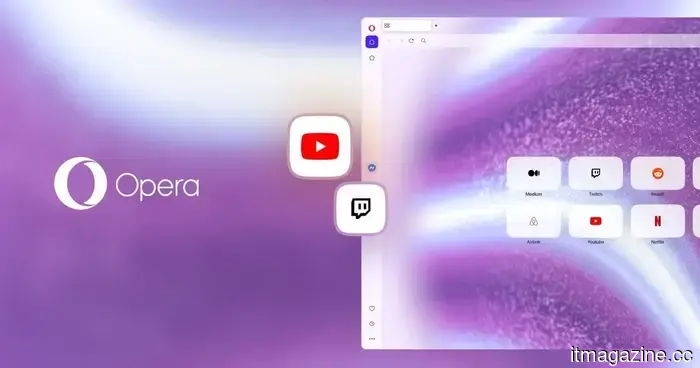 Opera One enhances video watching by offering a 500% volume boost, upgraded Picture-in-Picture (PiP) functionality, and support for streaming through the sidebar.
Opera One now enables users to pin YouTube and Twitch in the sidebar, increase tab volume to 500%, and utilize an updated picture-in-picture mode for video calls.
Opera One enhances video watching by offering a 500% volume boost, upgraded Picture-in-Picture (PiP) functionality, and support for streaming through the sidebar.
Opera One now enables users to pin YouTube and Twitch in the sidebar, increase tab volume to 500%, and utilize an updated picture-in-picture mode for video calls.
 The Honor 600 series targets the affordable flagship segment by featuring Snapdragon performance and a 7,000mAh battery.
The Honor 600 and Honor 600 Pro offer significant enhancements in performance, battery life, and camera hardware, making them strong competitors in the budget flagship category.
The Honor 600 series targets the affordable flagship segment by featuring Snapdragon performance and a 7,000mAh battery.
The Honor 600 and Honor 600 Pro offer significant enhancements in performance, battery life, and camera hardware, making them strong competitors in the budget flagship category.
 Google introduces a $750M partner fund during Cloud Next 2026 to support agentic AI implementations across Accenture, Deloitte, and KPMG.
Google has allocated $750 million to speed up the development of agentic AI solutions by its partners. Accenture boasts over 450 agents, KPMG has committed $100 million, and partners are earning $7.05 for every $1 spent on the cloud.
Google introduces a $750M partner fund during Cloud Next 2026 to support agentic AI implementations across Accenture, Deloitte, and KPMG.
Google has allocated $750 million to speed up the development of agentic AI solutions by its partners. Accenture boasts over 450 agents, KPMG has committed $100 million, and partners are earning $7.05 for every $1 spent on the cloud.
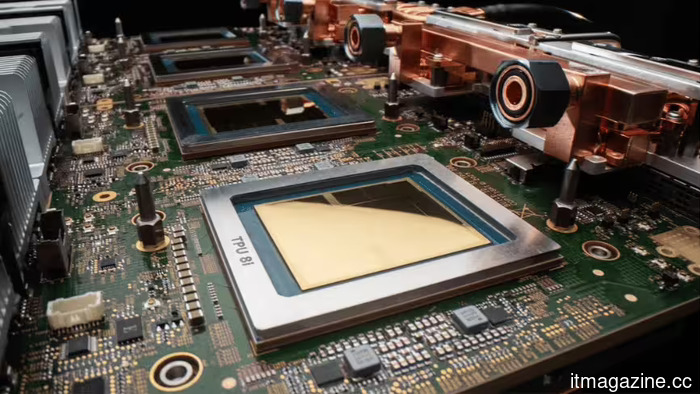 Google unveils the Ironwood TPU and offers a preview of its eighth generation, which is divided into training and inference chips at TSMC's 2nm technology.
Google's Ironwood TPU is operational, delivering 4.6 petaFLOPS per chip. The eighth generation is divided into two parts: Broadcom for training and MediaTek for inference, both manufactured at 2nm, set to launch in late 2027.
Google unveils the Ironwood TPU and offers a preview of its eighth generation, which is divided into training and inference chips at TSMC's 2nm technology.
Google's Ironwood TPU is operational, delivering 4.6 petaFLOPS per chip. The eighth generation is divided into two parts: Broadcom for training and MediaTek for inference, both manufactured at 2nm, set to launch in late 2027.
 The Devil May Cry Season 2 trailer featuring the clash between Dante and Vergil has captured our full attention.
Netflix has released a trailer for Season 2 of Devil May Cry, hinting at an intense confrontation between Dante and Vergil while also introducing two significant villains.
The Devil May Cry Season 2 trailer featuring the clash between Dante and Vergil has captured our full attention.
Netflix has released a trailer for Season 2 of Devil May Cry, hinting at an intense confrontation between Dante and Vergil while also introducing two significant villains.
Google Cloud Next 2026: AI agents, A2A protocol, Workspace Studio, and the comprehensive strategy against OpenAI and Anthropic.
At Cloud Next 2026, Google introduced a suite of AI agents that includes Workspace Studio, the A2A protocol implemented at 150 organizations, and Project Mariner. The key message: Google is the sole owner of the complete stack.