
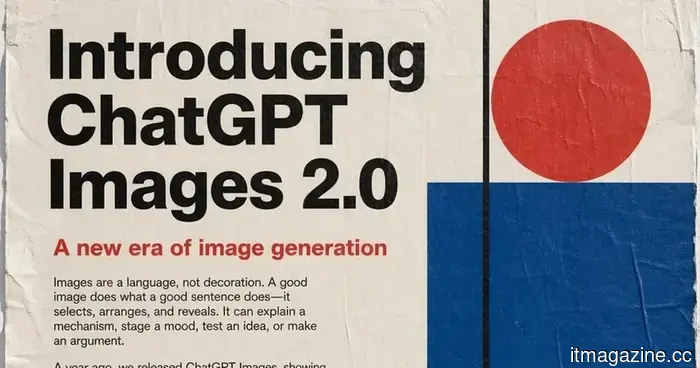
ChatGPT Images 2.0 has arrived, and it offers much more than just an enhancement.
Better text, reasoning, and real-world outputs.
OpenAI has returned with an upgrade to ChatGPT's image generation capabilities that feels more substantial than just a novelty; it represents a significant advancement towards creating genuinely useful AI-generated visuals. OpenAI has introduced ChatGPT Images 2.0, a new system for generating images that emphasizes reasoning and accuracy.
ChatGPT Images 2.0 prioritizes understanding over mere generation
Rather than mindlessly converting prompts into images, the model now takes a more thoughtful approach, effectively "evaluating" your request before producing the image.
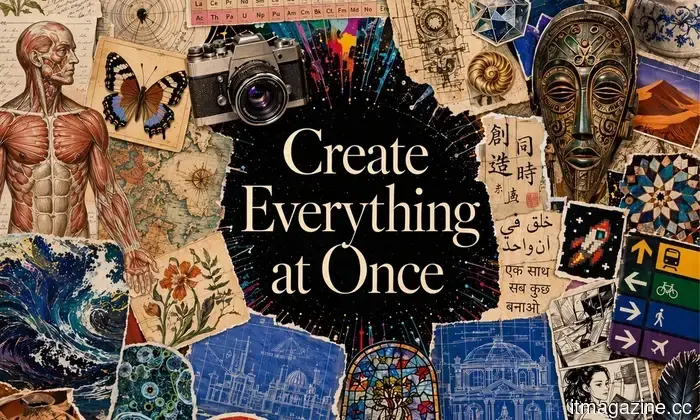
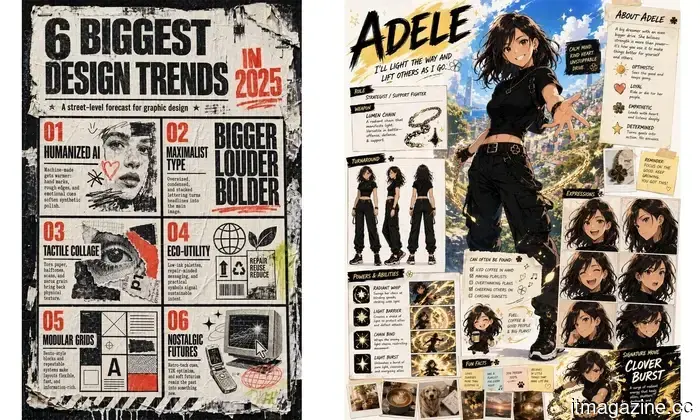
This transformation is evident in several important aspects. The model is significantly improved in processing complex prompts, maintaining consistency across various outputs, and demonstrating greater reliability when incorporating text into images—an area where earlier AI tools faced challenges.
Additionally, it can create multiple variations from a single prompt while preserving the original idea, which enhances its utility for iterative design work. The outcome is a system that feels less like a simple AI art generator and more like a tool that genuinely comprehends your creative intentions.
This is where AI images become practical
What makes this upgrade noteworthy is the strategic direction OpenAI is pursuing. The focus has shifted from merely creating viral AI art to developing image generation that is applicable in real-world situations. With enhanced text rendering, improved structure, and more consistent outputs, ChatGPT Images 2.0 becomes increasingly suitable for tasks such as presentations, social media content, or quick design prototypes. While it may not fully replace professional design tools, it is approaching a level where it can handle a surprising amount of routine creative work.
Nonetheless, it is not without flaws. There are still occasional inconsistencies, particularly with more intricate layouts or non-English text. However, compared to progress made just a year ago, the improvements are remarkable. If this trend continues, the distinction between “AI-generated” and “practically usable” visuals will become increasingly blurred. ChatGPT Images 2.0 is available today to all ChatGPT and Codex users, with advanced outputs using Thinking accessible to Plus, Pro, Business, and Enterprise users. The foundational model, gpt-image-2, is also accessible through the API.
Varun is a seasoned technology journalist and editor with over eight years of experience in consumer tech media. His work covers...
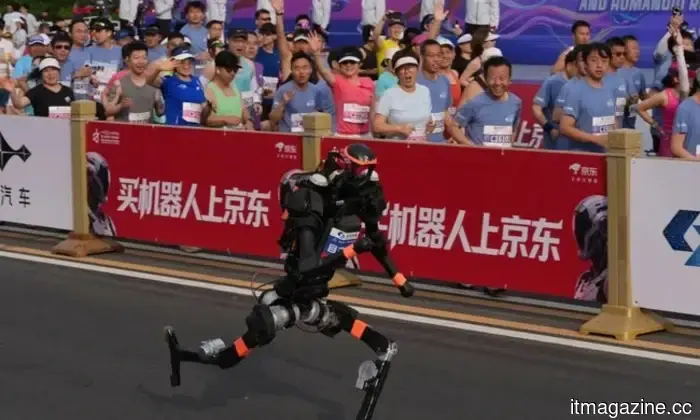
Robots have just surpassed the Beijing half-marathon world record holder.
A humanoid robot has completed a half-marathon faster than the existing world record holder. While this may not appear impressive initially, it's a significant accomplishment since last year's fastest robot at Beijing's humanoid robot half-marathon finished in two hours and 40 minutes. This year, the winning robot finished in 50 minutes and 26 seconds, comfortably outpacing the human world record of 57 minutes set by Jacob Kiplimo.
As if the issues weren't already overwhelming, AI is exacerbating the global e-waste crisis.
A new report underscores an escalating environmental concern.
AI is transforming global operations, but it's also quietly intensifying one of our major environmental challenges. This issue isn't related to energy consumption but rather the hardware involved. The advancement of each new AI model incurs a physical cost that contributes to the burgeoning e-waste crisis.
Smart glasses are finding an unexpected niche in Korean drama and theater productions.
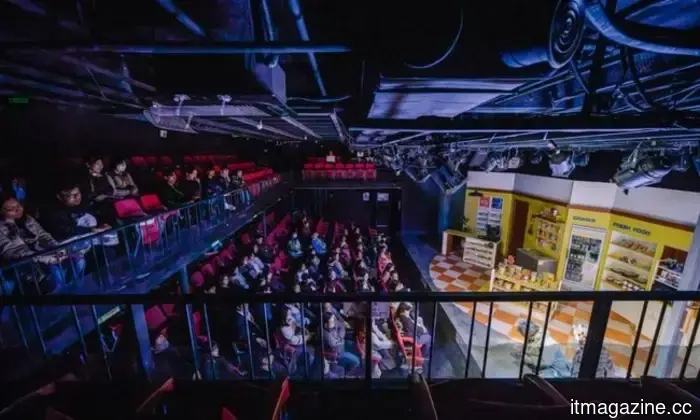
Every year, millions of fans engage with Korean content without speaking the language. They stream shows with subtitles, read translated lyrics, and employ various workarounds. However, live theater poses a unique challenge—there's no opportunity to pause or rewind. A Korean startup believes it has found a solution for this, and Yuroy Wang was among the first to experience it. The 22-year-old retail worker from Taipei, a K-pop enthusiast passionate about Korean culture despite not speaking the language, attended a performance of "The Second Chance Convenience Store," a touring production based on a bestselling Korean novel in Taiwan. He anticipated supertitles, but instead received a pair of chunky AI-powered glasses that translated the dialogue in real time directly onto the lenses. "As soon as I discovered they were available, I couldn't wait to try them," he shared. Wang represents a growing group of audiences experiencing how smart glasses—previously a tech category struggling to find a mainstream application—may have discovered their unexpected niche in live Korean theater.
How do the glasses function?


Other articles
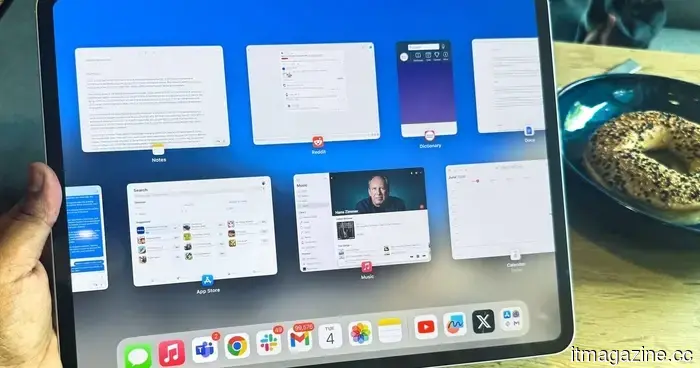 An Asus leak reveals a competitor to the iPad Pro featuring a design that looks familiar and a 144Hz OLED display.
Asus is set to introduce the Asus Pad, a 12.2-inch OLED tablet featuring a 144Hz display, a 9,000mAh battery, and an impressively slim body measuring just 6.5mm. Here’s what we have learned so far.
An Asus leak reveals a competitor to the iPad Pro featuring a design that looks familiar and a 144Hz OLED display.
Asus is set to introduce the Asus Pad, a 12.2-inch OLED tablet featuring a 144Hz display, a 9,000mAh battery, and an impressively slim body measuring just 6.5mm. Here’s what we have learned so far.
 YouTube is addressing celebrity deepfakes with new technology for detecting AI-generated likenesses.
YouTube is broadening its AI technology for likeness detection to include talent agencies, managers, and celebrities, aiming to assist in the identification and removal of deepfakes.
YouTube is addressing celebrity deepfakes with new technology for detecting AI-generated likenesses.
YouTube is broadening its AI technology for likeness detection to include talent agencies, managers, and celebrities, aiming to assist in the identification and removal of deepfakes.
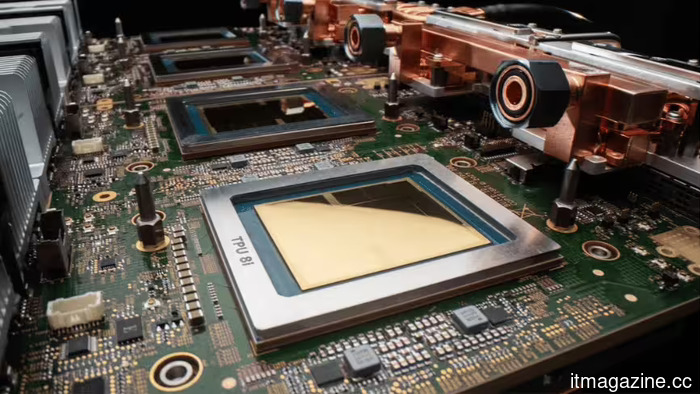 Google unveils the Ironwood TPU and offers a preview of its eighth generation, which is divided into training and inference chips at TSMC's 2nm technology.
Google's Ironwood TPU is operational, delivering 4.6 petaFLOPS per chip. The eighth generation is divided into two parts: Broadcom for training and MediaTek for inference, both manufactured at 2nm, set to launch in late 2027.
Google unveils the Ironwood TPU and offers a preview of its eighth generation, which is divided into training and inference chips at TSMC's 2nm technology.
Google's Ironwood TPU is operational, delivering 4.6 petaFLOPS per chip. The eighth generation is divided into two parts: Broadcom for training and MediaTek for inference, both manufactured at 2nm, set to launch in late 2027.
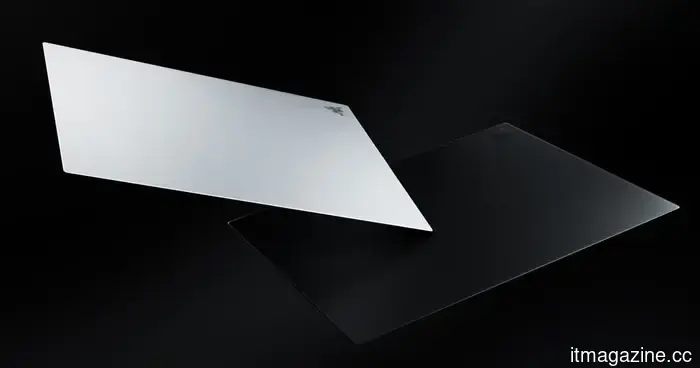 Razer has created the thinnest glass mouse pad in the world, and your wrists will appreciate it.
Razer's Atlas Pro is the thinnest glass gaming mouse mat globally, measuring only 1.9mm, and it aims to enhance the comfort of your gaming setup.
Razer has created the thinnest glass mouse pad in the world, and your wrists will appreciate it.
Razer's Atlas Pro is the thinnest glass gaming mouse mat globally, measuring only 1.9mm, and it aims to enhance the comfort of your gaming setup.
 Xbox Game Pass has just become more affordable, and I have no objections to the change that comes with it.
Xbox Game Pass lowers its price but loses day-one access to Call of Duty. Is this a strategic reset or a decline in value? Here’s what’s different, the significance of these changes, and how gamers are responding.
Google Cloud Next 2026: AI agents, A2A protocol, Workspace Studio, and a comprehensive strategy to compete with OpenAI and Anthropic.
Google unveiled its AI agent suite at Cloud Next 2026, which includes Workspace Studio, the A2A protocol deployed at 150 organizations, and Project Mariner. The emphasis: only Google controls the entire stack.
Xbox Game Pass has just become more affordable, and I have no objections to the change that comes with it.
Xbox Game Pass lowers its price but loses day-one access to Call of Duty. Is this a strategic reset or a decline in value? Here’s what’s different, the significance of these changes, and how gamers are responding.
Google Cloud Next 2026: AI agents, A2A protocol, Workspace Studio, and a comprehensive strategy to compete with OpenAI and Anthropic.
Google unveiled its AI agent suite at Cloud Next 2026, which includes Workspace Studio, the A2A protocol deployed at 150 organizations, and Project Mariner. The emphasis: only Google controls the entire stack.
ChatGPT Images 2.0 has arrived, and it offers much more than just an enhancement.
ChatGPT Images 2.0 offers enhanced and more precise image generation, featuring improved text processing and consistency, bringing AI-generated visuals closer to practical real-world applications.