

Zoom will now verify whether you are a human or an AI impersonator during video calls.
Biometric badges, iris scans, and AI bouncers: welcome to the future of your Monday morning standup.
Zoom video calls have introduced a new level of awkwardness with a small feature. The platform now prompts users to confirm whether they are human. It has collaborated with World, Sam Altman’s iris-scanning identity firm (previously known as Worldcoin), to incorporate real-time human verification during meetings.
Launched on April 17, 2026, this feature is part of World’s ID 4.0 rollout, allowing hosts to verify that every individual on the call is a real person and not an AI-generated imitation.
How does the “verified human” badge function?
For those curious about how World’s Deep Face technology operates, it entails a three-step process. It cross-checks a signed image from the user's initial Orb registration, a live facial scan from the user's device, and the frame of the video visible to other meeting participants.
Only when all three samples align does the “Verified Human” badge appear next to the user's name. It seems strange and ironic to me that I need to validate my humanity just to be acknowledged as such in a Zoom meeting.
Hosts can also require Deep Face verification for meeting participation, effectively preventing unverified users from joining. Additionally, mid-call checks can be conducted on the spot. So, if you suspect your colleague appears suspicious or simply want to unsettle someone, you can request a real-time check.
Why is this necessary?
The answer is straightforward: deepfake fraud has evolved from being a rarity discussed among acquaintances to a significant threat. In early 2024, engineering company Arup suffered a $25 million loss when an employee in Hong Kong approved wire transfers during a video call, where everyone except the victim turned out to be a deepfake.
A similar incident occurred with a multinational firm in Singapore in 2025. Furthermore, deepfake-related fraud losses exceeded $200 million in the first quarter of last year alone. The threat is not a distant possibility; it is a reality that an increasing number of individuals and businesses are confronting.
The trend is clear: biometric verification is becoming a standard practice in the workplace.
For over five years, Shikhar has consistently simplified advancements in consumer technology and presented them…
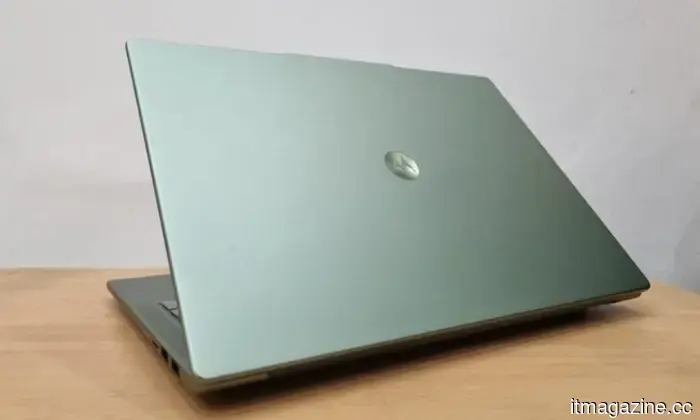
You won’t believe it, but Motorola has surprisingly crafted an eye-catching laptop.
Motorola’s Moto Book 60 Pro is unexpectedly stylish, and its pricing makes it even more appealing.
Motorola is not the brand I anticipate seeing on a genuinely solid laptop. A stylish phone? Absolutely. A foldable device with character? You bet. But a slim and lightweight notebook that balances design and value effectively was a genuine surprise. Yet, the Moto Book 60 Pro stands out as one of the more commendable laptops in its category.
In a troubled laptop market, Motorola's offerings feel refreshing, capable, attractive, and approachable at a time when prices elsewhere have become increasingly daunting.
Google just made another of Gemini's valuable features available to all users for free: the Notebooks feature.
Previously exclusive to paid AI subscribers, Gemini Notebooks are now accessible to all free users on the web. If you frequently use Gemini, this is a significant development.
Google’s new desktop mode demonstrates that Samsung DeX was onto something.
Android 16 finally introduces a genuine desktop mode for Pixel phones, yet Google’s long-awaited feature largely underscores that Samsung has spent years perfecting the complexities involved.
I have eagerly anticipated Android's serious take on desktop mode for years. Back in 2019, I purchased a OnePlus 7 Pro and wasted an embarrassing amount of time trying to force its rudimentary desktop mode into something functional. It made complete sense to me then; phones were already incredibly powerful, and the idea of having one real computer in my pocket felt less like science fiction and more like overdue practicality.






Other articles
 The MacBook Neo led me to understand that Apple still hasn't figured out how to create a genuinely excellent budget iPhone.
The MacBook Neo demonstrates that Apple is capable of creating an excellent entry-level product, which only increases the frustration with the iPhone 17e.
The MacBook Neo led me to understand that Apple still hasn't figured out how to create a genuinely excellent budget iPhone.
The MacBook Neo demonstrates that Apple is capable of creating an excellent entry-level product, which only increases the frustration with the iPhone 17e.
.jpg) 3 overlooked films you can enjoy for free this weekend (April 17-19)
From a tense dinner party thriller to an uplifting tale about a man and his cat, these three complimentary Tubi films cater to every mood you might desire this weekend.
3 overlooked films you can enjoy for free this weekend (April 17-19)
From a tense dinner party thriller to an uplifting tale about a man and his cat, these three complimentary Tubi films cater to every mood you might desire this weekend.
 Google's updated desktop mode clearly indicates that Samsung DeX had the right idea.
Android 16's desktop mode finally offers Pixel users an authentic desktop experience; however, when compared to Samsung DeX, it highlights that Samsung's implementation remains more refined.
Google's updated desktop mode clearly indicates that Samsung DeX had the right idea.
Android 16's desktop mode finally offers Pixel users an authentic desktop experience; however, when compared to Samsung DeX, it highlights that Samsung's implementation remains more refined.
 PlayStation 6 leaks and rumors: All the information we have regarding Sony's upcoming gaming console.
The PlayStation 6 is on its way, but it may not be as imminent as we previously believed, particularly due to the rising costs of components.
PlayStation 6 leaks and rumors: All the information we have regarding Sony's upcoming gaming console.
The PlayStation 6 is on its way, but it may not be as imminent as we previously believed, particularly due to the rising costs of components.
 AirPods Pro 3 might enable you to communicate with Siri without having to utter a word.
AirPods Pro 3 could offer more than just music playback: equipped with IR cameras and Q.ai's micro-facial-movement technology, Apple's upcoming earbuds might enable users to control Siri without any noise.
AirPods Pro 3 might enable you to communicate with Siri without having to utter a word.
AirPods Pro 3 could offer more than just music playback: equipped with IR cameras and Q.ai's micro-facial-movement technology, Apple's upcoming earbuds might enable users to control Siri without any noise.
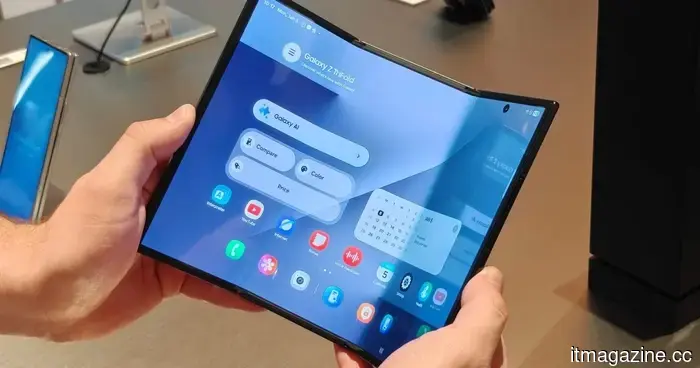 Samsung is already reconsidering the TriFold, and this time, it’s beginning with the hinge.
Only a few months after removing the original TriFold from stores, Samsung is revamping it from the hinge onward, with supply chain sources indicating a thinner and lighter triple-fold device.
Samsung is already reconsidering the TriFold, and this time, it’s beginning with the hinge.
Only a few months after removing the original TriFold from stores, Samsung is revamping it from the hinge onward, with supply chain sources indicating a thinner and lighter triple-fold device.
Zoom will now verify whether you are a human or an AI impersonator during video calls.
Zoom has introduced a human verification feature for video meetings, collaborating with Sam Altman's World to show a "Verified Human" badge for attendees who successfully complete a three-step biometric verification process.