

Threads revamps its web interface and introduces direct messaging to desktop for the first time.
Summary: Connor Hayes, head of Threads, previewed a revamped web interface that introduces direct messaging, a navigation sidebar with shortcuts to saved posts and insights, and a simplified single-feed layout to replace the current multi-column design. Direct messages, which were launched on mobile in June 2025, will be available on the web "in the upcoming weeks," allowing one-on-one chats, group conversations with up to 50 participants, and media sharing for Threads’ most active desktop users as the platform reaches over 450 million monthly active users and begins expanding its global advertising efforts.
Threads is set to unveil a redesigned web interface that includes direct messages, a navigation sidebar, and quicker access to features that were hard to find in the previous mobile-focused layout. Connor Hayes, who became the head of Threads in September 2025, shared these changes in a post this week, emphasizing that “the web is crucial for how our most engaged users interact with Threads, and we will be increasing our investment in this area.” Currently, the web version does not have direct messaging in public testing, but users should expect to see it roll out shortly.
The redesign replaces the existing multi-column layout with a neater single-feed format featuring a left-side navigation bar. This sidebar provides shortcuts to saved posts, performance insights, activity logs, notifications, and options to switch between different feeds, all features found in the mobile app that previously required multiple taps or navigating profiles on the web. The new look resembles the desktop layout of X, which may either reflect a practical design decision or an acknowledgment that the format Threads aimed to replace was indeed effective.
Direct messages are finally coming to the desktop version. Launched in the Threads mobile app in June 2025—nearly two years after the platform’s inception—the web version has been without this key communication feature, limiting access for what Hayes refers to as “most engaged” users, who prefer using Threads on computers. The web rollout will enable one-on-one chats, group discussions for up to 50 participants, emoji reactions, and the ability to share photos, GIFs, and stickers.
Threads has been progressively establishing its messaging capabilities. In January, it introduced a basketball mini-game for direct messages. In February, it started testing a shortcut that turns the phrase “DM me” in a post into a clickable link that initiates a direct message. Built on Instagram's infrastructure, the messaging system is reliable but also aligns with different privacy expectations and content standards.
The redesign announcement came a day after Hayes revealed modifications to the appearance of replies on mobile. Replies will now be indented to make conversation threads clearer, a feature that is rolling out on iOS and is currently being tested on Android.
Context of Competition
Threads has experienced unprecedented growth, becoming the fastest-growing social platform with over 450 million monthly active users, while daily active user estimates range from approximately 137 to 141 million. In January, data from Similarweb indicated that Threads had overtaken X in daily mobile users, with 141.5 million compared to 125 million—a surprising milestone given its launch as a text-based companion to Instagram in July 2023.
This growth occurred amid a general decline of X under Elon Musk’s leadership, which has prompted users, advertisers, and publishers to look for alternatives. Bluesky has emerged as a contender, raising $100 million in its Series B and growing to 43 million users under new CEO Toni Schneider, capturing a notable segment of the market. However, Threads benefits from its integration with Instagram’s vast user base of over 2 billion, creating a distribution advantage unmatched by standalone competitors.
The web redesign represents a shift in focus from growth to user retention. Threads has acquired a substantial user base, but it needs to enhance its feature set to become essential for the power users driving conversation and content creation. The introduction of direct messages, a functional desktop experience, and better reply threading address specific criticisms that have led some users to regard Threads as a secondary platform.
Monetization and Meta's Wider Strategy
Meta began its global rollout of ads on Threads in late January 2026 after preliminary tests in the US and Japan throughout 2025. The rollout utilizes Meta’s existing Ads Manager and accommodates image, video, and carousel formats via both Advantage+ and manual campaigns. Early pricing for advertisements has been lower than rates on Facebook and Instagram, with CPMs ranging from $3 to $8 and cost per click between $0.30 and $1.50, reflecting the nascent level of competition among advertisers on the platform. Analysts at Evercore ISI predict Threads will generate $8 billion in advertising revenue by the end of 2025 and $11.3 billion by 2026.
This advertising rollout lends commercial significance to the web redesign beyond mere user experience. Desktop users typically exhibit higher engagement rates and hold greater value for advertisers. A web interface designed to keep users engaged longer, combined with messaging features that encourage frequent sessions, aligns with the

Other articles
 You might find it hard to believe, but Motorola has created an impressive laptop that truly grabs attention.
The Moto Book 60 Pro boasts a stylish design that attracts attention, but the true surprise lies in the impressive laptop specifications you receive for the price.
You might find it hard to believe, but Motorola has created an impressive laptop that truly grabs attention.
The Moto Book 60 Pro boasts a stylish design that attracts attention, but the true surprise lies in the impressive laptop specifications you receive for the price.
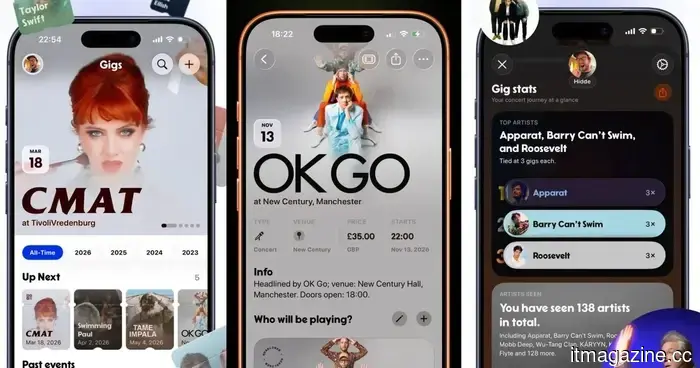 This incredibly awesome app transforms your concert experiences into lasting live music memories.
Gigs is an AI-driven application that organizes concert memories into a timeline that can be searched, allowing users to relive and keep track of their live music experiences.
This incredibly awesome app transforms your concert experiences into lasting live music memories.
Gigs is an AI-driven application that organizes concert memories into a timeline that can be searched, allowing users to relive and keep track of their live music experiences.
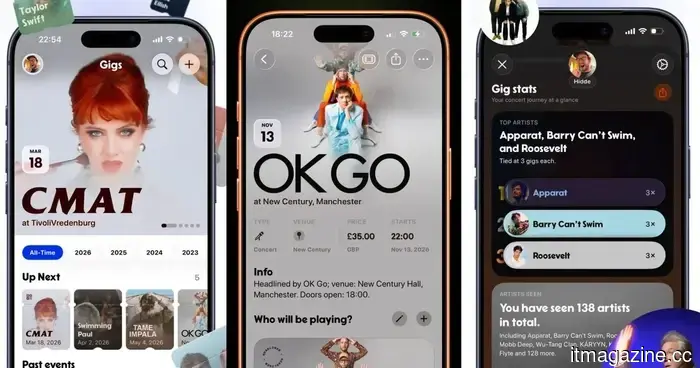 This amazing app transforms your concert experiences into lasting music memories.
Gigs is an AI-driven application that organizes concert memories into a searchable timeline, allowing users to revisit and keep track of their live music experiences.
This amazing app transforms your concert experiences into lasting music memories.
Gigs is an AI-driven application that organizes concert memories into a searchable timeline, allowing users to revisit and keep track of their live music experiences.
 Meta plans to reduce its workforce by 8,000 positions on May 20, with additional layoffs anticipated in the latter half of 2026.
Meta plans to reduce its workforce by approximately 8,000 employees on May 20, which represents 10% of its total staff, with additional layoffs expected in 2026 as the company reallocates $115-135 billion towards AI infrastructure.
Meta plans to reduce its workforce by 8,000 positions on May 20, with additional layoffs anticipated in the latter half of 2026.
Meta plans to reduce its workforce by approximately 8,000 employees on May 20, which represents 10% of its total staff, with additional layoffs expected in 2026 as the company reallocates $115-135 billion towards AI infrastructure.
 You might find it hard to believe, but Motorola really produces an impressive laptop that grabs attention.
The Moto Book 60 Pro has a sleek design that catches the eye, but the true surprise is the value you receive for the price.
You might find it hard to believe, but Motorola really produces an impressive laptop that grabs attention.
The Moto Book 60 Pro has a sleek design that catches the eye, but the true surprise is the value you receive for the price.
Threads revamps its web interface and introduces direct messaging to desktop for the first time.
Threads head Connor Hayes offers a glimpse of a revamped web layout featuring direct messages, a navigation sidebar, and saved posts, as the platform exceeds 450 million monthly active users.