

The AI Artist Library of iQIYI is facing increasing challenges as actors refuse to grant authorization.
Credit: iQIYI
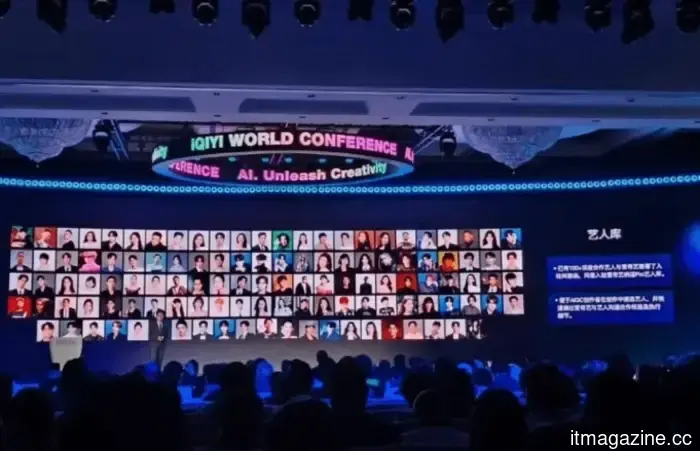
On Monday, the Chinese streaming service iQIYI launched its AI Artist Library initiative with significant fanfare, announcing that over 100 artists had already been integrated into the program. The company stated that this initiative would utilize authorized multimodal data to create digital avatars of performers and promote the library as a scalable, compliant solution for AI-enhanced film and TV production. However, the launch quickly faced challenges.
Shortly after the announcement, the studio of Chinese actor Zhang Ruoyun released a statement refuting any involvement, claiming it had not signed any AI-related agreements and that legal action was in progress. Similar statements followed from representatives of prominent Chinese actors Wang Churan, Li Yitong, and Yu Hewei, leading to increased online scrutiny and raising doubts about the validity of iQIYI’s assertions.
In response to the growing backlash, iQIYI sought to clarify its stance, describing the artist library not as a final list of contracted AI performers but as a matchmaking framework for AIGC creators. In this system, inclusion suggests a potential openness to exploring AI-driven projects, but actual participation—along with the format, scope, and compensation—would still necessitate individual negotiations, akin to conventional production processes. Zhang Ruoyun's studio indicated that their legal team is addressing the situation with urgency.
Nevertheless, this clarification has not fully alleviated concerns. Critics contend that the marketing terms like “signed” and “onboarded” blurred the distinction between exploratory interest and formal approval, leading to potential misunderstandings. Legal experts have also pointed out inherent risks within the model: even with consent, the reuse of an actor's likeness and performance data in AI systems raises complicated issues regarding ownership, control, and long-term rights management.
Beyond the immediate public relations issues, this incident highlights a larger conflict within the entertainment sector. As generative AI technologies transition from experimentation to execution, platforms like iQIYI are hurriedly attempting to establish the necessary infrastructure for digital performers. However, the absence of clear standards concerning consent, compensation, and governance jeopardizes such initiatives, risking a clash with the very talent ecosystem they rely upon.
In that regard, the controversy represents more than just an isolated error; it serves as a preliminary warning that scaling AI in creative fields will not only require technical capabilities but also necessitate new contractual frameworks alongside a more precise alignment between platform narratives and artists' expectations.
Jessie Wu is a tech journalist based in Shanghai, focusing on consumer electronics, semiconductors, and the gaming industry for TechNode. You can contact her via e-mail: jessie.wu@technode.com.



Other articles
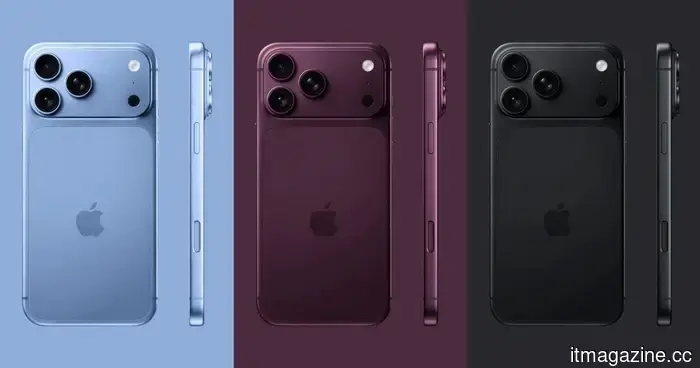 Leaks regarding the iPhone 18 Pro colors have disclosed four new finish options.
Leaks indicate that the iPhone 18 Pro will come in four color choices, featuring a new Dark Cherry option.
Leaks regarding the iPhone 18 Pro colors have disclosed four new finish options.
Leaks indicate that the iPhone 18 Pro will come in four color choices, featuring a new Dark Cherry option.
 Tim Cook resigns as CEO of Apple, transferring the position to hardware chief Ternus.
Apple will shift its leadership from Tim Cook to John Ternus, signaling a new era while ensuring continuity with Cook remaining as chairman.
Tim Cook resigns as CEO of Apple, transferring the position to hardware chief Ternus.
Apple will shift its leadership from Tim Cook to John Ternus, signaling a new era while ensuring continuity with Cook remaining as chairman.
 Assassin’s Creed Black Flag Resynced has finally received a date for its showcase.
Ubisoft has announced a Worldwide Reveal Showcase for Assassin's Creed Black Flag Resynced. The event is anticipated to feature a cinematic trailer, gameplay video, and a release date.
Assassin’s Creed Black Flag Resynced has finally received a date for its showcase.
Ubisoft has announced a Worldwide Reveal Showcase for Assassin's Creed Black Flag Resynced. The event is anticipated to feature a cinematic trailer, gameplay video, and a release date.
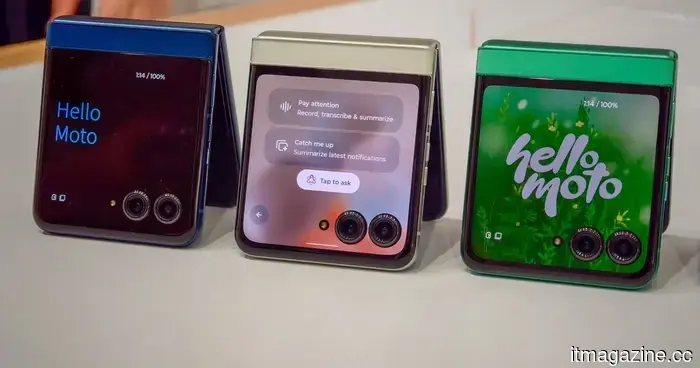 Motorola announces the launch date for a new line of Razr foldable phones.
Motorola has announced that the launch date for its Razr 2026 foldable series will be April 29. A teaser video has showcased new color options, including a purple quilted finish, and sales in the US are anticipated to begin on May 21.
Motorola announces the launch date for a new line of Razr foldable phones.
Motorola has announced that the launch date for its Razr 2026 foldable series will be April 29. A teaser video has showcased new color options, including a purple quilted finish, and sales in the US are anticipated to begin on May 21.
 Assassin’s Creed Black Flag Resynced has finally received a date for its showcase.
Ubisoft has announced a Worldwide Reveal Showcase for Assassin's Creed Black Flag Resynced. The event is anticipated to feature a cinematic trailer, gameplay preview, and a release date.
Assassin’s Creed Black Flag Resynced has finally received a date for its showcase.
Ubisoft has announced a Worldwide Reveal Showcase for Assassin's Creed Black Flag Resynced. The event is anticipated to feature a cinematic trailer, gameplay preview, and a release date.
 Assassin’s Creed Black Flag Resynced has finally received a date for its showcase.
Ubisoft has announced a Global Reveal Showcase for Assassin's Creed Black Flag Resynced. The showcase is anticipated to feature a cinematic trailer, gameplay footage, and a release date.
Assassin’s Creed Black Flag Resynced has finally received a date for its showcase.
Ubisoft has announced a Global Reveal Showcase for Assassin's Creed Black Flag Resynced. The showcase is anticipated to feature a cinematic trailer, gameplay footage, and a release date.
The AI Artist Library of iQIYI is facing increasing challenges as actors refuse to grant authorization.
On Monday, the Chinese streaming service iQIYI launched its AI Artist Library project with much excitement, asserting that over 100 artists had