

Meta is looking to charge users for WhatsApp, and it's currently exploring this possibility.
WhatsApp has been free for more than ten years, but Meta is beginning to change that. The company is testing a paid subscription option called WhatsApp Plus, and if you haven’t come across it yet, you likely will soon. The initial rollout was noted by WABetaInfo, and Meta's own Help Center page has since verified some of the information.
So, what can you expect to get?
Currently, WhatsApp Plus primarily focuses on customization. Subscribers will have access to premium stickers featuring special effects, the option to change the app’s themes and icons, and a custom ringtone feature for specific contacts. Additionally, users can pin up to 20 chats instead of the standard limit, and have more detailed control over chat list alerts and notification sounds.
WABetaInfo
At this stage, it’s largely centered around cosmetic changes, but WABetaInfo points out that Meta is actively considering adding more features for the premium tier, indicating this is likely just the beginning.
The essentials remain free
It’s important to note that none of WhatsApp’s fundamental features are being removed — messaging, voice, and video calls, along with end-to-end encryption, will still be free. WhatsApp Plus is intended to be an addition, at least for now. As for the cost, it hasn’t been officially revealed, but early regional pricing noted by WABetaInfo ranges from 229 Pakistani Rupees (less than $1) to €2.49, which is approximately $3. The price differences across regions are significant, so expect localized tiers when this launches more broadly. Meta is also reportedly considering offering one-month free trials to attract users.
Meta is conducting a similar test with Instagram Plus, which has been showcasing features such as extended Stories and “super hearts.” Neither service has official pricing yet, but it's becoming evident that Meta is expanding a premium layer across its entire app ecosystem. Whether users will actually pay for sticker effects and custom themes remains uncertain, but considering WhatsApp’s large user base, even a modest conversion rate could quickly add up.
Shimul is a contributor at Digital Trends, boasting over five years of experience in the technology sector.
Tinder aims to verify your humanity through an orb. Yes, you heard that correctly.
Using an orb to prove you are human is no longer a concept from science fiction.
Online dating is already a challenge in terms of trust, and now Tinder plans to introduce an eyeball scan. The widely-used dating app has announced a global partnership with World, a biometric identity company founded by OpenAI's Sam Altman. To confirm your identity as a real person on Tinder, you will soon have the option to use a physical orb device for an eye scan.
What is World ID and how does Tinder's human verification function?
Read more
I didn't think food reels could assist with my diet – but they might.
Scroll now, snack less later.
A new study led by researchers at the University of Bristol has discovered that individuals attempting to resist food cravings may be using social media content featuring tempting meals as a substitute for actually eating them. The findings challenge the long-standing belief that exposure to enticing food imagery leads to overeating.
Conducted in partnership with the University at Buffalo School of Management, the research assessed how visual engagement with food-related content affects eating behavior. Over three experiments with 840 participants aged 19 to 77, researchers combined online surveys with a controlled lab study to analyze how people respond to food-related media.
Read more
AI dating appears efficient – but I remain skeptical.
Artificial intelligence is progressively infiltrating various aspects of everyday life, and dating may be the next frontier. A fresh wave of AI “agents” is being developed to emulate personalities, engage with others, and even assist users in finding potential romantic partners — all without requiring users to do the initial legwork.
According to a report by WIRED, researchers and developers are experimenting with systems that create personalized AI agents, or “digital twins,” designed to represent individuals in virtual spaces. These agents can communicate with others, engage in conversations, and evaluate compatibility on a scale that would be unachievable for humans alone.
Read more


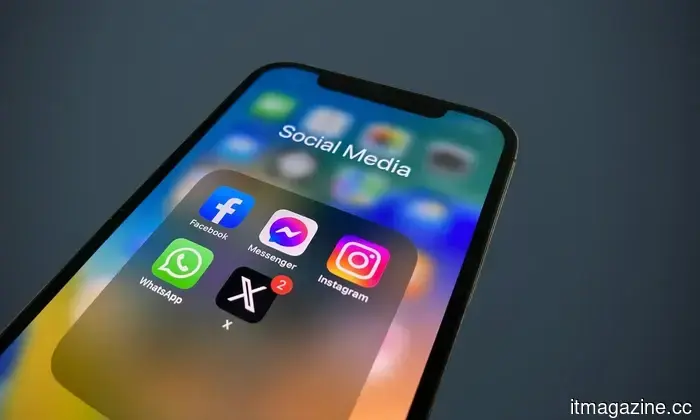




Other articles
 FTC resolves OkCupid data controversy without a fine.
Clarifai removed 3 million OkCupid user images and facial-recognition models following a settlement with the FTC, but critics argue that the penalty-free agreement was inadequate.
FTC resolves OkCupid data controversy without a fine.
Clarifai removed 3 million OkCupid user images and facial-recognition models following a settlement with the FTC, but critics argue that the penalty-free agreement was inadequate.
 Meta is looking to charge users for WhatsApp, and it is currently exploring this option.
Meta might soon impose a fee for WhatsApp Plus, although the demand for premium features remains uncertain.
Meta is looking to charge users for WhatsApp, and it is currently exploring this option.
Meta might soon impose a fee for WhatsApp Plus, although the demand for premium features remains uncertain.
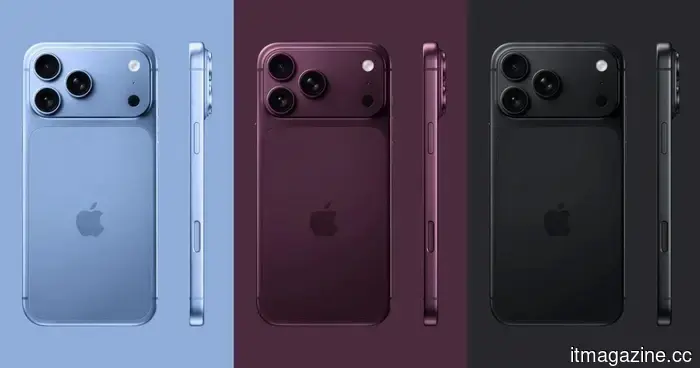 Leaks regarding the iPhone 18 Pro's colors indicate four new finish options.
Rumors indicate that the iPhone 18 Pro will come in four color choices, featuring a new Dark Cherry variant.
Leaks regarding the iPhone 18 Pro's colors indicate four new finish options.
Rumors indicate that the iPhone 18 Pro will come in four color choices, featuring a new Dark Cherry variant.
 Amazon invests up to an additional $25 billion in Anthropic.
Amazon is set to invest an additional $25 billion in Anthropic, which has committed to spending $100 billion on AWS cloud services over the next decade, reflecting a similar agreement Amazon made with OpenAI two months earlier.
Amazon invests up to an additional $25 billion in Anthropic.
Amazon is set to invest an additional $25 billion in Anthropic, which has committed to spending $100 billion on AWS cloud services over the next decade, reflecting a similar agreement Amazon made with OpenAI two months earlier.
 Deezer reports that songs created by AI now account for 44% of daily uploads.
Deezer reports that almost 50% of daily music uploads are now produced by AI, leading to worries about quality, authenticity, and the potential for fraud.
Deezer reports that songs created by AI now account for 44% of daily uploads.
Deezer reports that almost 50% of daily music uploads are now produced by AI, leading to worries about quality, authenticity, and the potential for fraud.
 Jeff Bezos' physical AI laboratory is nearing the achievement of securing $10 billion in funding.
According to the Financial Times, Jeff Bezos' AI lab, Project Prometheus, is close to securing a $10 billion funding round, valuing the company at $38 billion, with JPMorgan and BlackRock included among the investors.
Jeff Bezos' physical AI laboratory is nearing the achievement of securing $10 billion in funding.
According to the Financial Times, Jeff Bezos' AI lab, Project Prometheus, is close to securing a $10 billion funding round, valuing the company at $38 billion, with JPMorgan and BlackRock included among the investors.
Meta is looking to charge users for WhatsApp, and it's currently exploring this possibility.
Meta might start charging for WhatsApp Plus in the near future, although interest in premium features remains uncertain.