
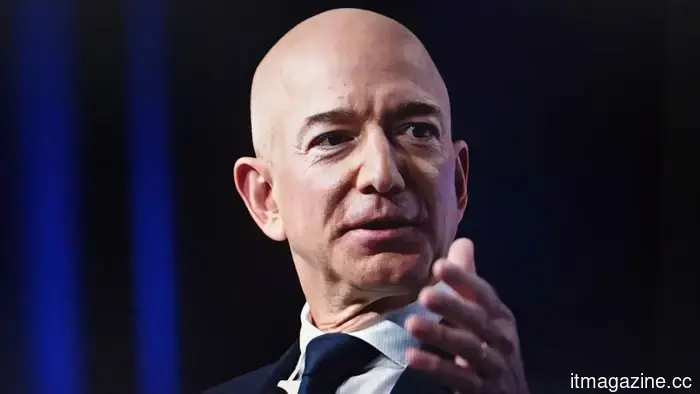
Jeff Bezos' physical AI laboratory is nearing the achievement of securing $10 billion in funding.
Project Prometheus was initiated in November 2025 with an initial funding of $6.2 billion and is working on AI systems that comprehend the physical world, with a focus on engineering, manufacturing, aerospace, robotics, and drug discovery. The funding round has not been finalized yet.
According to a report by the Financial Times on Monday, Jeff Bezos is nearing completion of a $10 billion funding round for his AI lab, which is valued at $38 billion, according to sources familiar with the negotiations. The startup, referred to internally as Project Prometheus, has secured JPMorgan and BlackRock as investors for this new funding round, although the fundraising has not been concluded at the time of writing. BlackRock declined to provide comments.
Project Prometheus commenced in November 2025 with $6.2 billion in initial funding. Its primary focus is what the AI sector terms “physical AI,” which involves systems that learn through interactions with the real world and grasp the laws of physics, rather than relying solely on text and images.
The lab aims to address sectors including engineering, manufacturing, aerospace, robotics, drug discovery, and logistics automation. It is headed by CEO Vikram Bajaj, a former Google X scientist and co-founder of Foresite Labs, and has expanded to over 120 employees sourced from top AI companies such as OpenAI, xAI, Meta, and DeepMind.
Bezos is noted as one of the initial investors in this endeavor and has been leading the fundraising alongside Bajaj. If the confirmed valuation of $38 billion is realized, Prometheus would be among the most highly valued early-stage AI startups globally.
For context, this funding comes shortly after Amazon, the company founded by Bezos, committed to investing up to $25 billion in Anthropic and secured a $100 billion pledge for cloud spending in return.
This situation highlights the considerable shift in the scale of AI infrastructure deals: Prometheus is raising $10 billion in a single round, exceeding the total funds raised by most AI companies throughout their histories.
Physical AI is fundamentally different from the large language models that have dominated AI investments since 2022. LLMs are trained on publicly accessible text, images, and code, which are plentiful and relatively inexpensive.
Conversely, physical AI systems necessitate specialized data regarding material behavior, engineering tolerances, manufacturing processes, and real-world physics, much of which is proprietary and challenging to collect at scale.
This scarcity presents not only a barrier to entry but also a possible long-term advantage for companies that manage to gather it, which may help explain why Prometheus attracted institutional investors like BlackRock and JPMorgan even at an early stage.
This venture represents the first time Bezos has taken an operational role in a tech company since departing Amazon in 2021. It also indicates a larger ambition to apply AI directly to physical industries such as manufacturing, aerospace, construction, and logistics, areas where LLMs have only had a superficial impact thus far.
Whether Prometheus will realize this ambition remains uncertain; the lab is still in its nascent stages and has not yet publicly showcased products or commercial applications.
Other articles
 Motorola has announced the launch date for a new series of Razr foldable smartphones.
Motorola has announced that April 29 will be the launch date for its Razr 2026 foldable series. A teaser video has showcased new color options, including a purple quilted finish, and sales in the US are anticipated to begin on May 21.
Motorola has announced the launch date for a new series of Razr foldable smartphones.
Motorola has announced that April 29 will be the launch date for its Razr 2026 foldable series. A teaser video has showcased new color options, including a purple quilted finish, and sales in the US are anticipated to begin on May 21.
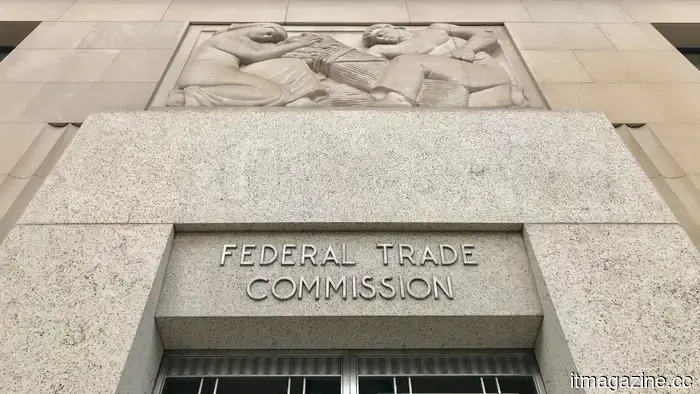 FTC resolves OkCupid data controversy without a fine.
Clarifai removed 3 million OkCupid user images and facial-recognition models following a settlement with the FTC, but critics argue that the penalty-free agreement was inadequate.
FTC resolves OkCupid data controversy without a fine.
Clarifai removed 3 million OkCupid user images and facial-recognition models following a settlement with the FTC, but critics argue that the penalty-free agreement was inadequate.
 VisioLab secures $11 million to expand its AI-enhanced checkout for iPads.
VisioLab has secured $11 million in Series A funding, with eCAPITAL and Simon Capital leading the investment, to expand its AI checkout system that operates without the use of barcodes.
VisioLab secures $11 million to expand its AI-enhanced checkout for iPads.
VisioLab has secured $11 million in Series A funding, with eCAPITAL and Simon Capital leading the investment, to expand its AI checkout system that operates without the use of barcodes.
 Leaks regarding the iPhone 18 Pro's colors indicate four new finish options.
Rumors indicate that the iPhone 18 Pro will come in four color choices, featuring a new Dark Cherry variant.
Leaks regarding the iPhone 18 Pro's colors indicate four new finish options.
Rumors indicate that the iPhone 18 Pro will come in four color choices, featuring a new Dark Cherry variant.
 Motorola has announced the release date for a new lineup of Razr foldable phones.
Motorola has announced that the launch date for its Razr 2026 foldable series will be April 29. A teaser video has showcased new color options, including a purple quilted design, with sales in the US anticipated to begin on May 21.
Motorola has announced the release date for a new lineup of Razr foldable phones.
Motorola has announced that the launch date for its Razr 2026 foldable series will be April 29. A teaser video has showcased new color options, including a purple quilted design, with sales in the US anticipated to begin on May 21.
 Meta is looking to charge users for WhatsApp, and it is currently exploring this option.
Meta might soon impose a fee for WhatsApp Plus, although the demand for premium features remains uncertain.
Meta is looking to charge users for WhatsApp, and it is currently exploring this option.
Meta might soon impose a fee for WhatsApp Plus, although the demand for premium features remains uncertain.
Jeff Bezos' physical AI laboratory is nearing the achievement of securing $10 billion in funding.
According to the Financial Times, Jeff Bezos' AI lab, Project Prometheus, is close to securing a $10 billion funding round, valuing the company at $38 billion, with JPMorgan and BlackRock included among the investors.