

Google Photos introduces new editing features focused on subtle enhancements.
Google Photos has made your camera roll feel like it comes with a makeup artist, and the outcomes are pleasantly subtle.
Whether it's dark circles from a late night of work, an unexpected blemish, or something else that could use a touch of brightness, Google Photos has you covered.
Google has officially introduced a new Touch Up suite within its Photos app editor, integrating face retouching tools directly for the first time. Previously, such edits were only possible in Google’s Camera app during capture.
What tools are available?
With the new Touch Up feature (featuring options to smooth skin, whiten teeth, and brighten eyes), you can now edit a photo you’ve already taken within the same app. There's no need to export it, switch to another app, make edits, and save it back.
The Touch Up feature offers several editing options: heal, smooth, under eyes, irises, teeth, eyebrows, and lips. Each option comes with an intensity slider to control the level of effect applied. The aim appears to be refinement rather than drastic change.
Can you edit individual people in a group photo?
Yes, this is where the new feature becomes truly practical. Google’s AI is capable of detecting individual faces, allowing you to whiten one person’s teeth or smooth their skin in a group photo without affecting those beside them.
The tool currently supports up to six faces in a single photo. Its rollout is gradual at this time. The Touch Up feature is available on Android devices running Android 9.0 or later, with a minimum of 4GB of RAM. For the billion-plus users of the Photos app daily, this makes it a comprehensive editing solution.
This development positions the Google Photos app in direct competition with dedicated retouching applications, such as Facetune and Snapseed.
For over five years, Shikhar has been simplifying advancements in consumer technology…
Apple’s foldable is maintaining Camera Control, but one-handed photography on a larger foldable sounds challenging.
Apple has performed significant engineering feats to accomplish this; however, is it truly worth it?
The leaks surrounding Apple’s first foldable iPhone have been numerous, with the latest one coming from Weibo leaker Instant Digital. According to Notebookcheck, the leak indicates that the iPhone Fold will feature the Camera Control button, despite being thinner than the iPhone Air when opened.
This is no minor achievement. Integrating the Camera Control button into such a slim device likely required considerable engineering effort from Apple. Nevertheless, it seems Apple deemed it worthwhile.
Your iPhone is getting more intelligent: Here’s what Apple Intelligence can offer in iOS 27.
Apple has been progressively enhancing Apple Intelligence since its launch, and iOS 27 may very well be the most ambitious update yet. Backend code uncovered by developer Nicolás Alvarez and later verified by MacRumors points to at least four new AI-powered features on the way for system apps. While none of this is officially confirmed yet, the evidence is quite compelling.
Visual intelligence is becoming smarter.
A leak of the Xperia I VIII design indicates Sony may still be clinging to the past.
Over the years, smartphone manufacturers have consistently refined their offerings. Devices in 2026 are sharper, smarter, and more polished than ever. However, a recent glimpse at the Sony Xperia 1 VIII suggests Sony might be holding on too tightly to past designs, and not necessarily for the better. Here's why I feel that way.
This doesn't resemble the Sony we remember.







Other articles
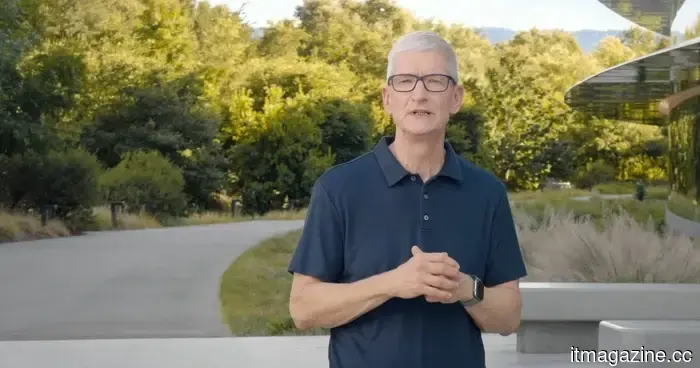 Tim Cook has resigned from his position as Apple CEO and has passed the role to hardware chief Ternus.
Apple will shift leadership from Tim Cook to John Ternus, entering a new chapter while ensuring continuity as Cook will remain in his role as chairman.
Tim Cook has resigned from his position as Apple CEO and has passed the role to hardware chief Ternus.
Apple will shift leadership from Tim Cook to John Ternus, entering a new chapter while ensuring continuity as Cook will remain in his role as chairman.
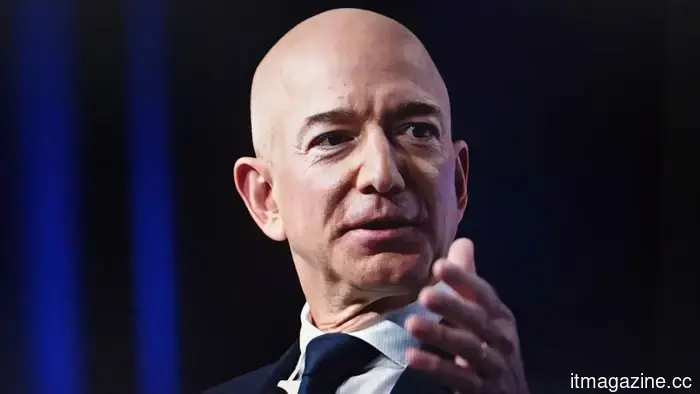 Jeff Bezos' physical AI laboratory is nearing the achievement of securing $10 billion in funding.
According to the Financial Times, Jeff Bezos' AI lab, Project Prometheus, is close to securing a $10 billion funding round, valuing the company at $38 billion, with JPMorgan and BlackRock included among the investors.
Jeff Bezos' physical AI laboratory is nearing the achievement of securing $10 billion in funding.
According to the Financial Times, Jeff Bezos' AI lab, Project Prometheus, is close to securing a $10 billion funding round, valuing the company at $38 billion, with JPMorgan and BlackRock included among the investors.
 Amazon invests an additional $25 billion in Anthropic.
Amazon is investing an additional $25 billion in Anthropic, which has committed to spending $100 billion on AWS cloud services over the next decade. This mirrors Amazon's earlier agreement with OpenAI two months ago.
Amazon invests an additional $25 billion in Anthropic.
Amazon is investing an additional $25 billion in Anthropic, which has committed to spending $100 billion on AWS cloud services over the next decade. This mirrors Amazon's earlier agreement with OpenAI two months ago.
 Google Photos introduces new editing features focused on subtle enhancements.
For the first time, Google Photos enables users to refine individual facial features after capturing a photo, utilizing AI-driven tools that cater to each person in group images, without the need for extra apps or subscriptions.
Google Photos introduces new editing features focused on subtle enhancements.
For the first time, Google Photos enables users to refine individual facial features after capturing a photo, utilizing AI-driven tools that cater to each person in group images, without the need for extra apps or subscriptions.
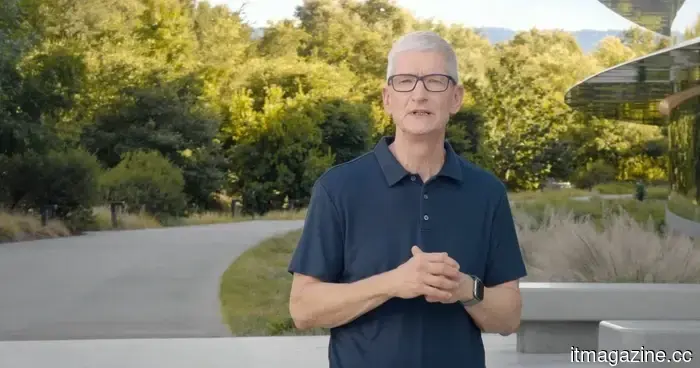 Tim Cook resigns as CEO of Apple, transferring the position to hardware chief Ternus.
Apple will shift its leadership from Tim Cook to John Ternus, signaling a new era while ensuring continuity with Cook remaining as chairman.
Tim Cook resigns as CEO of Apple, transferring the position to hardware chief Ternus.
Apple will shift its leadership from Tim Cook to John Ternus, signaling a new era while ensuring continuity with Cook remaining as chairman.
 The AI Artist Library of iQIYI is facing increasing challenges as actors refuse to grant authorization.
On Monday, the Chinese streaming service iQIYI launched its AI Artist Library project with much excitement, asserting that over 100 artists had
The AI Artist Library of iQIYI is facing increasing challenges as actors refuse to grant authorization.
On Monday, the Chinese streaming service iQIYI launched its AI Artist Library project with much excitement, asserting that over 100 artists had
Google Photos introduces new editing features focused on subtle enhancements.
For the first time, Google Photos allows users to modify specific facial features post-capture, utilizing AI-driven tools that function for every individual in group photos, without the need for extra apps or subscriptions.