

ASIC collaborates with international regulators to oversee Anthropic's Mythos AI.
Australia's market regulator has publicly stated that it is monitoring the evolution of Anthropic's Mythos model alongside its international counterparts, adding to a rapidly increasing global regulatory response that started with the Bank of England, the US Federal Reserve, and the Treasury Department. ECB President Lagarde has indicated that no governance framework currently exists.
The Australian Securities and Investments Commission (ASIC) confirmed on Monday that it is watching the progress of Anthropic’s advanced AI model Mythos and its possible effects on the Australian financial market, as reported by Reuters. An ASIC spokesperson stated, “ASIC is closely monitoring these developments with peer regulators to evaluate potential consequences for the Australian market.” They emphasized that "ASIC collaborates closely with other regulators, government bodies, and the financial sector to understand and address changing technologies.”
The regulator also noted that it expects financial services licensees to proactively protect their customers and clients. This statement from ASIC is the latest in a wave of global regulatory responses to Mythos, which Anthropic released on April 7, 2026, under a limited access program called Project Glasswing.
Anthropic asserts that the model successfully identified and leveraged zero-day vulnerabilities across all major operating systems and web browsers, a capability the company claims is designed to enhance defensive security efforts, but which regulators view as a potential systemic risk if malicious actors were to exploit the model’s functions.
The reaction from financial regulators has been swift and unusually well-coordinated for a technological event. Bank of England Governor Andrew Bailey, while speaking at Columbia University in New York, cautioned that Mythos could “crack the whole cyber risk world open” and urged regulators to promptly evaluate how effectively the model can pinpoint and exploit vulnerabilities in financial infrastructures.
In response, the Bank of England’s Cross Market Operational Resilience Group (CMORG) and its AI Taskforce quickly arranged meetings to discuss Mythos. European Central Bank President Christine Lagarde remarked on Bloomberg TV that there is currently no governance framework “to actually mind those things,” candidly acknowledging that regulatory measures have not kept pace with technological advancements.
In the United States, Treasury Secretary Scott Bessent and Federal Reserve Chair Jerome Powell held an urgent meeting with leading bank CEOs to address the cybersecurity risks posed by Mythos. This meeting, confirmed by CNBC, took place while bank leaders were in Washington for a Financial Services Forum board meeting, with JPMorgan Chase CEO Jamie Dimon being the only major bank leader unable to participate.
A Treasury representative later confirmed the meeting and mentioned that the Treasury plans to facilitate additional sessions with regulators and institutions going forward.
On the commercial front, major US banks have begun internal testing of Mythos for defensive uses. Goldman Sachs CEO David Solomon informed analysts during a quarterly earnings call that the bank has access to the model and is “hypersensitive” to the advanced capabilities of new AI systems. JPMorgan Chase was identified as an initial partner in Project Glasswing, together with about 40 other companies, including Amazon, Apple, Google, Microsoft, and Nvidia.
Anthropic has pledged $100 million in credits to these partners and $4 million to open-source security organizations, with the explicit aim of enhancing defensive capabilities before any public release of capabilities.
Regulators are primarily assessing structural risks rather than individual concerns. Financial institutions operate technology stacks that layer decades-old legacy systems with modern cloud infrastructure, resulting in accumulated technical debt and latent vulnerabilities. The banking sector’s significant dependence on a limited number of consolidated cloud providers poses a risk; an adequately capable AI model exploiting weaknesses in these providers’ systems could have far-reaching impacts across the financial system.
IBM Senior Vice President Rob Thomas has openly criticized Anthropic’s restricted-access approach, arguing that "security improves more often through scrutiny than through concealment." In response, Anthropic’s CEO Dario Amodei has defended the restricted rollout, stating, “the dangers of getting this wrong are obvious, but if we get it right, there is a real opportunity to create a fundamentally more secure internet and world.”
Anthropic’s relationship with the US government is further complicated by a separate issue. The Department of Defense has classified Anthropic as a supply chain risk to national security, a designation the company is contesting in court. A federal appeals court has denied Anthropic’s request to temporarily block this designation, leaving it unable to secure DoD contracts; however, a separate preliminary injunction permits the company to continue collaborating with other government agencies while legal proceedings continue.

Other articles
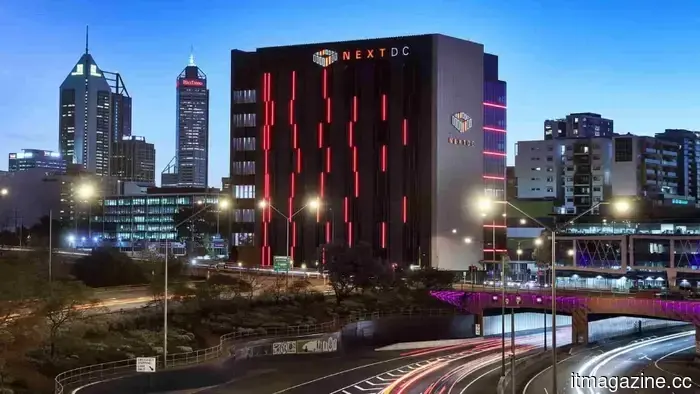 NEXTDC in Australia unveils a capital plan worth A$2.2 billion.
NEXTDC unveils a capital plan worth A$2.2 billion, which includes a A$1.5 billion equity raise aimed at fast-tracking its S4 Sydney data center following a 60% increase in contracted capacity.
NEXTDC in Australia unveils a capital plan worth A$2.2 billion.
NEXTDC unveils a capital plan worth A$2.2 billion, which includes a A$1.5 billion equity raise aimed at fast-tracking its S4 Sydney data center following a 60% increase in contracted capacity.
 The question that AI providers wish VPs of Engineering would never pose
The adoption of AI in coding is rapidly increasing. However, many engineering leaders continue to focus on measuring usage rather than evaluating outcomes. For more details, check out the article.
The question that AI providers wish VPs of Engineering would never pose
The adoption of AI in coding is rapidly increasing. However, many engineering leaders continue to focus on measuring usage rather than evaluating outcomes. For more details, check out the article.
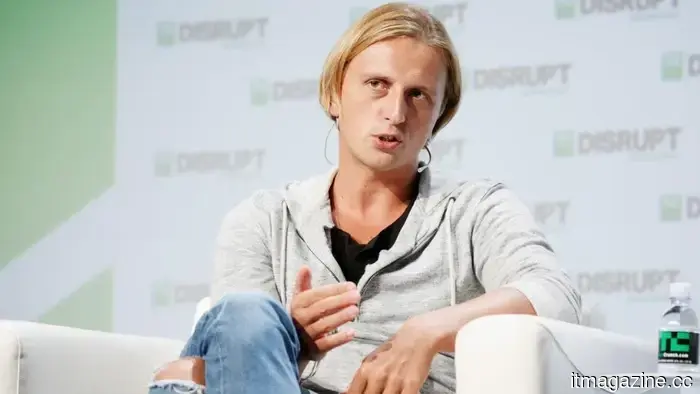 Revolut's initial public offering is scheduled for two years from now, and it will take place in the United States.
Revolut's CEO, Nik Storonsky, has indicated that the fintech's IPO is now set for two years from now and will take place in the US, narrowing his previous guidance from December of "two to three years."
Revolut's initial public offering is scheduled for two years from now, and it will take place in the United States.
Revolut's CEO, Nik Storonsky, has indicated that the fintech's IPO is now set for two years from now and will take place in the US, narrowing his previous guidance from December of "two to three years."
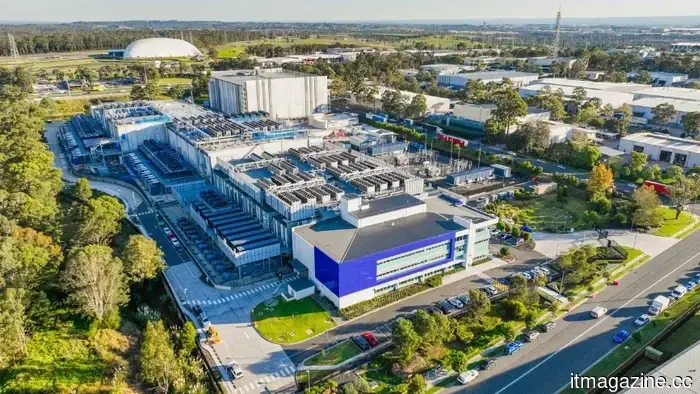 AirTrunk expands into India by purchasing Lumina CloudInfra.
AirTrunk purchases Lumina CloudInfra, which is backed by Blackstone, securing a data center pipeline in India of 600MW valued at as much as $5 billion.
AirTrunk expands into India by purchasing Lumina CloudInfra.
AirTrunk purchases Lumina CloudInfra, which is backed by Blackstone, securing a data center pipeline in India of 600MW valued at as much as $5 billion.
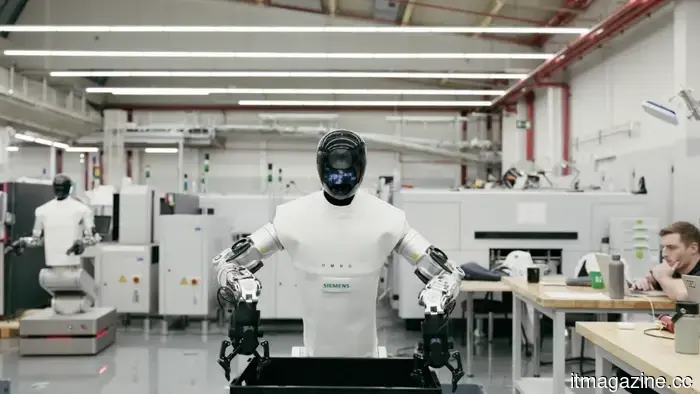 Siemens and Humanoid have launched a humanoid robot that is powered by Nvidia technology.
Siemens and UK-based startup Humanoid launched a humanoid robot powered by Nvidia at a German electronics factory, successfully handling tote operations autonomously for over 8 hours.
Siemens and Humanoid have launched a humanoid robot that is powered by Nvidia technology.
Siemens and UK-based startup Humanoid launched a humanoid robot powered by Nvidia at a German electronics factory, successfully handling tote operations autonomously for over 8 hours.
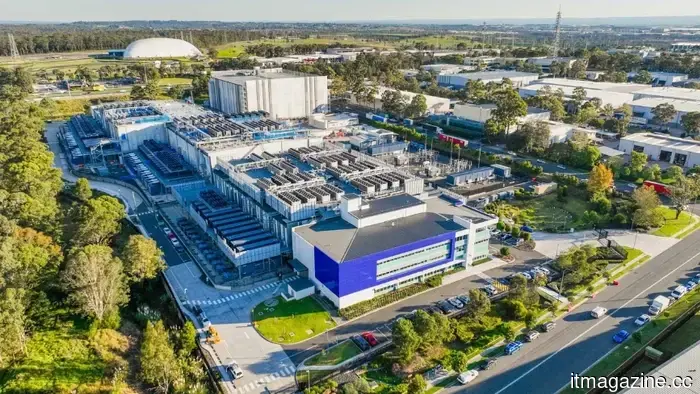 AirTrunk expands into India through the acquisition of Lumina CloudInfra.
AirTrunk has acquired Lumina CloudInfra, which is backed by Blackstone, securing a data center pipeline in India of 600MW valued at up to $5 billion.
AirTrunk expands into India through the acquisition of Lumina CloudInfra.
AirTrunk has acquired Lumina CloudInfra, which is backed by Blackstone, securing a data center pipeline in India of 600MW valued at up to $5 billion.
ASIC collaborates with international regulators to oversee Anthropic's Mythos AI.
ASIC has announced that it is keeping an eye on Anthropic's Mythos AI model for potential banking risks, alongside the Bank of England, the Federal Reserve, the European Central Bank, and the Treasury.