
The Cadence-Nvidia partnership in robotics
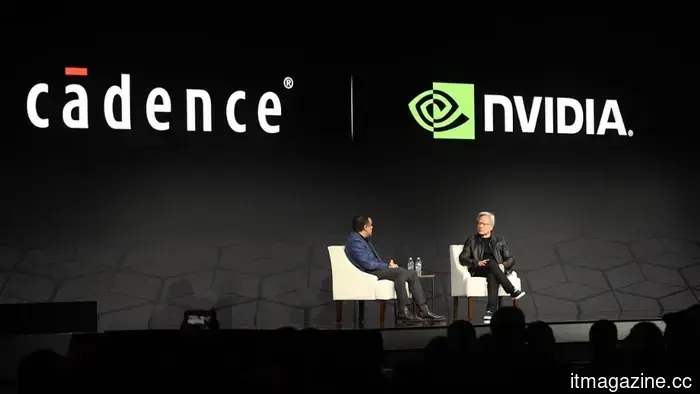
The two companies revealed an expanded partnership during a Cadence conference in Santa Clara on Wednesday. The aim is to enhance the accuracy of robot training data, enabling physical AI systems to achieve real-world deployment more swiftly.
Cadence Design Systems and Nvidia have formed a partnership designed to address a longstanding issue in robotics: the disparity between how robots learn in computer simulations and their actual performance in the real world.
The collaboration was announced by the CEOs of both companies at the Cadence conference in Santa Clara, California. It combines Cadence’s advanced physics simulation engines with Nvidia’s AI training platforms, including the open-source simulation libraries of Isaac and the open-world models of Cosmos.
Cadence is primarily recognized as a leading provider of software for designing cutting-edge computing chips. However, the company also produces physics engines that simulate real-world material interactions, metal deformation, fluid dynamics, and surface contact.
These simulations have applications in aerospace, automotive, and semiconductor design, and they are now being utilized to address the challenge of generating the training data necessary for robot AI systems to learn how to manipulate objects and navigate physical spaces.
Training robots in simulations is more efficient and cost-effective than training them in the real world, but the utility of the training data depends on the accuracy of the physics engine used.
“The more precise the generated training data, the higher the quality of the model,” stated Cadence CEO Anirudh Devgan at the Santa Clara conference.
Nvidia CEO Jensen Huang outlined the partnership’s extent: “We’re collaborating with you on robotic systems across the board.”
The integrated solution will combine Cadence’s multiphysics simulation with Nvidia’s model training pipelines, deploying the outcomes on Nvidia’s Jetson robotics and edge AI hardware.
The result is a streamlined workflow that moves from world-model training through physics simulation to real-world deployment feedback, all coordinated by AI agents throughout the entire process.
This announcement fits into a larger trend of Nvidia forming extensive simulation partnerships within industrial engineering. The company has also established partnerships with Siemens and Dassault Systèmes to create industrial AI platforms and virtual twins.
For Cadence, entering the robotics application domain marks a significant extension of its simulation software into the AI infrastructure layer at a time when the demand for precise robot training data is rapidly increasing.
Other articles
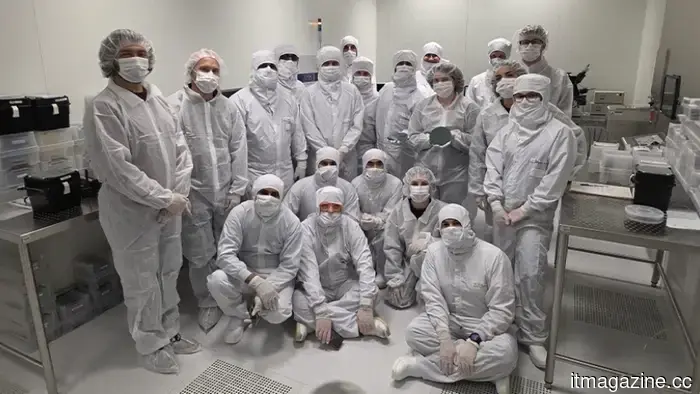 The Italian deeptech company specializing in graphene-based optical chips has secured €211 million in funding.
CamGraPhIC, a subsidiary of 2D Photonics, has received EU approval for a €211M grant from Italy to industrialize optical interconnects based on graphene for artificial intelligence.
The Italian deeptech company specializing in graphene-based optical chips has secured €211 million in funding.
CamGraPhIC, a subsidiary of 2D Photonics, has received EU approval for a €211M grant from Italy to industrialize optical interconnects based on graphene for artificial intelligence.
 Musk is urging chip suppliers to operate at 'light speed' for his Terafab AI.
Reports indicate that Musk's teams reached out to Applied Materials, Tokyo Electron, and Lam Research regarding his Terafab AI chip facility.
Musk is urging chip suppliers to operate at 'light speed' for his Terafab AI.
Reports indicate that Musk's teams reached out to Applied Materials, Tokyo Electron, and Lam Research regarding his Terafab AI chip facility.
 Apple covertly warned that it might remove Grok from the App Store due to concerns about deepfake nude content.
In January, Apple warned that it would pull Grok from the App Store due to issues related to non-consensual deepfakes. The company did not accept xAI's initial solution.
Apple covertly warned that it might remove Grok from the App Store due to concerns about deepfake nude content.
In January, Apple warned that it would pull Grok from the App Store due to issues related to non-consensual deepfakes. The company did not accept xAI's initial solution.
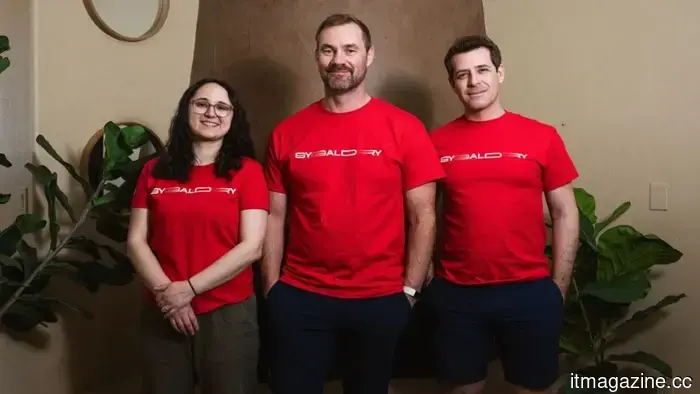 Sygaldry Technologies has secured $105 million in a Series A funding round.
Sygaldry, founded by Chad Rigetti of Rigetti Computing, has secured $139 million to develop AI servers enhanced by quantum technology. The funding round was spearheaded by Breakthrough Energy Ventures.
Sygaldry Technologies has secured $105 million in a Series A funding round.
Sygaldry, founded by Chad Rigetti of Rigetti Computing, has secured $139 million to develop AI servers enhanced by quantum technology. The funding round was spearheaded by Breakthrough Energy Ventures.
 Nuclear startup X-energy, supported by Amazon, has submitted its application for an IPO.
X-energy, supported by a $500 million investment from Amazon and a commitment to purchase 5GW of power, has submitted a filing for an IPO with a goal of raising up to $814 million.
Nuclear startup X-energy, supported by Amazon, has submitted its application for an IPO.
X-energy, supported by a $500 million investment from Amazon and a commitment to purchase 5GW of power, has submitted a filing for an IPO with a goal of raising up to $814 million.
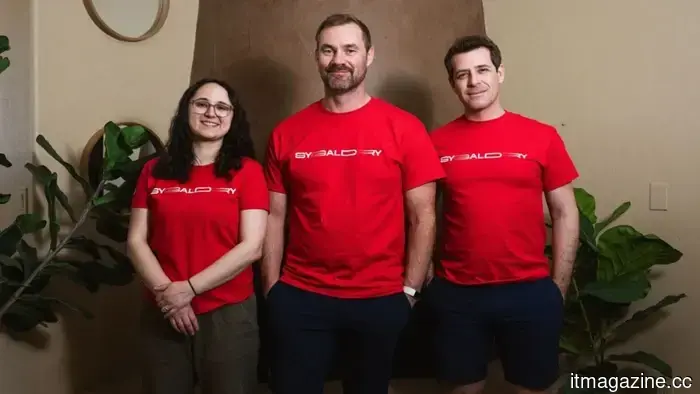 Sygaldry Technologies has secured $105 million in a Series A funding round.
Sygaldry, under the leadership of Chad Rigetti, the founder of Rigetti Computing, has secured $139 million to develop AI servers powered by quantum acceleration. The funding round was led by Breakthrough Energy Ventures.
Sygaldry Technologies has secured $105 million in a Series A funding round.
Sygaldry, under the leadership of Chad Rigetti, the founder of Rigetti Computing, has secured $139 million to develop AI servers powered by quantum acceleration. The funding round was led by Breakthrough Energy Ventures.
The Cadence-Nvidia partnership in robotics
Cadence and Nvidia have enhanced their AI collaboration to bridge the sim-to-real gap in robotics by integrating physics engines with Nvidia's Isaac and Cosmos models.