
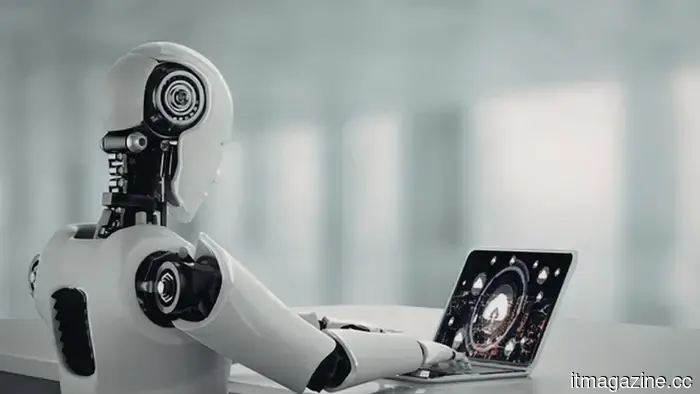
Tesla is considering its Shanghai Gigafactory for the mass production of the Optimus humanoid robot.
In summary, Tesla's president in China, Wang Hao, has referred to the Shanghai Gigafactory as a "golden key" for the mass production of Optimus humanoid robots, marking the first instance of a Tesla executive publicly connecting the factory to robotics manufacturing. In 2025, the facility produced 851,000 electric vehicles (EVs), and Tesla has already utilized over 1,000 Gen 3 Optimus units in its facilities. The goal is to begin production-scale manufacturing between 2026 and 2028.
Wang Hao's comments, reported by the South China Morning Post and later confirmed by the Washington Post and ABC News, indicate that the factory, responsible for over half of Tesla's global vehicle production, is being considered for the next stage of the company’s hardware strategy. While he did not clarify whether Tesla would modify existing production lines or establish new ones for robot manufacturing, the intent was evident.
The Shanghai Gigafactory has achieved significant milestones, delivering 851,000 EVs in 2025 and producing over four million cars since its inception. When production of the new Model Y was initiated, the factory reached full output in just six weeks. The established supplier network, dense workforce, and manufacturing infrastructure that facilitated this rapid ramp-up are also crucial for humanoid robot production.
Wang argues that the existing capabilities in Shanghai—including modular assembly lines, robotics infrastructure, and vertical integration—can be adapted for Optimus production without beginning from scratch. The factory is already planning to launch six new production lines in 2026 for vehicles, robots, energy storage, and battery manufacturing.
Producing Optimus in China would enable Tesla to tap into a supply chain that is increasingly dominant in the components necessary for humanoid robots, such as actuators, sensors, batteries, and precision motors. China currently holds about 90% of the global humanoid robot market, with local companies like Unitree and Agibot competing vigorously on price and functionality. Manufacturing Optimus within this ecosystem would allow Tesla to capitalize on the cost advantages that have made its Shanghai-produced vehicles the most lucrative in its lineup.
Tesla introduced its Gen 3 Optimus, designed specifically for mass production, in early 2026. To date, over 1,000 Gen 3 units have been deployed at Tesla's manufacturing sites, mainly in Gigafactory Texas and the Fremont plant, where they undertake factory tasks that function as both real-world testing and workforce support.
The production goals are ambitious. Tesla aims to manufacture hundreds of units in 2026, increasing to thousands and ultimately tens of thousands annually by 2027 and 2028. Some internal projections mention one million units per year from Shanghai, although this number has not been officially confirmed. A dedicated robotics line at Gigafactory Texas is expected to achieve even higher volumes, with Elon Musk's stated aim of pricing Optimus below $20,000 per unit.
However, there remains a considerable gap between the prototypes in the field and actual mass production. While Optimus can handle structured factory tasks, the advanced capabilities needed for tasks outside Tesla’s own facilities—including dexterous manipulation, autonomous navigation, and general-purpose functionality—are still under development. Musk has highlighted the robot’s hands as a key hardware challenge requiring fine motor control, which no humanoid robot has yet demonstrated at a production level.
Wang's remarks come at a time when China's humanoid robotics industry is advancing swiftly. Unitree’s G1 and H1 robots are already available for commercial purchase at lower price points than what Tesla has indicated for Optimus. Agibot, with solid backing from both state and private investment, is developing robots for factory and logistics applications. Other companies like Fourier Intelligence and UBTECH, along with a growing number of Chinese startups, are also targeting this market.
This competitive landscape presents both challenges and opportunities for Tesla. Manufacturing Optimus in Shanghai would place Tesla directly in a strong competing market but would also provide access to talent, suppliers, and government incentives that are accelerating the development of robotics in China. The Chinese government sees humanoid robots as a strategic technology and is providing subsidies and support that other regions have not matched as quickly.
For European competitors, such as Germany's Neura Robotics and emerging players, Tesla's potential production in Shanghai complicates the competitive environment further. The combination of Tesla's brand, manufacturing scale, and AI capabilities with China's supply chain advantages could pose significant challenges for competitors.
If Tesla proceeds with humanoid robot production in Shanghai, it would have geopolitical implications. The company's operations in China already must navigate the complexities of U.S.-China technology policies. Introducing robotics production—considered strategically sensitive by both governments—would increase Tesla's reliance on Chinese manufacturing, especially during a politically volatile period between the two countries.
Musk has historically leveraged Tesla's presence in China, as the success of the Shanghai factory provided the production capacity and cost benefits necessary for global expansion. Applying the same strategy to Optimus would
Other articles
 Samsung SmartThings update introduces elderly care monitoring through ambient sensing and artificial intelligence.
Samsung's SmartThings update employs robot vacuums, appliances, and wearable devices to keep an eye on elderly family members, identify falls and signs of cognitive decline, and notify caregivers from a distance.
Samsung SmartThings update introduces elderly care monitoring through ambient sensing and artificial intelligence.
Samsung's SmartThings update employs robot vacuums, appliances, and wearable devices to keep an eye on elderly family members, identify falls and signs of cognitive decline, and notify caregivers from a distance.
 Solidroad secures $25 million in Series A funding to enhance customer support quality assurance through AI automation.
Solidroad, established by former Intercom employees, has secured $25 million in funding from Hedosophia to implement AI quality assurance across all customer support interactions for clients such as Ryanair and Crypto.com.
Solidroad secures $25 million in Series A funding to enhance customer support quality assurance through AI automation.
Solidroad, established by former Intercom employees, has secured $25 million in funding from Hedosophia to implement AI quality assurance across all customer support interactions for clients such as Ryanair and Crypto.com.
 Claude Opus 4.7 outperforms GPT-5.4 and Gemini 3.1 Pro in SWE-bench and agentic reasoning.
Anthropic's Claude Opus 4.7 achieves a score of 64.3% on SWE-bench Pro, introduces multi-agent coordination and features three times the vision resolution, while maintaining the same pricing as the previous version.
Claude Opus 4.7 outperforms GPT-5.4 and Gemini 3.1 Pro in SWE-bench and agentic reasoning.
Anthropic's Claude Opus 4.7 achieves a score of 64.3% on SWE-bench Pro, introduces multi-agent coordination and features three times the vision resolution, while maintaining the same pricing as the previous version.
 Google incorporates Nano Banana image creation into Gemini's Personal Intelligence feature.
Google's Gemini can now create images by utilizing personal context from Gmail, Photos, and Drive through Nano Banana, currently being launched for subscribers in the US while excluding Europe.
Google incorporates Nano Banana image creation into Gemini's Personal Intelligence feature.
Google's Gemini can now create images by utilizing personal context from Gmail, Photos, and Drive through Nano Banana, currently being launched for subscribers in the US while excluding Europe.
 Solidroad secures $25 million in Series A funding to enhance customer support quality assurance through AI automation.
Solidroad, established by former Intercom employees, has secured $25 million in funding from Hedosophia to implement AI quality assurance across all customer support interactions for clients such as Ryanair and Crypto.com.
Solidroad secures $25 million in Series A funding to enhance customer support quality assurance through AI automation.
Solidroad, established by former Intercom employees, has secured $25 million in funding from Hedosophia to implement AI quality assurance across all customer support interactions for clients such as Ryanair and Crypto.com.
 Claude Opus 4.7 outperforms GPT-5.4 and Gemini 3.1 Pro in SWE-bench and agentic reasoning.
Anthropic's Claude Opus 4.7 achieves a score of 64.3% on SWE-bench Pro, introduces multi-agent coordination, and offers three times the vision resolution, all at the same price as the previous version.
Claude Opus 4.7 outperforms GPT-5.4 and Gemini 3.1 Pro in SWE-bench and agentic reasoning.
Anthropic's Claude Opus 4.7 achieves a score of 64.3% on SWE-bench Pro, introduces multi-agent coordination, and offers three times the vision resolution, all at the same price as the previous version.
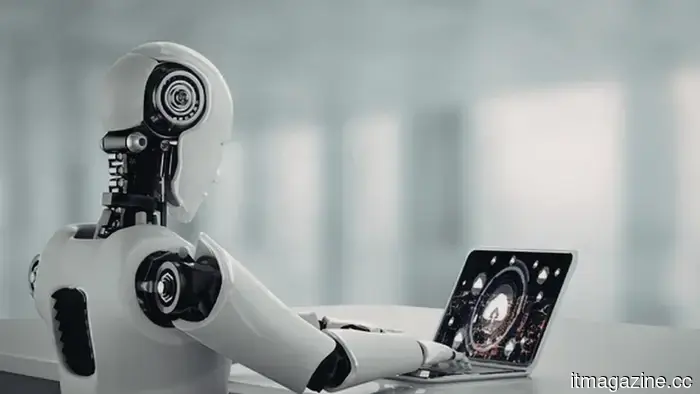
Tesla is considering its Shanghai Gigafactory for the mass production of the Optimus humanoid robot.
The president of Tesla China refers to the Shanghai Gigafactory as a "golden key" for the production of the Optimus robot, with the facility that produces half of Tesla's vehicles now looking toward humanoid manufacturing.