
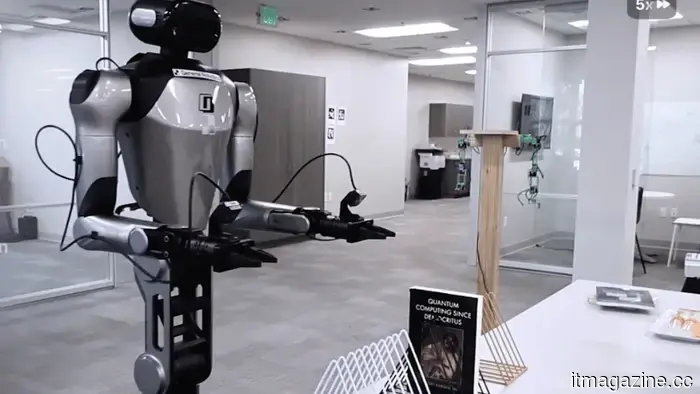
Accenture invests in General Robotics to coordinate factory robots using integrated AI.
In summary, Accenture Ventures has invested in General Robotics, which offers the GRID platform that delivers a cohesive AI intelligence layer for over 40 robots from various manufacturers such as FANUC, Flexiv, and Ghost Robotics. This investment aligns with Accenture's physical AI strategy, which includes the NVIDIA-driven Physical AI Orchestrator and previous investments in Sanctuary AI and Schaeffler's humanoid robotics initiatives.
Accenture's stake in General Robotics highlights the consulting firm’s belief that physical AI, beyond just chatbots, will create significant enterprise value in the future. Through Accenture Ventures, this investment enables access to General Robotics’ GRID platform, which facilitates a unified intelligence layer across more than 40 robot models from multiple manufacturers including FANUC, Flexiv, and Ghost Robotics. Instead of programming each robot separately, GRID presents modular, reusable AI capabilities that can be implemented across different hardware using cloud orchestration and simulation-based training, while ensuring complete data sovereignty for business customers.
Manufacturing Implications
The approach is clear: modern factories utilize robots from various suppliers, each requiring unique software, programming languages, and integration efforts, leading to inefficiencies and heightened costs in scaling automation. The GRID platform operates above the hardware, offering a shared orchestration framework that enables manufacturers to implement AI-driven tasks across their robot fleets without needing to rewrite code for each individual machine.
Prasad Satyavolu, Accenture’s global lead for manufacturing and operations, commented on the pressing workforce shortages and the need for increased productivity in factories: “General Robotics’ GRID platform, along with Accenture’s extensive industry knowledge, allows us to provide enterprise-level robotics intelligence and orchestration at scale.”
Founded by Ashish Kapoor, a former leader in autonomous systems and robotics research at Microsoft, General Robotics places significant importance on simulation-based training. The GRID platform incorporates NVIDIA’s Isaac Sim, enabling manufacturers to train robotic AI skills using digital replicas prior to deploying them on actual hardware.
Accenture’s Strategy in Physical AI
This investment is part of a broader strategy. In October 2025, Accenture unveiled its Physical AI Orchestrator, which integrates NVIDIA Omniverse libraries and the Mega NVIDIA Omniverse Blueprint to coordinate robotic and autonomous systems in industrial environments. Accenture has established itself as a vital integrator in NVIDIA's physical AI ecosystem, utilizing NVIDIA Metropolis for vision-based industrial analytics along with its proprietary orchestration tools.
General Robotics complements this strategy by serving as the software intelligence layer that Accenture’s consulting services can implement across client factories. While the Physical AI Orchestrator manages coordination at the facility level, GRID addresses the robot-level AI, handling the skills, perception, and decision-making essential for robots to perform complex tasks autonomously.
Accenture Ventures has been developing a portfolio in this domain, including an investment in Sanctuary AI, based in Vancouver, which creates general-purpose robots for manufacturing, and a partnership in 2025 with Schaeffler to integrate industrial humanoid robots in automotive and precision manufacturing settings. The investment in General Robotics broadens the focus from humanoid hardware to the software layer that enhances the utility of any robot in an enterprise environment.
Market Overview
Physical AI, defined as artificial intelligence that interacts with and affects the physical world via robots, autonomous vehicles, and industrial systems, is attracting considerable investment. The market is expected to expand from approximately $1.5 billion in 2026 to over $15 billion by 2032, reflecting a compound annual growth rate of 47%. NVIDIA CEO Jensen Huang has described this as the “ChatGPT moment for physical AI,” with the company's Isaac and Omniverse platforms serving as foundational infrastructure for businesses in this sector.
A Deloitte survey indicates that 58% of global business leaders are already utilizing some form of physical AI, although its deployment is mainly found in automotive, electronics, and logistics industries. Accenture sees a significant opportunity in bridging the gap between pilot projects and full-scale deployment, leveraging its enterprise integration capabilities.
The primary challenge lies in achieving interoperability among diverse robot brands that different manufacturers utilize, each optimized for specific tasks. Historically, the expense of integrating these into a cohesive automated system has prevented all but the largest manufacturers from doing so. General Robotics claims that GRID addresses this issue by completely abstracting the hardware layer, allowing AI skills to transfer between robots like software applications across operating systems.
Limitations of the Investment
The financial details of the investment were not revealed, and General Robotics is still an early-stage company. It has been selected for the Microsoft for Startups Pegasus Program, which offers cloud credits and market entry assistance, but it has not disclosed its revenue or large-scale customer deployment figures.
A critical consideration is whether a platform-centric approach can succeed in an industry where robot manufacturers have strong incentives to lock customers into proprietary ecosystems. Companies like FANUC, ABB, and KUKA provide their own software platforms, and convincing manufacturers to adopt an independent orchestration layer requires showcasing value that outweighs the costs of switching. Although
Other articles
 Accel announces a $5 billion AI fund following a significant rise in returns from Anthropic and Cursor.
Accel has secured $5 billion for late-stage AI investments, supported by impressive returns from Anthropic and Cursor, in a venture market that, in Q1 2026, invested a record $297 billion.
Accel announces a $5 billion AI fund following a significant rise in returns from Anthropic and Cursor.
Accel has secured $5 billion for late-stage AI investments, supported by impressive returns from Anthropic and Cursor, in a venture market that, in Q1 2026, invested a record $297 billion.
 The Lord of the Rings: The Hunt for Gollum has unveiled its cast, and it's absolutely fantastic.
Warner Bros. has announced the all-star lineup for The Lord of the Rings: The Hunt for Gollum.
The Lord of the Rings: The Hunt for Gollum has unveiled its cast, and it's absolutely fantastic.
Warner Bros. has announced the all-star lineup for The Lord of the Rings: The Hunt for Gollum.
 Anthropic has received investment proposals at a valuation of $800 billion.
Anthropic has attracted investment proposals valuing the company at $800 billion, which is double its valuation from February, with annualized revenue reaching $30 billion as discussions for an IPO commence with Goldman Sachs and JPMorgan.
Anthropic has received investment proposals at a valuation of $800 billion.
Anthropic has attracted investment proposals valuing the company at $800 billion, which is double its valuation from February, with annualized revenue reaching $30 billion as discussions for an IPO commence with Goldman Sachs and JPMorgan.
 This upcoming phone will convert your photos into videos more quickly and without the typical AI errors.
Honor's upcoming AI Image to Video 2.0 feature is expected to launch alongside the new Honor 600 series. This feature operates entirely on the device and resolves the common issues you've encountered when generating AI videos.
This upcoming phone will convert your photos into videos more quickly and without the typical AI errors.
Honor's upcoming AI Image to Video 2.0 feature is expected to launch alongside the new Honor 600 series. This feature operates entirely on the device and resolves the common issues you've encountered when generating AI videos.
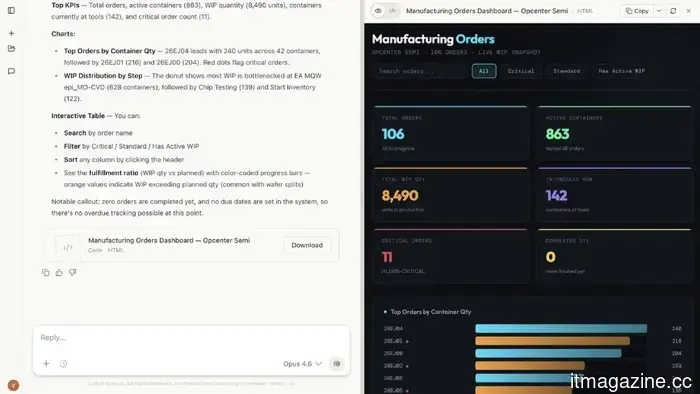 Athena aims to introduce agentic AI into the semiconductor manufacturing environment.
Athena Technology Solutions has introduced FabOrchestrator, an AI platform that autonomously manages reporting, support, and configuration for manufacturing execution systems (MES) in semiconductor factories.
Athena aims to introduce agentic AI into the semiconductor manufacturing environment.
Athena Technology Solutions has introduced FabOrchestrator, an AI platform that autonomously manages reporting, support, and configuration for manufacturing execution systems (MES) in semiconductor factories.
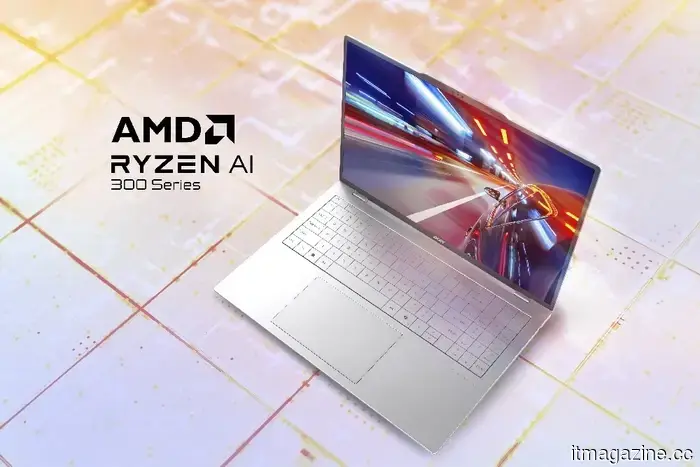 Acer Swift Air 16 with a large screen and lightweight
Acer has announced the launch of the Swift Air 16 ultrabook in Russia. The main feature of the model is a 16-inch OLED screen in a metal casing, which weighs only 1.1 kg. The manufacturer calls it "a new standard of mobility," but let's take a look at what we've got without the pomp.
Acer Swift Air 16 with a large screen and lightweight
Acer has announced the launch of the Swift Air 16 ultrabook in Russia. The main feature of the model is a 16-inch OLED screen in a metal casing, which weighs only 1.1 kg. The manufacturer calls it "a new standard of mobility," but let's take a look at what we've got without the pomp.
Accenture invests in General Robotics to coordinate factory robots using integrated AI.
Accenture Ventures is investing in General Robotics, which utilizes its GRID platform to implement AI capabilities across over 40 robots from various manufacturers, thereby enhancing factory automation.