

AI tools are allowing us to save more time, yet studies indicate that many of us are simply wasting it.
A study of American households revealed that ChatGPT accelerates tasks such as job searching and shopping; however, the additional time gained is often allocated to leisure rather than self-improvement.
Artificial intelligence is increasingly efficient at handling minor digital tasks that occupy a typical week, and recent research indicates that Americans are already noticing this at home.
In a study monitoring internet usage across over 200,000 US households, researchers discovered that ChatGPT users were significantly more effective at managing practical online tasks, subsequently using the extra time for leisure activities.
This finding is notable as discussions about AI productivity usually focus on work. The research highlights a more relatable aspect: your evenings, errands, and the routine tasks often neglected. While the immediate advantages are clear, the long-term benefits remain less certain.
The real advantage occurs at home
The study examined the adoption of ChatGPT from 2021 to 2024 and found that users were 76% to 176% more efficient in completing practical digital tasks at home.
That represents a substantial improvement, especially for routine activities like job hunting, travel planning, and shopping for essential household items.
This lends a more tangible argument for consumer AI. Rather than vague promises about productivity, it focuses on accomplishing unpleasant chores with less effort and friction. For many, this is when the technology begins to feel truly beneficial.
Leisure takes a larger portion
The more concerning aspect of the research emerges after those tasks are completed. Users generally do not translate much of that saved time into education, training, or other career advancement activities.
Researchers found that more of the spare time was spent on social media, streaming, and socializing with friends.
This results aren't insignificant. Leisure time holds real value, even if it doesn't neatly fit into standard economic metrics. However, it challenges the optimistic assumption that consumer AI will automatically lead to enhanced job opportunities, skill development, or upward mobility.
The gap may widen
The study also indicated that younger and higher-income Americans are adopting generative AI at a faster rate than older and lower-income groups.
This raises a challenging question about who truly gains from these advancements if these tools continue to evolve, especially since those who might benefit most at home could be slower to embrace them.
Researchers believe this disparity warrants greater attention from policymakers. While AI may currently be easing people's workloads, the more significant consumer question is whether these benefits reach a broad enough audience to have a meaningful impact.
Paulo Vargas is an English major turned reporter turned technical writer, with a career path that has consistently looped back to...
Many Americans are consulting AI about health issues, and some are perilously bypassing actual doctors.
One in four Americans already relies on AI for health guidance, a trend that raises serious concerns.
Google was once the primary source for individuals seeking information about their health conditions. However, this trend is gradually shifting, with an increasing number of users turning to AI for health-related inquiries.
According to recent findings from the West Health-Gallup Center on Healthcare in America, approximately one in four US adults has utilized an AI tool or chatbot for health information or advice. The results stem from a nationally representative survey conducted between October and December 2025, involving over 5,500 adults.
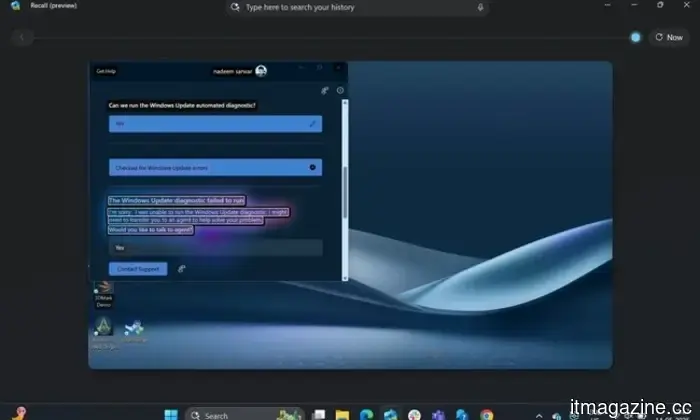
Windows Recall still has a secondary access point into your private PC history.
A new tool targets Recall after login, raising fresh concerns for anyone relying on Microsoft's privacy measures.
Windows Recall was designed to make searching your PC history more manageable; however, a recent proof of concept is challenging that promise once again.
TotalRecall Reloaded demonstrates how information captured by the Windows 11 feature can still be accessed after signing in, even after Microsoft updated its protections following last year’s criticisms.
Microsoft College Offer provides free software to ensure you overlook that the MacBook Neo is a better option.
Microsoft's new student package includes Microsoft 365, Xbox advantages, and other freebies for qualifying PCs.
Microsoft is introducing a new Microsoft College Offer for US college students purchasing a Windows 11 laptop, specifically designed to enhance the value of the purchase beyond just the hardware itself. Starting April 15, eligible customers can receive over $500 in additional benefits at no extra cost when acquiring a qualifying PC.





Other articles
 The Motorola Razr Fold may finally be available for purchase next month.
Following several months of teasers and partial disclosures, the Motorola Razr Fold now has a definitive launch date, pre-order discounts, and competitive specifications.
The Motorola Razr Fold may finally be available for purchase next month.
Following several months of teasers and partial disclosures, the Motorola Razr Fold now has a definitive launch date, pre-order discounts, and competitive specifications.
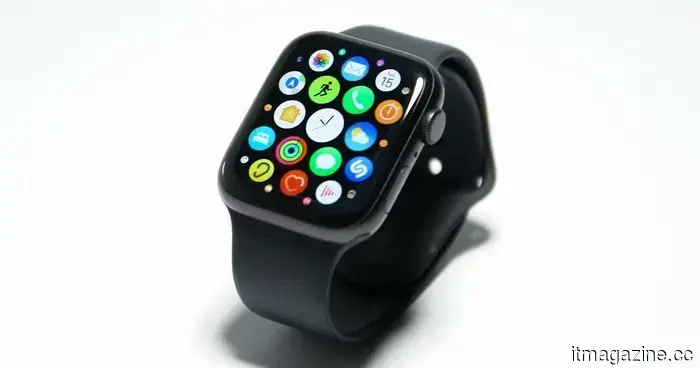 Apple retail locations may soon eliminate the long wait times for resolving Apple Watch software issues.
Apple is introducing Apple Watch software repairs at retail locations and Apple Authorized Service Providers this month, eliminating the requirement to send your watch to repair centers for software issues.
Apple retail locations may soon eliminate the long wait times for resolving Apple Watch software issues.
Apple is introducing Apple Watch software repairs at retail locations and Apple Authorized Service Providers this month, eliminating the requirement to send your watch to repair centers for software issues.
 You can now eliminate irritating YouTube Shorts from your feed.
YouTube's updated zero-minute Shorts timer takes them off your homepage completely, providing a simple method to reduce scrolling without the need to uninstall the app.
You can now eliminate irritating YouTube Shorts from your feed.
YouTube's updated zero-minute Shorts timer takes them off your homepage completely, providing a simple method to reduce scrolling without the need to uninstall the app.
 MSI introduces a wide range of laptops featuring up to RTX 5090 graphics and Intel Arrow Lake processors.
As competitors have already launched their Arrow Lake-HX Plus laptops, MSI has introduced a lineup of 13 models, featuring everything from entry-level Cyborgs to high-end Raiders and Titans equipped with RTX 5090 graphics.
MSI introduces a wide range of laptops featuring up to RTX 5090 graphics and Intel Arrow Lake processors.
As competitors have already launched their Arrow Lake-HX Plus laptops, MSI has introduced a lineup of 13 models, featuring everything from entry-level Cyborgs to high-end Raiders and Titans equipped with RTX 5090 graphics.
 Following the price increase, YouTube Premium is now available for half the cost if you subscribe to Google One.
Google is currently offering a 50% discount on YouTube Premium for subscribers of Google AI Pro, but this promotion is limited and associated with the Google One ecosystem.
Following the price increase, YouTube Premium is now available for half the cost if you subscribe to Google One.
Google is currently offering a 50% discount on YouTube Premium for subscribers of Google AI Pro, but this promotion is limited and associated with the Google One ecosystem.
 You can now get rid of those bothersome YouTube Shorts from your feed.
YouTube's newly introduced zero-minute Shorts timer eliminates them from your homepage completely, providing you with a simple method to reduce scrolling without the need to uninstall the app.
You can now get rid of those bothersome YouTube Shorts from your feed.
YouTube's newly introduced zero-minute Shorts timer eliminates them from your homepage completely, providing you with a simple method to reduce scrolling without the need to uninstall the app.
AI tools are allowing us to save more time, yet studies indicate that many of us are simply wasting it.
Recent studies indicate that ChatGPT is enabling Americans to complete digital household tasks more quickly; however, the majority of the time saved is redirected towards leisure activities rather than education, training, or other self-improvement efforts, and disparities in adoption raise further issues.