
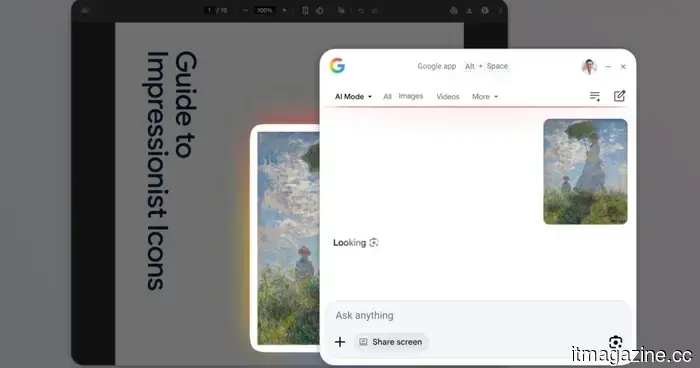
The Google app has just been released on Windows and aims to incorporate a Spotlight-like feature from Macs.
One shortcut, every answer: Google unleashes its full search capabilities on Windows without requiring you to open Chrome, heavily influenced by Mac’s Spotlight search.
Google has established its presence on Windows systems. The Google app for desktop is now fully available in English for Windows users, moving out of its experimental phase on Search Labs.
The browser tab that we instinctively open to use Google every few minutes now has a quicker, more efficient substitute right on the desktop.
What Does The App Actually Do?
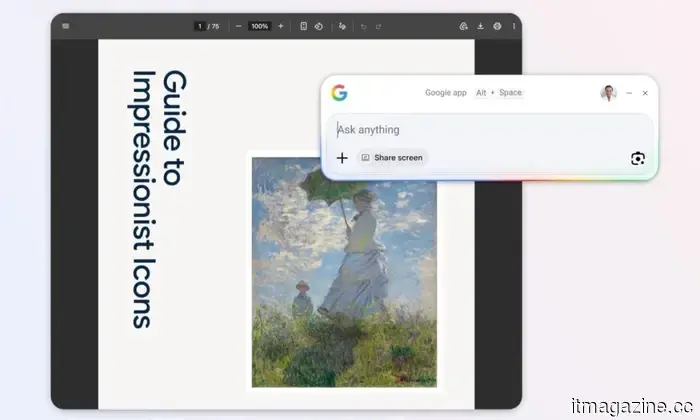
The main feature is a keyboard shortcut: Alt + Space. This brings up a floating search bar over whatever is currently displayed on the screen, similar to how Cmd + Space activates the Spotlight search on Macs.
Once the search bar is active, you can search your local files, installed applications, Google Drive documents, and the internet all from one location.
If I were still a Windows user (which I was until about three years ago), I would have downloaded the Google app just for the Spotlight-like search feature; however, my Mac’s Spotlight has been functioning well all along.
What else can it do?
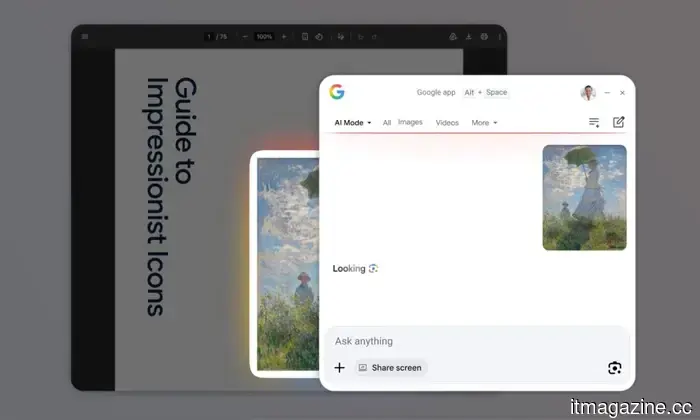
Quite a lot, in fact. Google Lens, the company’s integrated image-based search tool, is embedded directly within the new Google app for Windows. It allows users to click and search for anything visible on their screen.
From translating on-screen text to solving math problems, you can accomplish these tasks without needing to copy any content. Additionally, the app supports screen sharing during a search session, enabling users to keep a document or webpage open while asking follow-up questions.
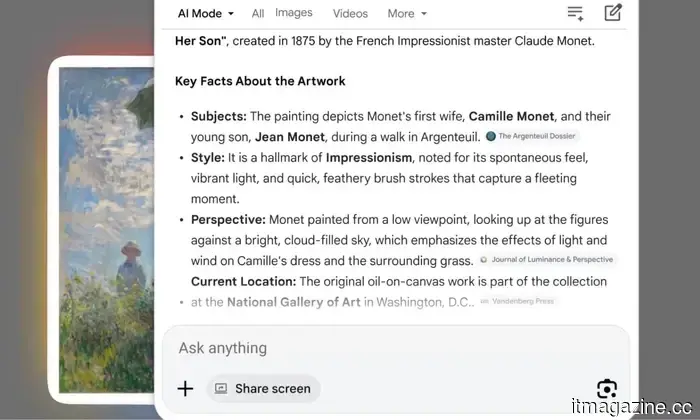
Naturally, the new Google app includes AI Mode. Thus, answers extend beyond simple blue links; responses are conversational, contextual, and linked to the internet with accurate information and relevant citations.
Google’s global rollout of its Windows app signifies more than just convenience; it directly challenges Microsoft’s dominance over desktop search. With Copilot already integrated into Windows, Google’s presence is becoming increasingly significant. In the future, we may also see a dedicated Gemini app for Windows.
For more than five years, Shikhar has continuously clarified developments in consumer tech and presented them…
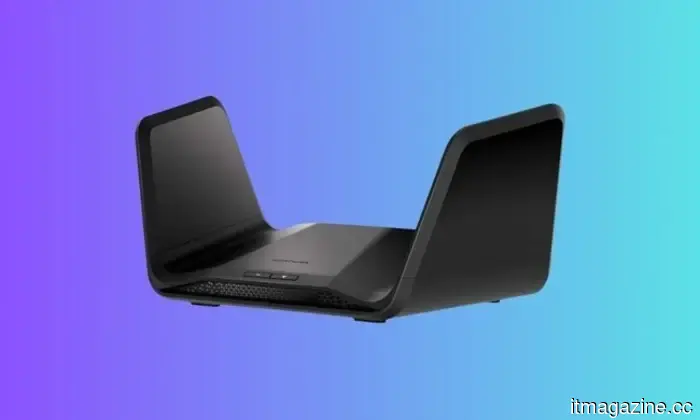
FCC clears Netgear while the foreign-made router ban remains intact.
Netgear has secured a temporary pathway for new routers, even as other consumer brands encounter greater uncertainty.
Netgear is now the first clear exception to the FCC’s foreign-made router ban, enabling it to continue launching new consumer routers in the U.S. despite its hardware being produced overseas. This policy has begun to create uncertainty for multiple router brands, especially those awaiting guidance on how the FCC will approach future approvals. The approval is valid until October 1, 2027, and encompasses a wide range of Netgear products, including Nighthawk and Orbi models, along with some cable gateways and modems. The FCC stated that the Defense Department reviewed Netgear’s application and determined that the products did not present a national security threat, although the agency did not clarify what specifically distinguished Netgear.
ChatGPT, Gemini, and other AI bots provide inaccurate medical advice half the time.
A recent study from BMJ Open has revealed that five major chatbots frequently delivered inaccurate or incomplete health guidance, especially in response to open-ended queries.
People tend to use AI chatbots like search engines for everyday health information. This practice appears riskier following a new study indicating that half of the answers from five major bots were problematic, even when the responses appeared polished and confident. Researchers assessed ChatGPT, Gemini, Grok, Meta AI, and DeepSeek with 250 prompts covering topics like cancer, vaccines, stem cells, nutrition, and athletic performance.
Microsoft adds new safety measures to protect against remote desktop attacks.
Microsoft has released one of the most practically useful security updates in recent times. If you operate in an environment where Remote Desktop files are commonly shared, this update is particularly important. The April 2026 cumulative updates for both Windows 10 and Windows 11 introduce a set of new protections aimed at preventing attackers from exploiting RDP files as a backdoor into your system.


Other articles
 Agriodor secures €15M funding round led by Crédit Mutuel Impact.
French deeptech company Agriodor has secured €15M in funding, with Crédit Mutuel Impact leading the investment, to expand its olfactory biocontrol platform.
Agriodor secures €15M funding round led by Crédit Mutuel Impact.
French deeptech company Agriodor has secured €15M in funding, with Crédit Mutuel Impact leading the investment, to expand its olfactory biocontrol platform.
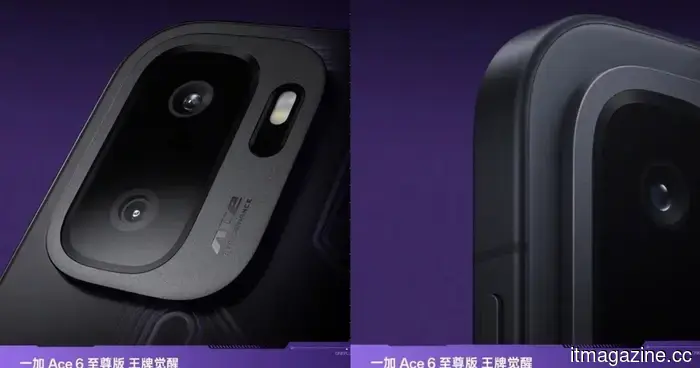 OnePlus reveals an impressive gaming-focused phone that you probably won't be able to obtain.
You’re not prepared for this gaming powerhouse.
OnePlus reveals an impressive gaming-focused phone that you probably won't be able to obtain.
You’re not prepared for this gaming powerhouse.
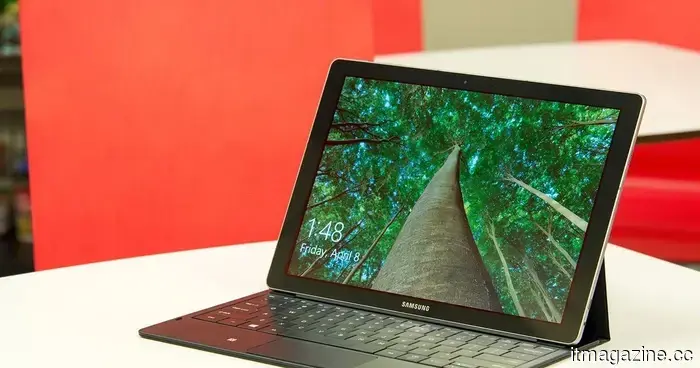 Samsung has discreetly increased the prices of its Galaxy tablets in the United States.
Wake up and get ready, Samsung has increased its prices once more.
Samsung has discreetly increased the prices of its Galaxy tablets in the United States.
Wake up and get ready, Samsung has increased its prices once more.
 Sony's latest gaming monitor features a 720Hz refresh rate and is equipped with an OLED panel.
Developed in collaboration with Fnatic and utilizing LG's state-of-the-art tandem OLED technology, Sony's latest INZONE M10S II sets a new standard for the appearance, experience, and performance of competitive gaming monitors.
Sony's latest gaming monitor features a 720Hz refresh rate and is equipped with an OLED panel.
Developed in collaboration with Fnatic and utilizing LG's state-of-the-art tandem OLED technology, Sony's latest INZONE M10S II sets a new standard for the appearance, experience, and performance of competitive gaming monitors.
 Apple TV and Peacock Premium Plus have both become more affordable, thanks to Amazon's intervention.
That's a great offer!
Apple TV and Peacock Premium Plus have both become more affordable, thanks to Amazon's intervention.
That's a great offer!
 Apple TV and Peacock Premium Plus have both seen a price reduction, courtesy of Amazon.
That's a great offer!
Apple TV and Peacock Premium Plus have both seen a price reduction, courtesy of Amazon.
That's a great offer!
The Google app has just been released on Windows and aims to incorporate a Spotlight-like feature from Macs.
With just one Alt + Space keystroke, Google's newly launched global Windows application provides search capabilities for files, apps, Drive, and the web—without needing a browser, without tabs, and without any hassle, all while packing a lot of Spotlight-like efficiency.