

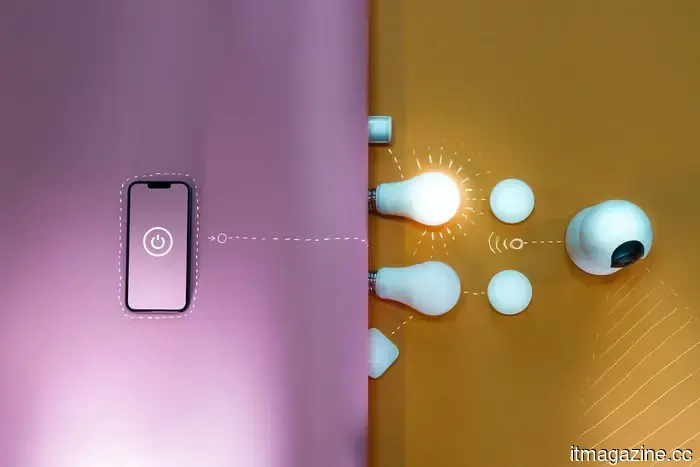
The smart home was intended to be accessible, yet it is turning into a tollgate.
I was raised with the belief that purchasing a product meant acquiring the actual item. A laptop included its specifications, a car came with its physical components, and while a printer was still a hassle, it was at least a one-time nuisance.
I observed the change when my subscriptions shifted from predominantly media content to being linked to physical items. Paying monthly for movies, music, or cloud storage felt one thing, but it was alarming to see this same concept extend to gadgets, vehicles, fitness equipment, and smart home devices, which already had their own price.
Then there were reports of a smart bed that lost some of its capabilities during an AWS outage. That was the point when the entire model felt less innovative and more irrational. Increasingly, products now come with a footnote: purchase the hardware, then pay again for features, remote access, cloud storage, AI functionalities, or premium controls that complete the experience.
The AWS service disruption has affected some of our users since last night, interrupting their sleep. This is not the experience we aim to provide, and I apologize for it. We are taking two main actions: 1) We are restoring all features as AWS recovers. All devices are currently...— Matteo Franceschetti (@m_franceschetti) October 20, 2025
This is the nature of ownership today.
The smart home was meant to blend into the background. Instead, it’s starting to resemble an old media business enhanced with better hardware and cleaner branding. The wall-mounted screen, counter speaker, and the dashboard that connects everything are no longer mere hardware pieces. They determine what appears first, what feels seamless, and what silently fades from view.
Jakub Zerdzicki / Unsplash
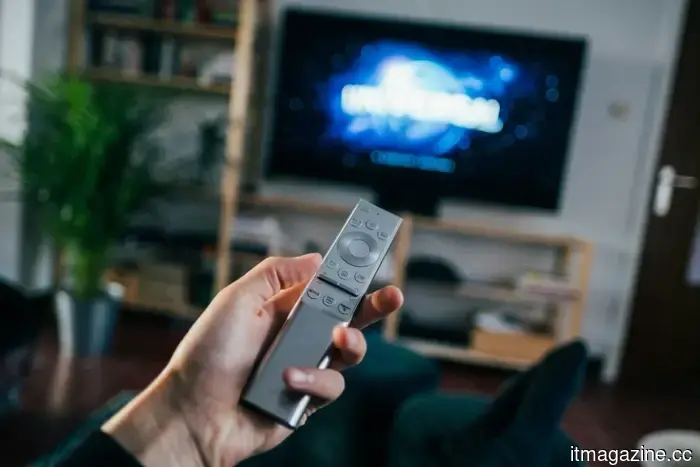
When a screen is placed in front of everything else, it ceases to be a neutral display. According to Parks Associates, 61% of US internet households utilize a smart TV as their main streaming device. Roku announced in January 2025 that it had surpassed 90 million households streaming and was present in nearly half of all US broadband households. Google revealed in late 2024 that Google TV and Android TV combined had reached 270 million active devices monthly.
The interface is now the key gatekeeper.
The core competition in the smart home no longer revolves around the hardware on the shelf. It's about the software layer that dictates what is prioritized, what recommendations are made, and which services are presented as integral. This is also where much of the ongoing monetization occurs. The hardware may be purchased once, but access, visibility, and premium features can be repeatedly monetized.
European broadcasters articulated this clearly in March, urging regulators to view smart TV platforms and virtual assistants from Google, Amazon, Apple, and Samsung as potential gatekeepers under the EU’s stringent tech regulations. Their concern was less about appealing hardware and more about access, discoverability, and whether users can navigate services without being redirected into a single company’s ecosystem.
Jakub Zerdzicki / Unsplash
Cable succeeded not because the box was magical, but because it controlled the access point.
Convenience is covering a lot here.
The smart home continues to promote itself with the same familiar promise: reduced friction, less clutter, and minimal effort. Simply say the command, tap the screen, and let the system handle the rest. This sounds appealing until convenience starts to become a gentle form of coercion. The simplest choice is often the one that is already linked to the platform owner’s services, defaults, recommendations, or paid add-ons.
That’s the clever part. A system doesn’t need to lock every door to limit choices. It just has to make one path feel effortless while rendering others slightly annoying. It can keep the basic version accessible while nudging users toward the subscription model, add-ons, or deeper integrations. Over time, users may stop making active choices and begin to drift. What initially appears neutral gradually reveals itself to be anything but.
There will be subtle fees.
Cable perfected a straightforward model: own the central box, package convenience as a service, and subtly influence what viewers discover, purchase, and remain loyal to. The smart home is reviving that strategy with streamlined hardware and appealing designs. The box has now transformed into a TV operating system, a voice assistant, or a home dashboard. The intermediary has simply learned to wear a friendly smile.
Jonas Leupe / Unsplash
I can understand paying for software, cloud storage, or services that incur genuine ongoing costs. What I find harder to accept is the notion that hardware I have already paid for should constantly require permissions, upgrades, and recurring fees. The smart home was marketed as seamless. Increasingly, it feels like a polite way to charge twice.
When all major players lean the same way, convenience functions much like blinders on a horse. It keeps my focus straight ahead, centered on ease and speed, while the creeping subscriptions, loss of agency, and ongoing extraction of my data and

Other articles
 Apple's foldable iPhone may avoid a postponement, after all.
A launch that Apple would prefer not to overlook.
Apple's foldable iPhone may avoid a postponement, after all.
A launch that Apple would prefer not to overlook.
 iPhone 18 series: All the information we have up to now
For the first time, Apple may launch its iPhone 18 series at two different events, which alters the way you should consider your next upgrade.
iPhone 18 series: All the information we have up to now
For the first time, Apple may launch its iPhone 18 series at two different events, which alters the way you should consider your next upgrade.
 I appreciate what Framework is offering, but it needs to follow through.
Framework hints at an upcoming hardware event concentrating on open computing and user empowerment.
I appreciate what Framework is offering, but it needs to follow through.
Framework hints at an upcoming hardware event concentrating on open computing and user empowerment.
 Dune 3 is arriving earlier than the director initially intended.
Director Denis Villeneuve states that he plans to create Dune 3 much earlier than he initially anticipated.
Dune 3 is arriving earlier than the director initially intended.
Director Denis Villeneuve states that he plans to create Dune 3 much earlier than he initially anticipated.
 Microsoft Teams is set to resolve a completely awkward daily issue encountered during meetings.
Microsoft is introducing a pre-join microphone test to Teams, along with privacy-focused Copilot recaps. This will provide regular users with a more seamless call initiation and give businesses better control over AI-generated meeting summaries.
Microsoft Teams is set to resolve a completely awkward daily issue encountered during meetings.
Microsoft is introducing a pre-join microphone test to Teams, along with privacy-focused Copilot recaps. This will provide regular users with a more seamless call initiation and give businesses better control over AI-generated meeting summaries.
 The Netherlands is the first European nation to sanction Tesla’s FSD Supervised.
On April 10, 2026, RDW granted approval for Tesla's Full Self-Driving Supervised, paving the way for access to Germany, France, Italy, and EU-wide approval by the summer of 2026.
The Netherlands is the first European nation to sanction Tesla’s FSD Supervised.
On April 10, 2026, RDW granted approval for Tesla's Full Self-Driving Supervised, paving the way for access to Germany, France, Italy, and EU-wide approval by the summer of 2026.
The smart home was intended to be accessible, yet it is turning into a tollgate.
The smart home was expected to offer effortless convenience. Instead, it often provides a refined system of control, where screens, speakers, and dashboards dictate what can be viewed, what can be utilized, and what continues to charge even after the hardware costs have been covered.